For those of us who work year-round and no longer have the entire summer to goof off or spend at camp, this interview series is here to hopefully brighten up your day and bring some beauty into your inbox. Lexington is fortunate to have multiple art galleries full of beautiful and diverse art pieces. This interview series will feature one local artist a week, where we'll talk about their inspiration, their drive, and even their advice for anyone looking to let their artistic passion take form.
This week we get to talk to Richard Furman. He was born in Japan, but is a true Virginian, spending the last 50 years or so right here. He describes himself as a hobbyist, but woodworking is something he's been doing since he was a kid and the pieces he creates speak for themselves. He taught woodshop for 34 years and has been with Artists in Cahoots for four years.
What kind of art do you create?
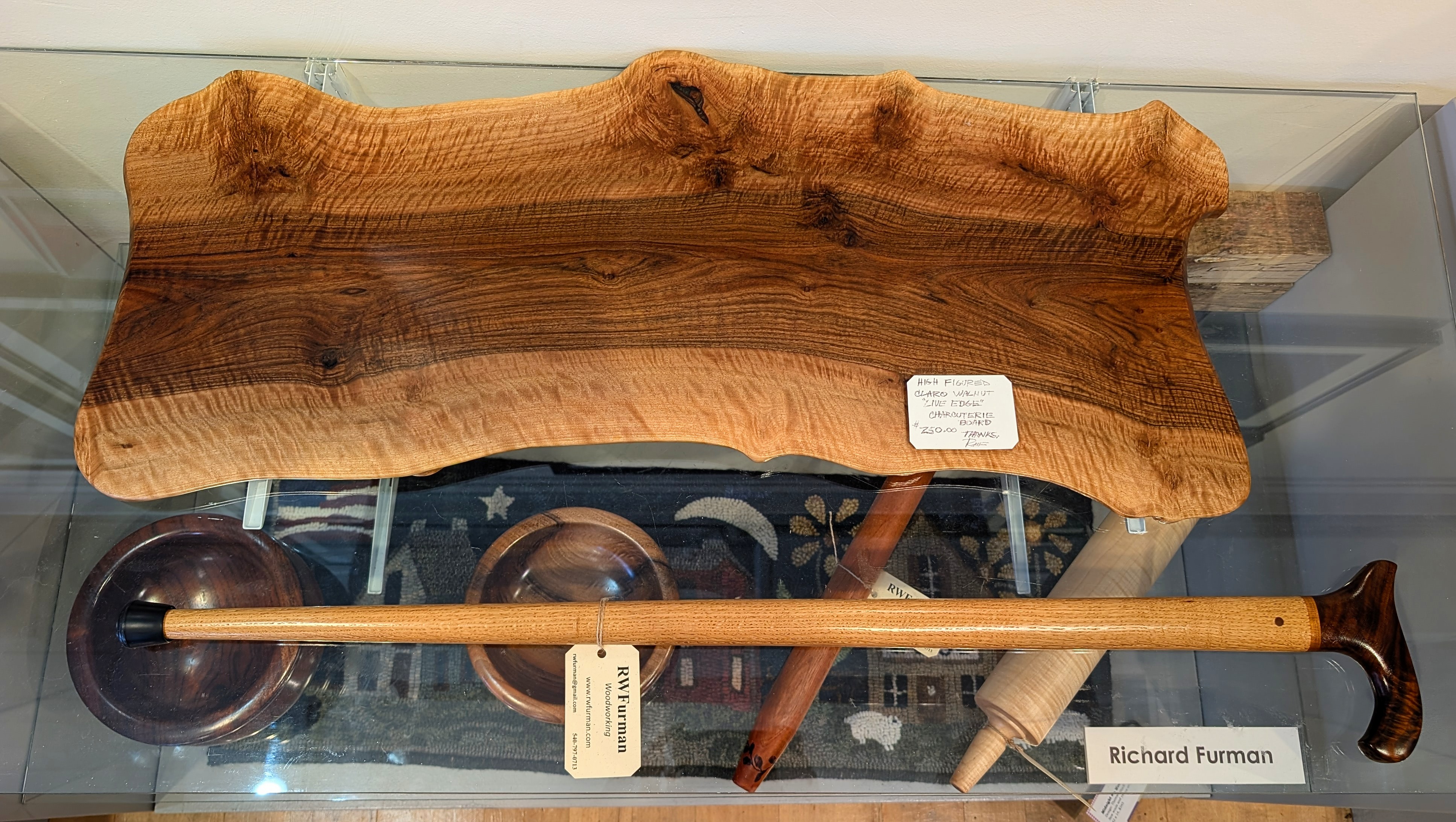
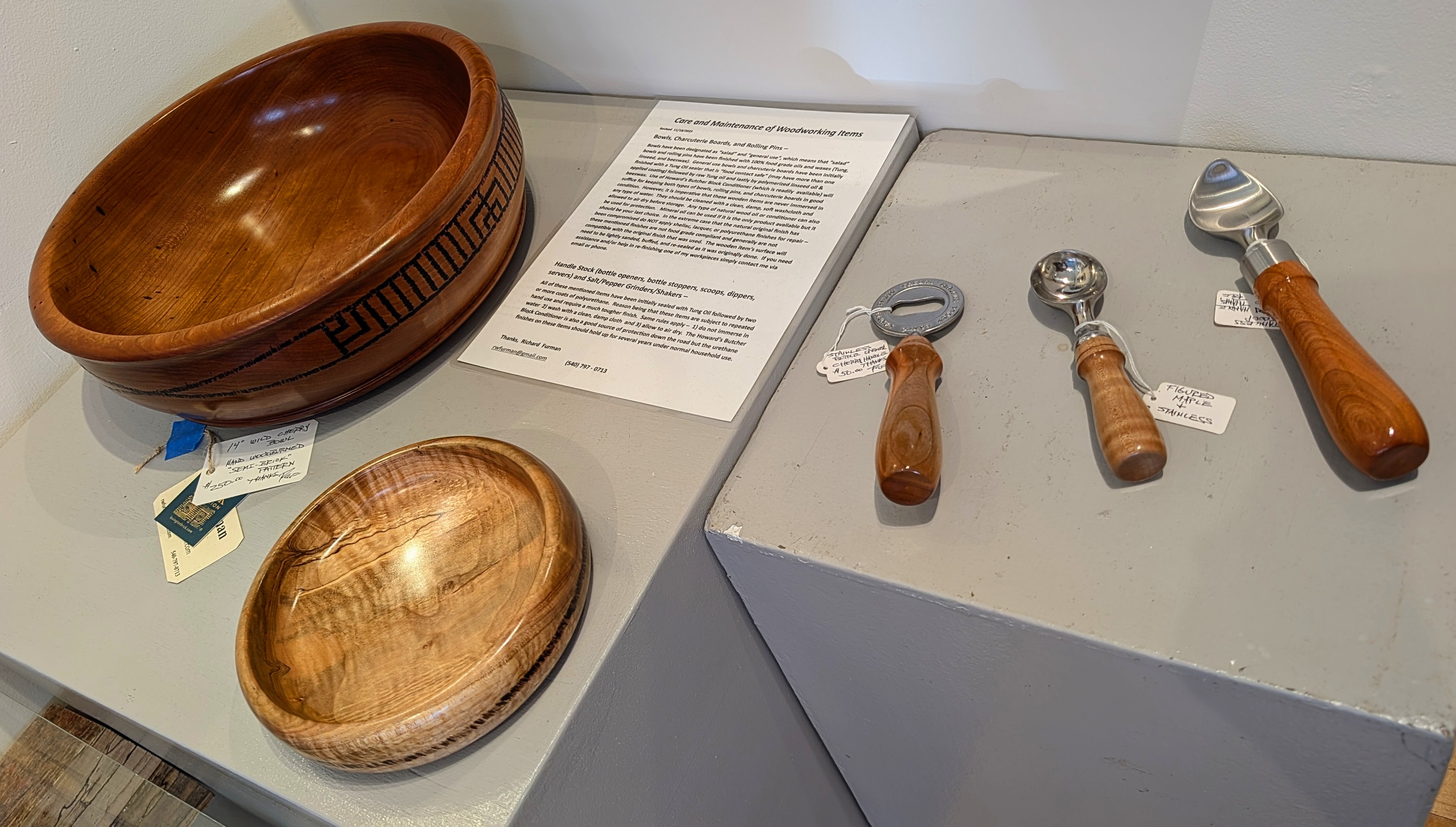
The vision or the philosophy that I use when I'm making something follows four basic principles or tenants: form, function, figure and finish. Form means whatever it is that I make; it's got to have a shape that's pleasing. Just to make something, that's one thing. But to make something, if you're going to go through all the trouble, you might as well try to make a form that's going be something that someone says, 'I like the looks of that.'
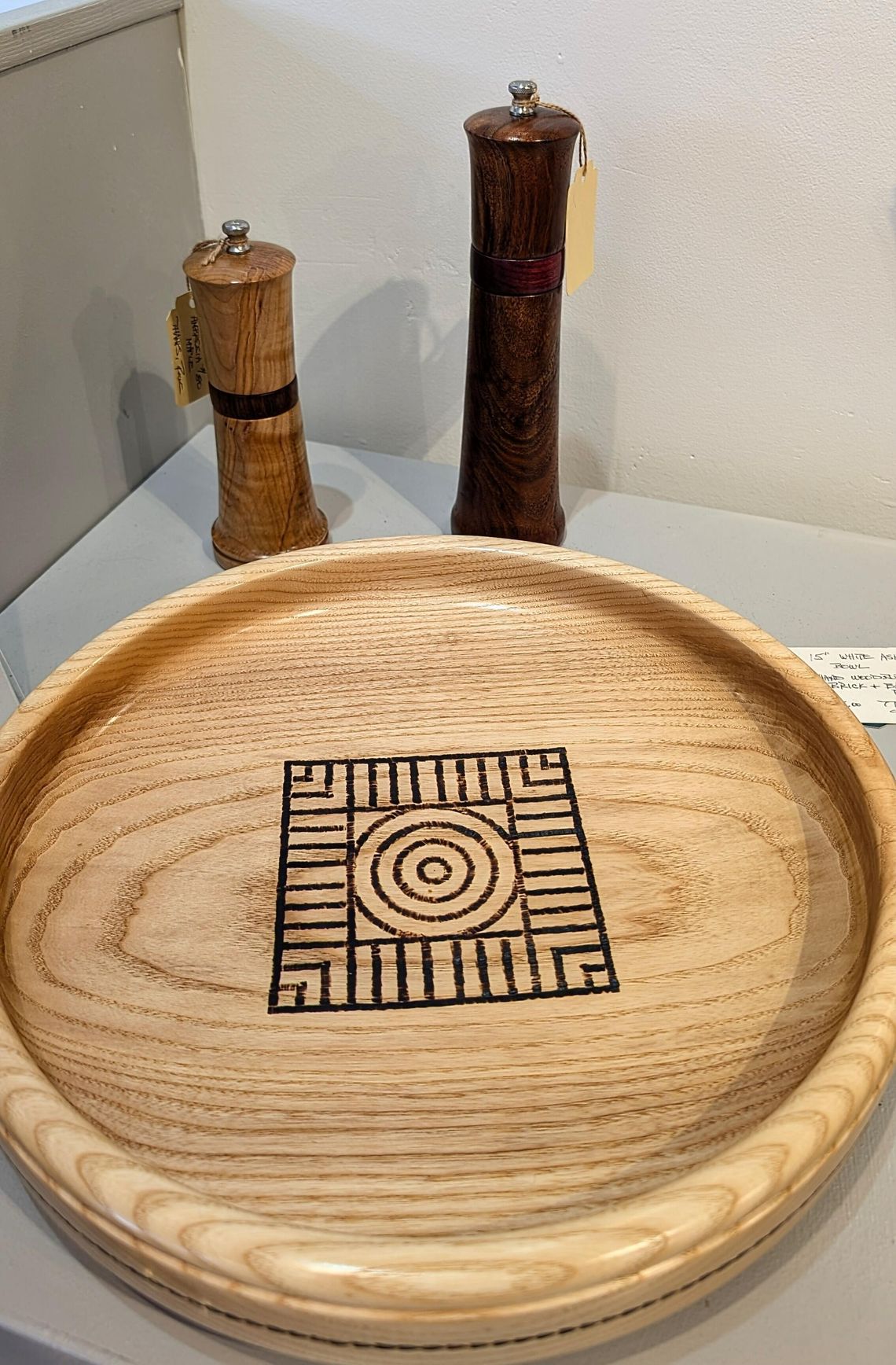
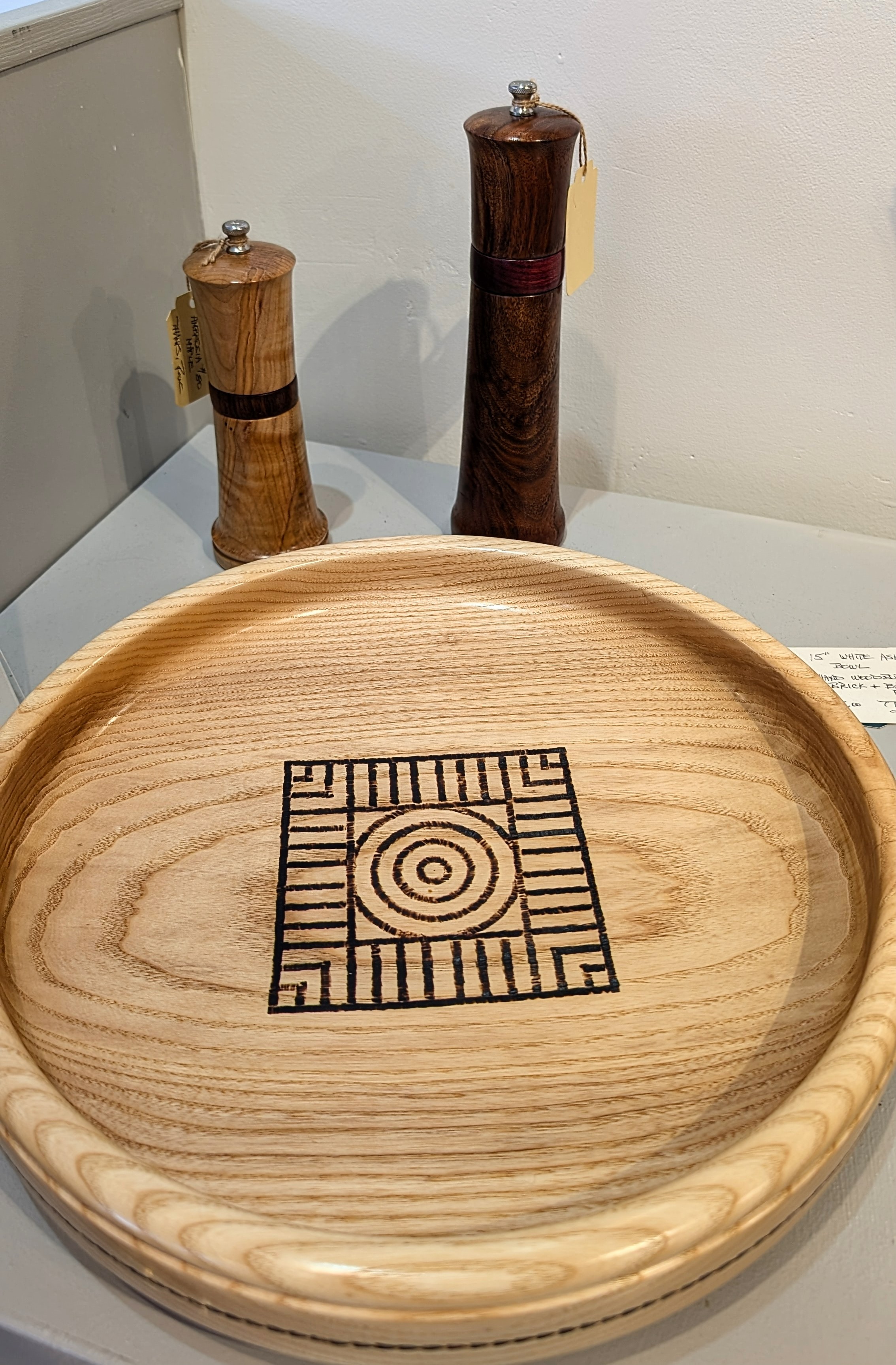
The next one's function, it's got to have a purpose. For me to make something out of wood just to be something sitting there on the table you just look at, it doesn't really speak for itself. So, you'll find that the things that I have, they all have a purpose. Whether it's a rolling pin, a bottle opener, a charcuterie board, a coffee table, a pepper grinder or whatever, it has some function.
Figure: you have two ways you can look at a board. Look at this piece right here, this is pretty plain Jane. The only thing that's interesting about this is maybe two or three knots that are in it and one down at the bottom, but that's about it. If you hunt, you may find a board that's got all this crazy quilting or figuring going on through it, or some inclusion that creates some crevice in here that just causes the grain to go nuts. That's what I look for. So when it comes to looking for the woods, like if I'm gonna turn a bowl, why do I want to turn a bowl out of something that just has no feature to the wood? There needs to be something there to draw you to this peace other than its shape. There needs to be something going on with the wood. So that's where the figure comes in.
Then the finish: you can work all day long to create a nice piece but if it doesn't feel good to the touch because it's not smooth enough or when you go to examine it you see sanding marks all through it or it's got dust in the finish or something, you kill what you try to create. So the finish is important.
What inspired you to start creating?
It started as gifts. When I retired, I said, 'I don't have the shop at my access anymore.' So I bought my lathe and figured, 'well, I'm just gonna learn how to make some small little baby bowls.' Just made little knick-knack bowls, giving them to a daughter and daughter-in-law, some friends and the wife, my sisters and all that stuff. And then some ink pens and gave them to all the guys for Christmas. So that's where it just started.
And then I decided I wanted to start doing some craft shows. That's when I expanded. People just don't want little bowls unless they get it for a cheap price, so if I make a big 12 or 13 inch bowl that's three and a half, four inches deep and if it's got some really crazy figure in it that you just can't find anywhere else, then okay now we're talking. I know they're not going to go to any old shop somewhere and find it. You'll find little baby bowls all day long and you'll find big bowls, but find a big bowl that's got a flame coming through the bottom of it, or something like that, you're gonna hunt a long time. They're there, but you won’t find them in any old shop.
What motivates you to keep making your art?
Age, staying out of my wife's hair and I don't get to fish as much as I used to. It just gives me something to do. I don't do it for a living. I'm retired, got my own social security check, got my retirement check, so I just do this because I enjoy it. I mean, I don't want to work for nothing.
So why am I doing it? Because I enjoy doing it. I just, you know, I haven't gotten tired of it yet. When I get tired of it, then I'll be done with it. I've been fishing all my life, since I was five/six years old and really fishing hard. Local rivers and so forth, that's where I've always enjoyed [fishing] but my goal when I was in my 20s was to be able to catch the citation, small amount. Once I finally reached that goal and I said, 'well, let's see if we can find a year where I can catch two.' As time went along I finally got to the point I knew I'd go out here and catch me a citation if I really worked hard and I had some years where I had 10 and 12 of them in one season. So, what's happened is because I've been there and done that, I'm still driven to fish when I get my chance but I'm more driven now to [do] this woodworking than I am to fishing because I'm still learning, still experimenting and I haven't said I've been there and done that. So at this stage of my life, it's a good thing because, you know, I'm 75 years old. When you get old, you got to stay active. You get to where you don't do anything and you become a couch potato, your life is really going to shorten up. So you gotta keep your brain running, try to use your hands as much as you can, try to just be active and this provides a way for me to do that.
Are there any artists you take inspiration from?
I take inspiration from all the ones here, without a doubt. They're all very different; all have different techniques so to speak. I mean what they do, even the people that have the wall art, you'll notice there's no two artists we have on the wall that have the same style. I get inspiration from all them because I'm not afraid to approach them with things. We know each other well enough now. They know they can speak to me honestly. I say, 'don't worry about hurting my feelings; just tell me exactly what you think.' And they do, so that helps.
The rolling pin that I brought in here today, they got this July 4th thing starting this weekend. The gallery decided that they wanted to find some way to celebrate America 250. This year, they wanted July to feature things that we collectively have created strictly to celebrate America 250. So I got to looking around and saw that rolling pins were something that the colonists wanted here, other than toys. I got to digging around, trying to find out what a 250-year-old rolling pin looked like. That was a struggle. I got on the internet and took me about a couple weeks. Got to dig around looking for vintage historic English rolling pins, 18th century, and boom I got this hit. It was in some Museum Association over there [in England] and had a date on it, 1760, told what it was made from and all this stuff. I'm going, 'that's what I'm gonna do.'
So that's what I created but to get the inspiration for it was just conversation with the people here in the gallery. And then inspiration also comes from snooping around on the net, see what's out there. You get to looking around at Etsy, just woodworking, you get to see what other people are doing and wow, you can get a lot of really neat ideas [out] of all kinds of stuff.
What sorts of feelings or ideas do you express in your art?
I've got a little thing out there on display; it's a phrase that sits in the back of my head: if the wood speaks to you, then find a way to enjoy and embrace it, and listen to the message and story it tries to send and share it. I laminated it because I felt it was, in a way, a mission statement of how I look at it. So that would probably be it. Look at the piece of wood and see if it talks to you. If you look at it and say, 'I see, I can probably make this out of it or it would be good for this.'
The figure, so to speak, it's all in the grain. The tree is just a natural thing obviously but a tree has several choices as it's growing, you know? If it doesn't get damaged, nothing happens to it then the grain in that log is not really going to be anything exceptional. It's going to go straight up. But you take a tree that's been growing on the side of ridge top around here, where the wind's gotten to it and snow and ice and stuff, it gets damaged. When that tree repairs itself, all those characteristics of grain each species has is really what makes the wood look good. Those are the pieces I try to find personally.
There are some people [who] actually are going the extra mile to find some unique pieces of wood to use in their turnings or whatever. I figured that's what I need to do because that's what separates them from everybody else. I go find a piece of wood somewhere; if I see one while I'm just running around and be like, 'oh, I have to have that.' You can take five woodworkers and have them all make a pepper grinder, for example. When it's all said and done, there's only two things, really three things, that'll make one type of grinder stand [out]. One is going to be its shape; the other one's gonna be the figure and lastly it's going to be the finish. So if all of them can do a good job on a finish, all are gonna do a good job on shape, even though they all may be different, what's going to separate the leader from the guy in the back? It's going to be the figure in the piece of the wood.
How does it feel when someone buys your art?
It feels great! It really does. This is gonna sound crazy. The excitement that I get when someone buys one of my pieces, it's like a gift. It's a gift to me in that they took the time to see it and appreciate it for what I felt I saw in that piece of wood or what that function or that finish was on it. It's also a way in that, you know, it's not necessarily a legacy. We all end up on this planet and we'll all sooner or later gonna die, that's just the way it is. You hope that your children and your grandchildren and whatever will remember who you were, what you were, what you did, but as time goes along, as generations pass, what you did in your lifetime as far as a parent will start to diminish.
I've traced my ancestors back all the way up in New York, all the way back [to the] late 1600s. That's where the Furman family actually came from, but I don't know any of them. So my point is that the pieces I make, hopefully, are gonna last more than a generation. If I make a really really nice bowl, if someone takes care of that bowl and don't burn it up or drop it from the Empire State building and bust it in three pieces, it's going to end up in somebody's hands sooner or later. They'll pass [it] on [to] their kid, or let’s assume there is no kid to pass [it to]; it might end up in an estate sale somewhere, who knows? But it's going to have my initials wood-burned in the back and that's where I feel where I'll leave my mark, so to speak, on this planet, other than my teaching career and everything.
So that's why I consider it a gift [from] me that when they buy it, that's my gift to that person – I'm giving you a piece of me, but your gift to me is that you've bought and you appreciated [it] enough to where I know now that's going to end up in somebody else's hands. So, like I say, it sounds kind of crazy.
Do you have any advice for aspiring artists, at any stage of their lives?
Oh my gosh. You gotta realize you're getting this from a guy who creates sawdust, but yeah. You just keep trying. I'm going to approach this from the woodworking angle. With all the kids I had when I was teaching shop, I learned this a long time ago, you can't grade a kid's bird house on it being exactly to spec because everybody's gonna make mistakes, adults included. You have to learn how to work around your mistakes because there is no such thing as a perfect project. Maybe an artist can create a piece on canvas that they finally get to where they feel they got it perfect. I'll just let it dry and I'll just go back and paint over it, fix it. Well, in woodwork, you don't get that choice. So you keep trying. You keep trying because you're going to make mistakes, you're going to have some failures but here's the neat thing: if something fails to some degree, don't give up and trash it unless you have to. You can always find a way to still bring it to life, usually. It may not be what you envisioned when you first started but you can still find a way to make use of it.
So that's the thing I was trying to get to all my kids when I was teaching. There's always going to be goofs. There's always going to be mistakes. When you have experiences like that and you have some goofs, then that's good because now you can anticipate that when you go on to do the next piece, which is experience