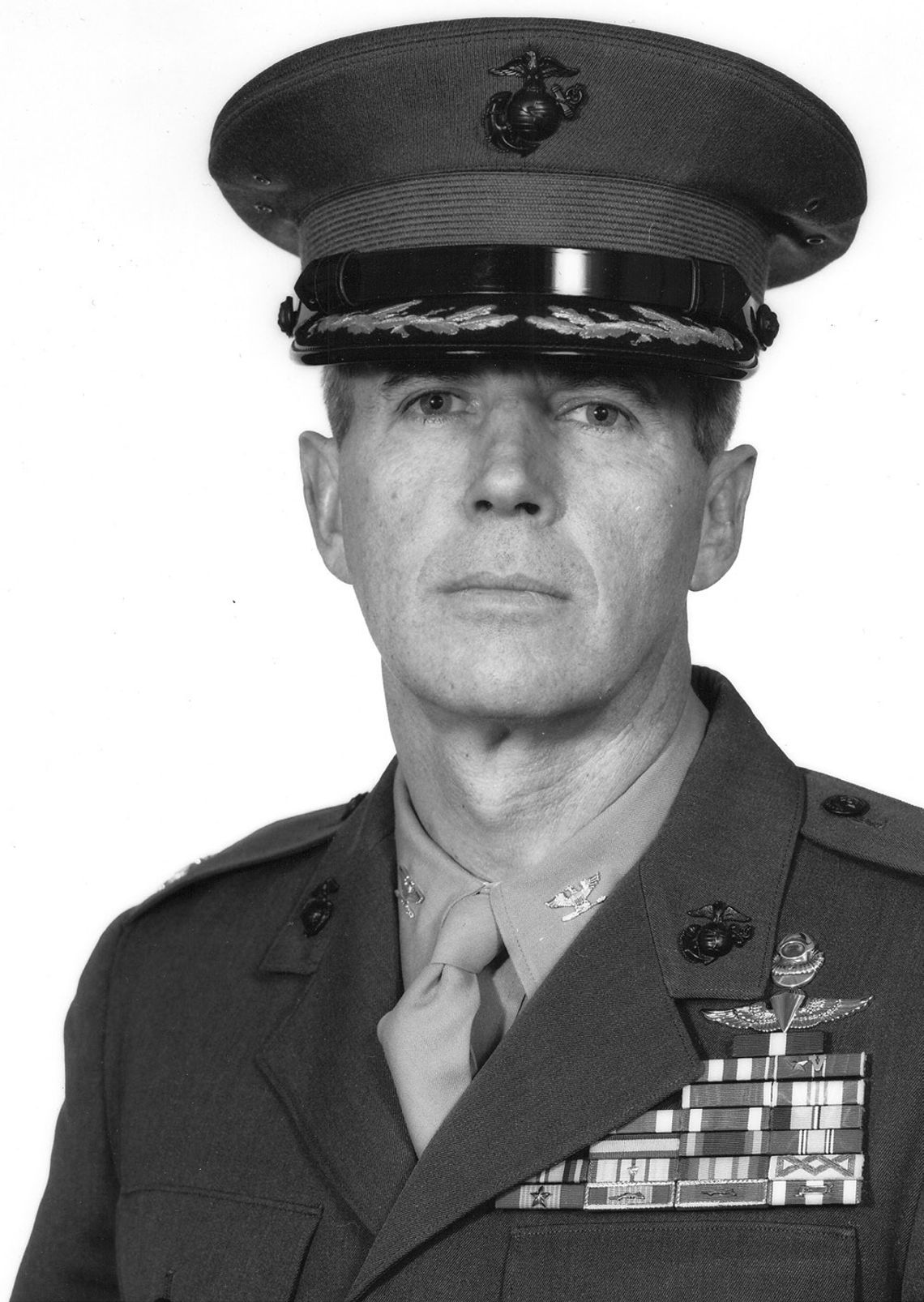
Col. John W. Ripley, a Vietnam veteran who also served at Virginia Military Institute and Southern Virginia College, received a posthumous Medal of Honor on June 18.
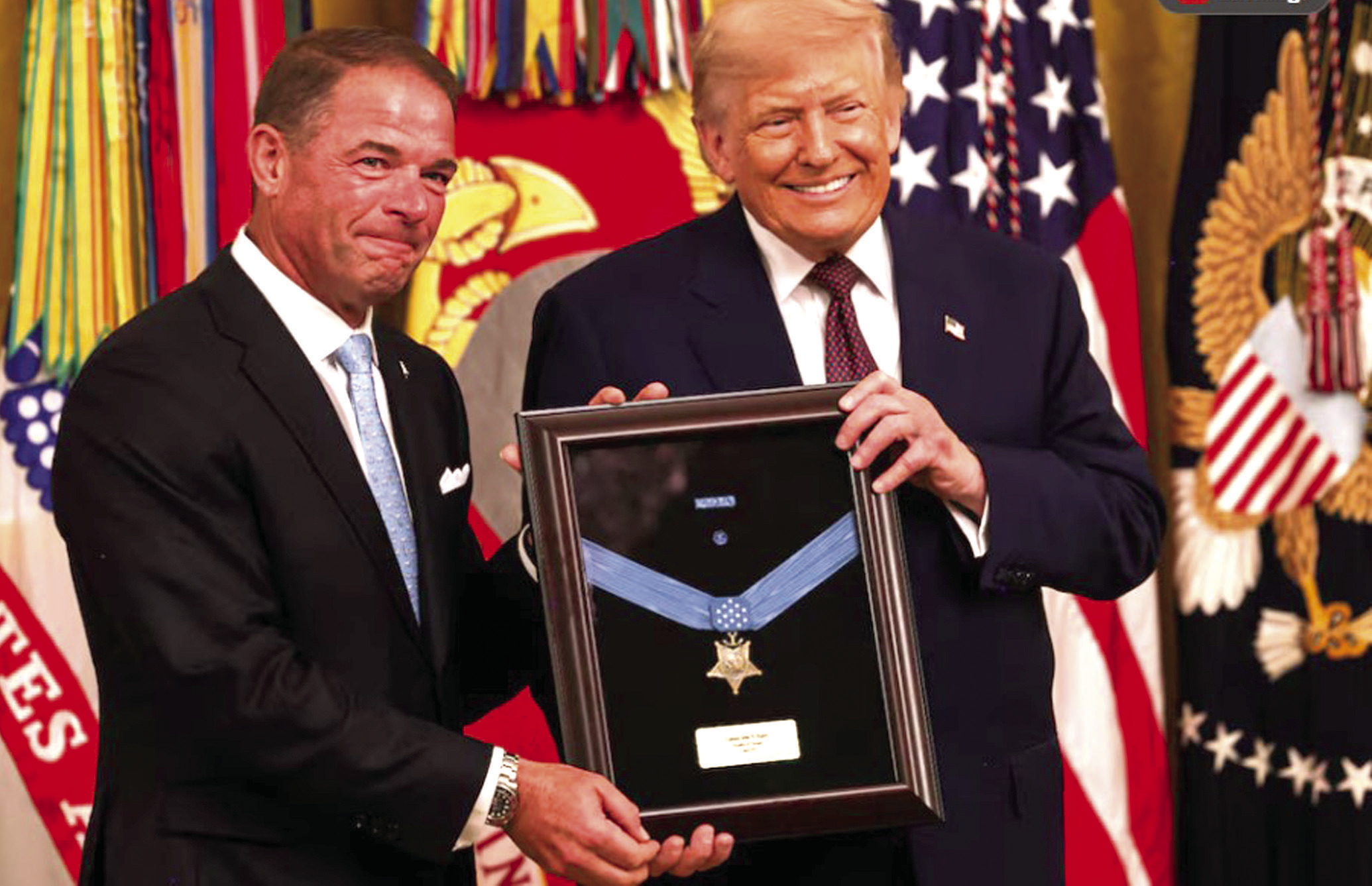
President Donald Trump presented Ripley’s son, Tom Ripley, with the award in recognition of his father’s “acts of gallantry and intrepidity above and beyond the call of duty,” according to a press release from the White House. The Medal of Honor is the nation’s highest valor medal.
Approximately 3,500 soldiers have received the Medal of Honor, Tom Ripley said in an interview this week. Only about 300 have been Marines.
“These people are icons,” he said. “This is rareified air.” John Ripley received the honor for his actions on April 2, 1972, when he was a Marine captain serving with the Third Vietnamese Marine Corps Infantry Battalion.
His battalion was tasked with defending the village of Dong Ha from a North Vietnamese offensive. Only a single bridge separated the enemy tanks from Dong Ha.
Working solo, Ripley climbed along the underside of the bridge to place 500 pounds of explosives at key structural points.
“For three hours, he repeatedly exposed himself to intense enemy fire as he climbed beneath the bridge,” according to the White House press release.
John Ripley then set off the explosives, taking down the bridge and bringing the enemy attack to a halt.
Tom Ripley said he first learned about his father’s actions at Dong Ha 10 years after the fact, when he was 13 years old. But he said he didn’t understand the impact of his father’s bravery until he himself was a Marine officer.
“Blowing up the bridge is obviously heroic and dynamic,” Tom Ripley said. “To stop effectively an invasion is just something very different.”
From Virginia to Vietnam
John Ripley was born in Radford in 1939, according to the Marine Corps University website. He graduated from Radford High School and enlisted with the Marines in 1957. After a year of enlisted service, he attended the U.S. Naval Academy and graduated in 1962.
He was commissioned as a second lieutenant but worked his way up to become a captain in 1966. He was deployed to Vietnam for the first time that year.
Ripley was injured in action in March 1967 but came back to finish out his tour. He returned to Vietnam to serve with the Third Vietnamese Marine Corps Infantry Battalion in 1971, which is how he found himself at Dong Ha.
Outside of Vietnam, John Ripley’s military career included time in Singapore, Malaya, Norway, the Great Britain and Japan. He attained the rank of colonel and also earned a Masters of Science from American University, according to Marine Corps University.
In 1990, he became the head of Virginia Military Institute’s Naval Reserve Officers Training Corps (NROTC) program.
“During his time at VMI, Col. Ripley created the largest, most productive NROTC unit in the country,” according to Marine Corps University.
Ripley retired from the Marine Corps and left VMI in 1992. He then assumed the presidency of Southern Seminary Junior College, which became Southern Virginia College while he was president.
After a brief stint as the college’s chancellor in 1996, Ripley became president of Hargrave Military Academy in 1997. He also served as director of the Marine Corps History and Museums Division from 1999 to 2005.
John Ripley died in 2008. He was 69 years old.
‘Unwavering Resolve’ At the time he died, John Ripley was a recipient of the Navy Cross, the second-highest valor award available to a member of the U.S. Navy or Marine Corps.
But Tom Ripley, who graduated from VMI in 1993 and was a Marine Corps captain, said he felt his father was deserving of the Medal of Honor. Tom Ripley had unsuccessfully petitioned to have the award upgraded in 1999, when his father was still alive.
He said things changed when he got a call from the U.S. Secretary of the Navy in 2025. Tom Ripley said Trump had asked his service chiefs to review the actions of medal recipients, and John Ripley was high on the list for an upgrade to the Medal of Honor.
“Like him or not, our president is the guy who’s decided to make this right,” Tom Ripley said.
Normally, a service member must be recommended for the Medal of Honor within three years of their action of valor, according to the Congressional Medal of Honor Society. But bills allowing John Ripley and two other veterans to receive the honor passed both houses of Congress in early 2026.
One of the other June 18 Medal of Honor recipients was Maj. James Capers, Jr., another Marine Corps officer during the Vietnam War.
“Their valor, unwavering resolve, and fighting spirit continue to inspire Marines today,” said Marine Corps Commandant Gen. Eric Smith in a press release from the Marine Corps. “Marines will carry their legacy forward for generations to come.”
The other veteran to receive the Medal of Honor on June 18 was Maj. Nicholas Dockery of the U.S. Army. Capers and Dockery were both present at the ceremony.