DAR, SAR Markers Unveiled At Ceremony
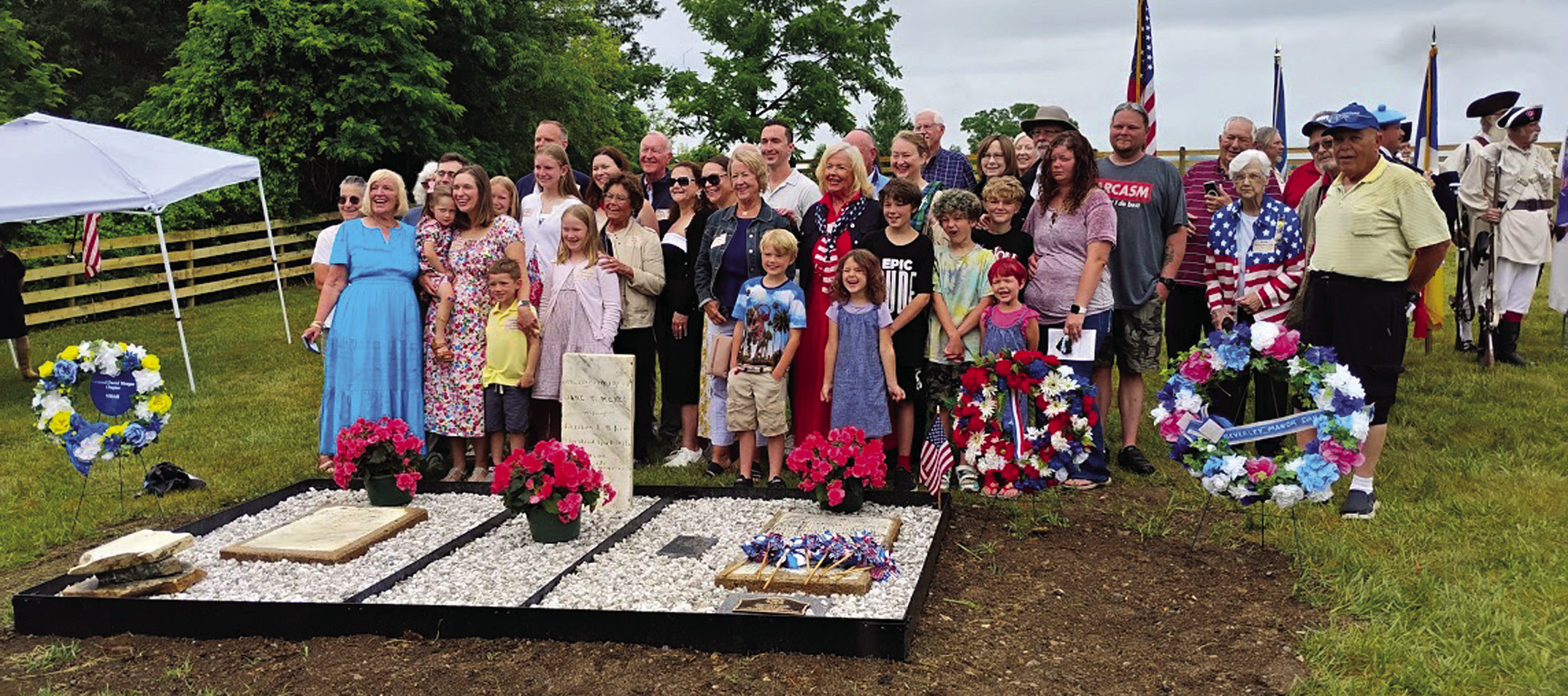
Two-hundred and fifty years after James Logan McKee joined the fight for American independence, his descendants gathered in Kerrs Creek to honor his legacy.
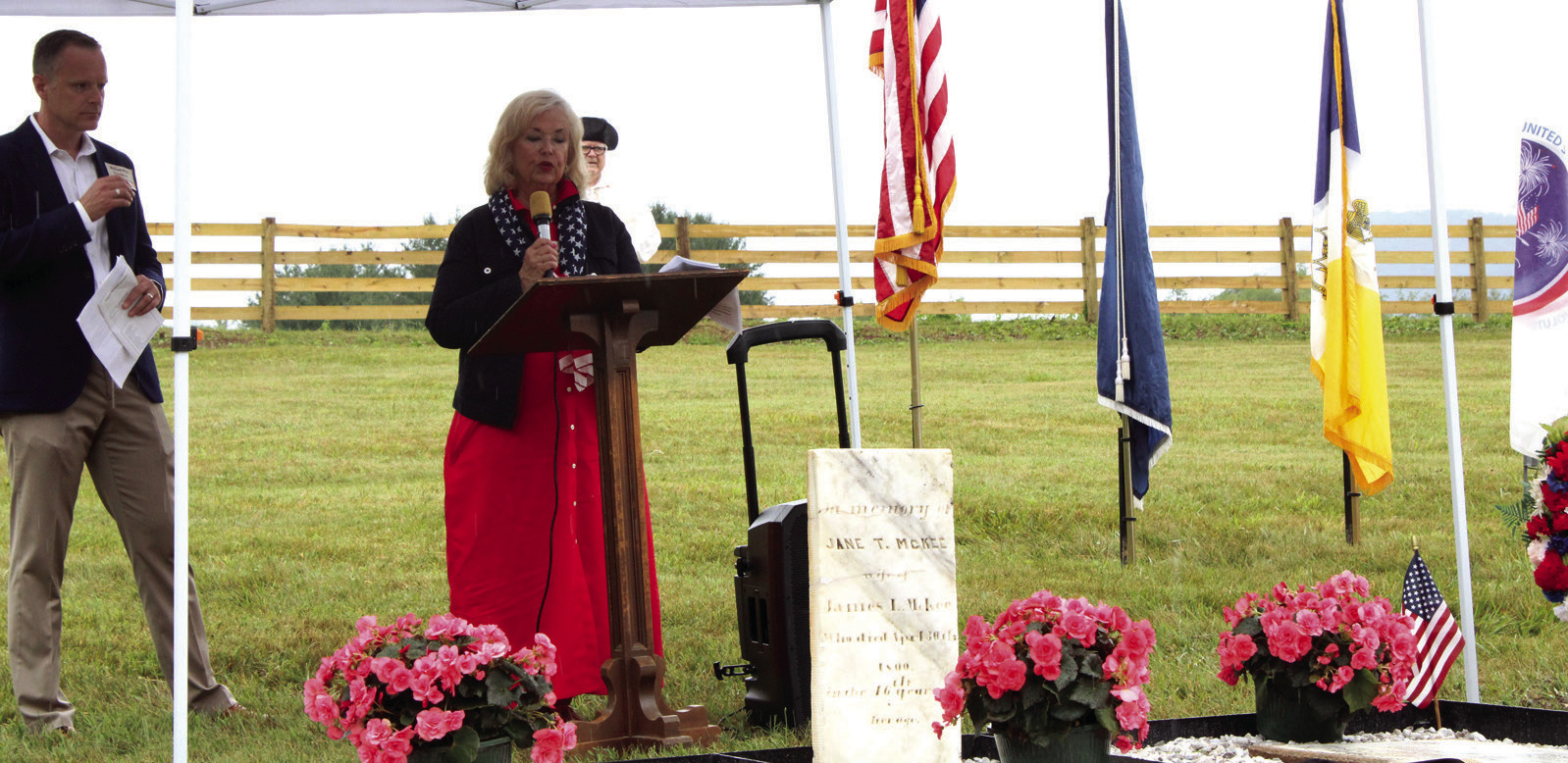
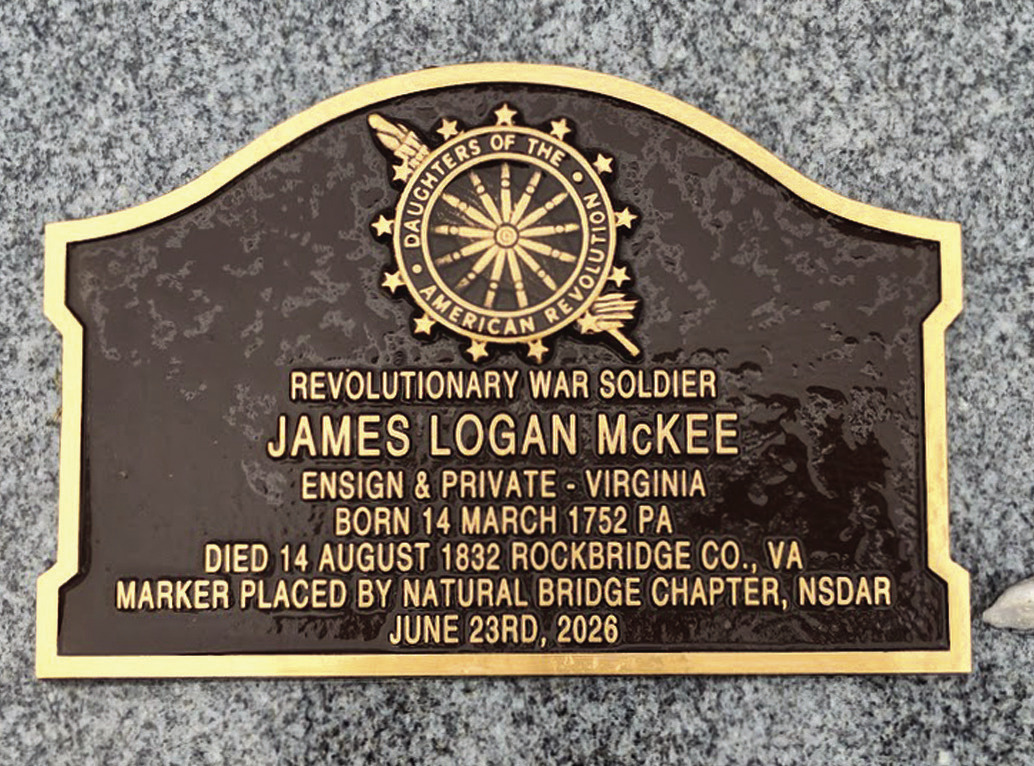
At the ceremony on June 23, McKee’s descendants unveiled grave markers from the Daughters of the American Revolution (DAR) and Virginia Society of the Sons of the American Revolution (SAR). Both organizations are nonprofits composed of the descendants of Revolutionary War patriots.
It’s the first time in more than 50 years that a grave in Rockbridge County has received these markers.
“There isn’t a lot of connection, I think, in today’s world,” said Susan Laird North, a descendant of McKee from California, in an interview with The News-Gazette. “A lot of people don’t know their family history.”
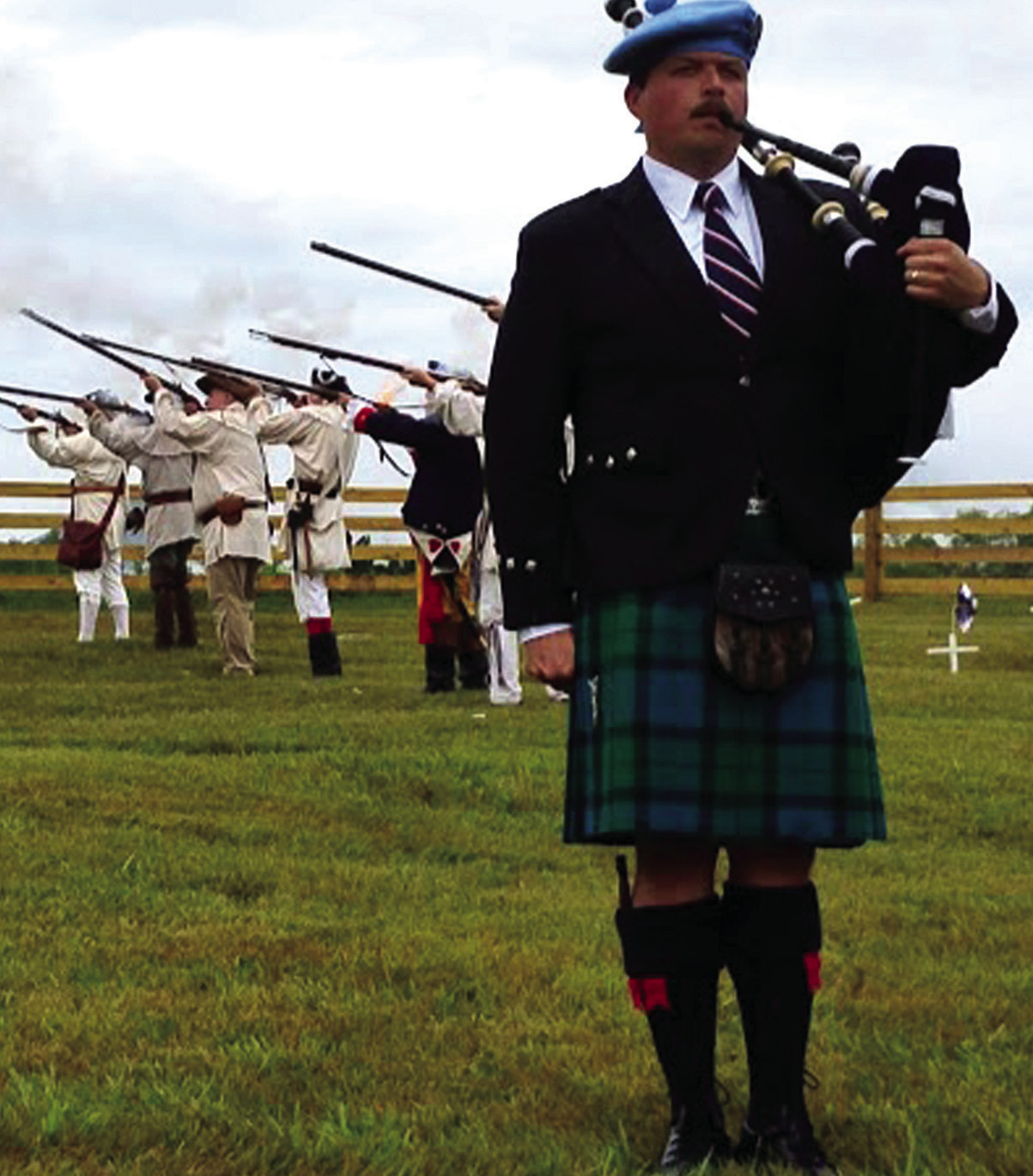
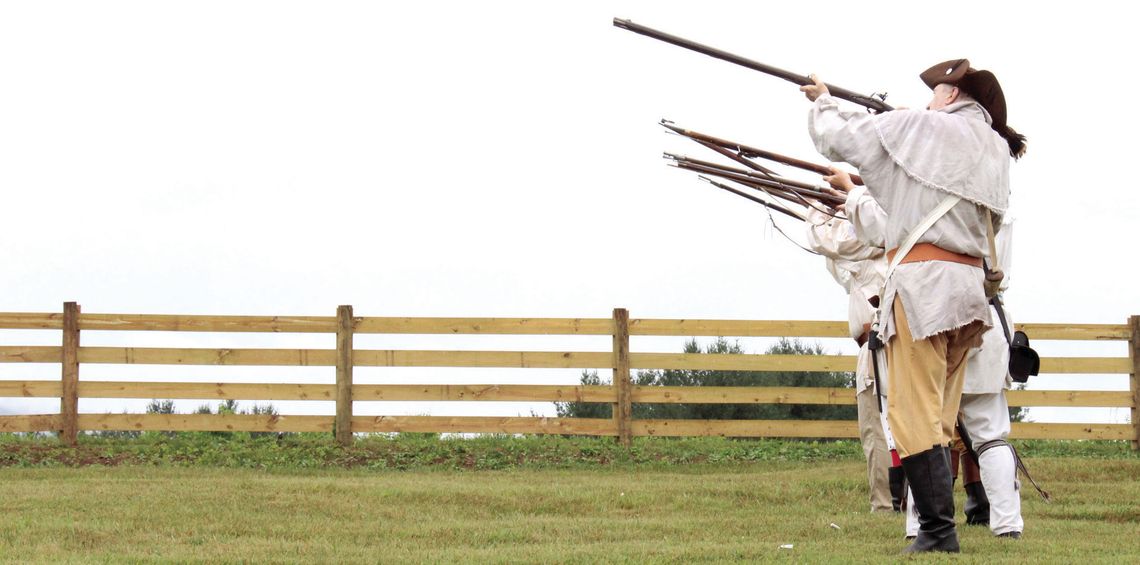
Descendants from across the country converged on Big Spring Farm, where McKee is buried. The event featured bagpipes, a musket firing and a trumpeter playing “Taps.”
Remembering the Past
McKee, whose family had emigrated from Ireland to Pennsylvania, was born in 1752. His family traveled south to Rockbridge County in 1754, when he was just 2 years old.
Jennifer McKee Cubitt spoke to the crowd of descendants and observers about her ancestor’s life outside of the Revolution. She said he faced conflict even before joining the Virginia militia.
Kerrs Creek was hit with attacks from the Shawnee in both 1759 and 1763, Cubitt said. McKee’s mother was killed in the 1763 raid, but he and his siblings had been sent away to live with family in Timber Ridge and were spared.
“When James Logan and his siblings returned from Timber Ridge, they came to a valley scarred by violence,” Cubbitt said.
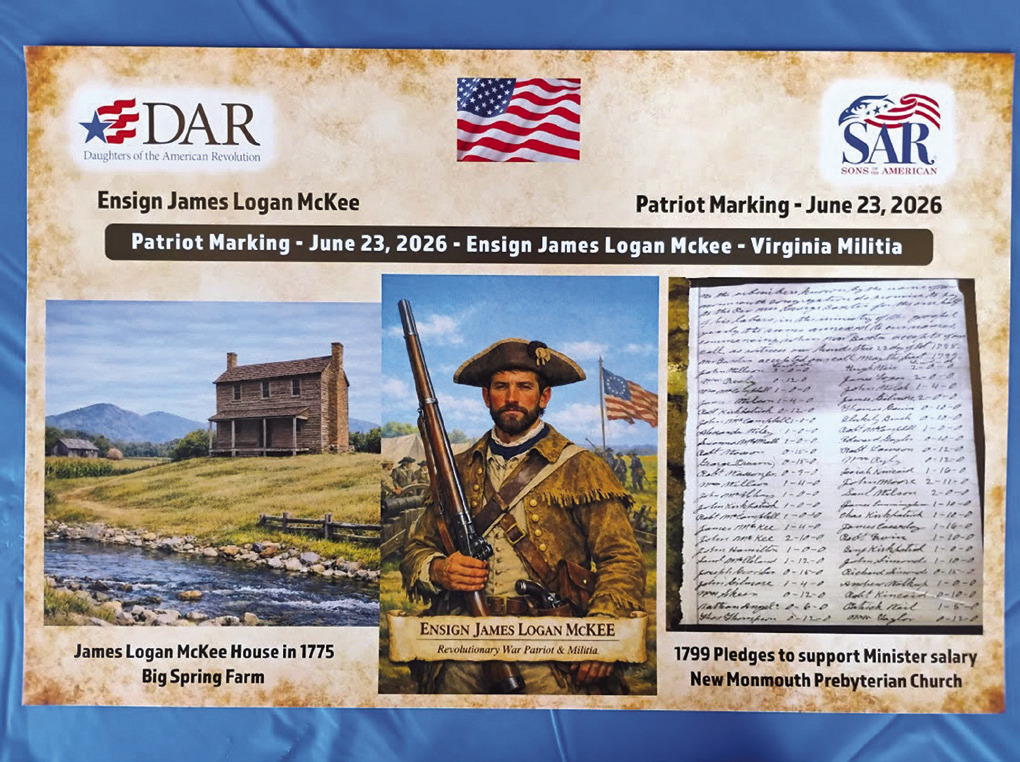
Several years later, McKee’s father bought the property that is now Big Spring Farm. He would later sell it to McKee. The farm passed from descendant to descendant for more than 130 years.
McKee was drafted into the Virginia militia in 1776, said William “Mick” Trevey Jr., a direct descendant from Wisconsin who spoke at the ceremony about McKee’s military service.
Trevey said McKee served in seven “tours” during the Revolution for a total of almost 18 months of service. From 1776 to 1777, he fought against Cherokee and Shawnee Native Americans in frontier conflicts and helped to fortify Fort Randolph in presentday West Virginia.
In 1781, McKee was called up once again, now as an ensign. An ensign was the lowest commissioned officer in the Revolutionary army and was often responsible for carrying the colors, Trevey said.
McKee’s service throughout 1781 included deployments to Portsmouth and Weston. He was also involved in the effort to repel Sir Banastre Tarleton’s attack on Charlottesville that year, but Trevey said it’s unclear what McKee’s role was. McKee’s final deployment was to Yorktown, the last major land battle of the war.
“The area all around Williamsport and Yorktown was the largest concentration of military forces ever assembled in North America at that time,” Trevey said.
After the siege of Yorktown, McKee returned to Kerrs Creek, where Cubbitt said he lived out his days in peace.
“For the rest of his long life, James Logan devoted himself to the land, his family, church and his community,” she said, “living quietly but honorably on the farm he had purchased from his father.”
McKee died in 1832. He was 80 years old.
Labors of the Present
North said the restoration of McKee’s grave and the surrounding cemetery was accomplished thanks to the work of Pauline McKee, a descendant of one of James Logan McKee’s brothers.
“It is impossible for people to understand the amount of effort and work that she herself has put into this,” North said. “She has lived and breathed this for five years, and without her this would not have happened.”
Pauline McKee said in an interview she first heard about her family’s history from her father. She began digging deeper about 40 years ago, when she was in her 30s. But she said she’s not the first person to look into the McKees and the other families that lived near them.
“It isn’t any one person who pulled this all together,” she said. “There are decades of people; they just didn’t know how to connect to each other.”
Pauline McKee first visited the McKee Big Spring Cemetery in 2021. She said when she first saw it, the cemetery was in a state of disrepair. Many headstones, including James Logan McKee’s, were damaged and covered by dirt and grass.
Restoration work on the cemetery began in 2021, and Pauline McKee formed the nonprofit McKee/Big Spring Cemetery Association in 2022. The cemetery was owned by New Monmouth Presbyterian Church until 2022, when control passed to Big Spring Farm.
Since work began, Pauline McKee said the restoration project has brought in about $30,000, mostly in donations from McKee family members. The work has included basic maintenance like mowing and repairing headstones. It also included groundpenetrating radar that identified 106 total graves.
Getting approval for the DAR and SAR markers for James Logan McKee’s grave was its own undertaking, Pauline McKee said. She said the DAR process included an extensive application that required primary documents and letters of approval from two local historians. The SAR application process was similar.
“It’s not easy,” she said.
Looking to the Future
Pauline McKee said there’s more work to be done. She said she wants to see educational boards installed throughout the cemetery to provide information about the people buried there.
North said ensuring the cemetery has enough funds for consistent upkeep is another priority.
“Having places like this — a place for people to go, a place for people to honor their ancestors — is really important,” she said.
Pauline McKee said she has focused on sustainability throughout the restoration. She said getting younger members of the family involved ensures that they’ll be invested in the cemetery’s future.
“The younger generation will not own it if they’re not involved,” she said.
Trevey is a part of that younger generation. He said researching James Logan McKee’s history helped him appreciate his family’s background.
“It was fascinating and heartwarming to watch the ripple effect of what happened here 250 years ago and how that has created this amazing place that we call home today,” Trevey said. “Even though I live in Milwaukee, I feel so connected to this part of Virginia.”