For those of us who work year-round and no longer have the entire summer to goof off or spend at camp, this interview series is here to hopefully brighten up your day and bring some beauty into your inbox. Lexington is fortunate to have multiple art galleries full of beautiful and diverse art pieces. This interview series will feature one local artist a week, where we'll talk about their inspiration, their drive, and even their advice for anyone looking to let their artistic passion take form.
This week we get to talk to Rebecca Worth-Warner. She grew up in Lexington and graduated from Lexington High School. Her mother started the business and she joined her when she was 25.
What kind of art do you create?
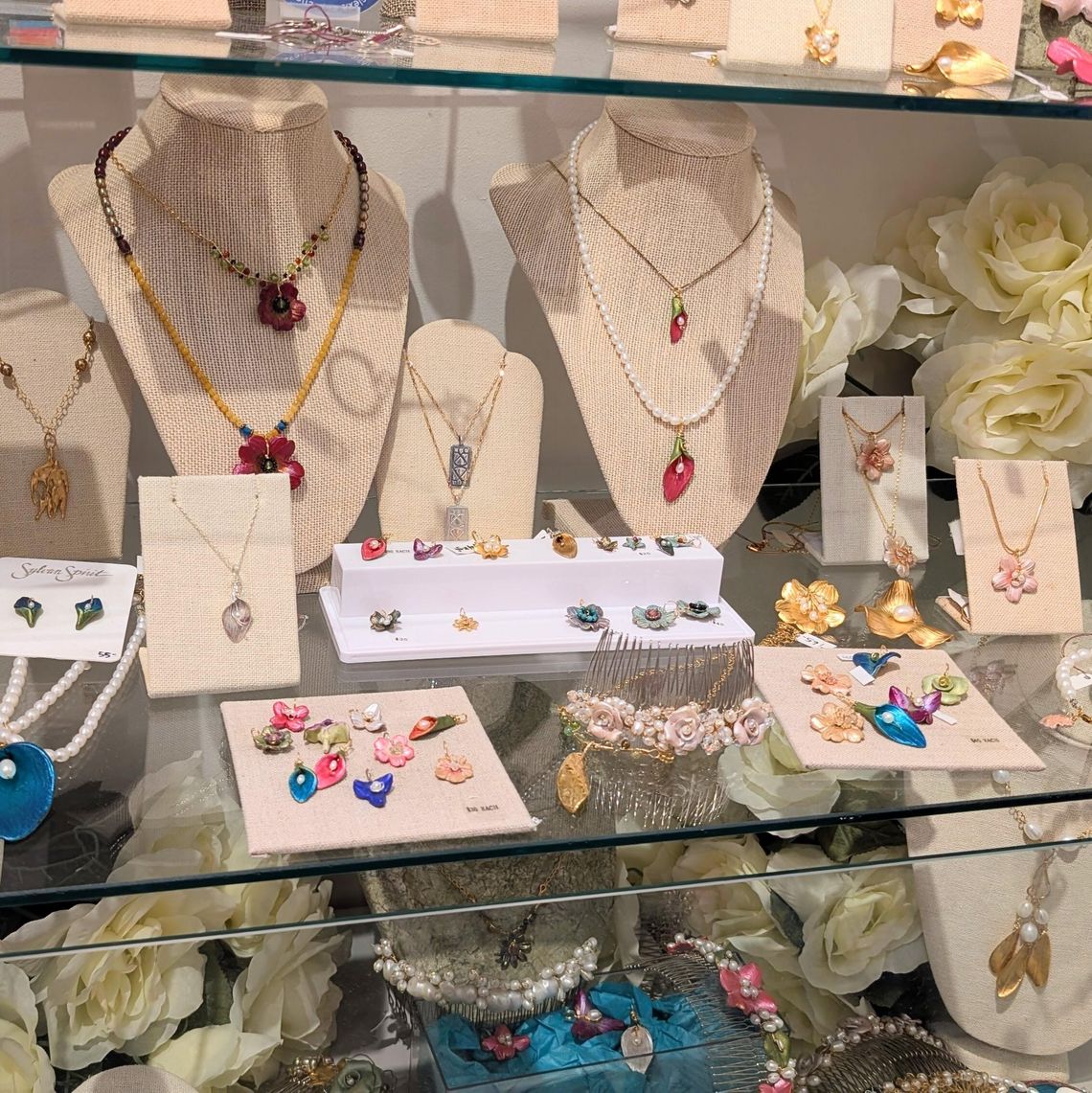
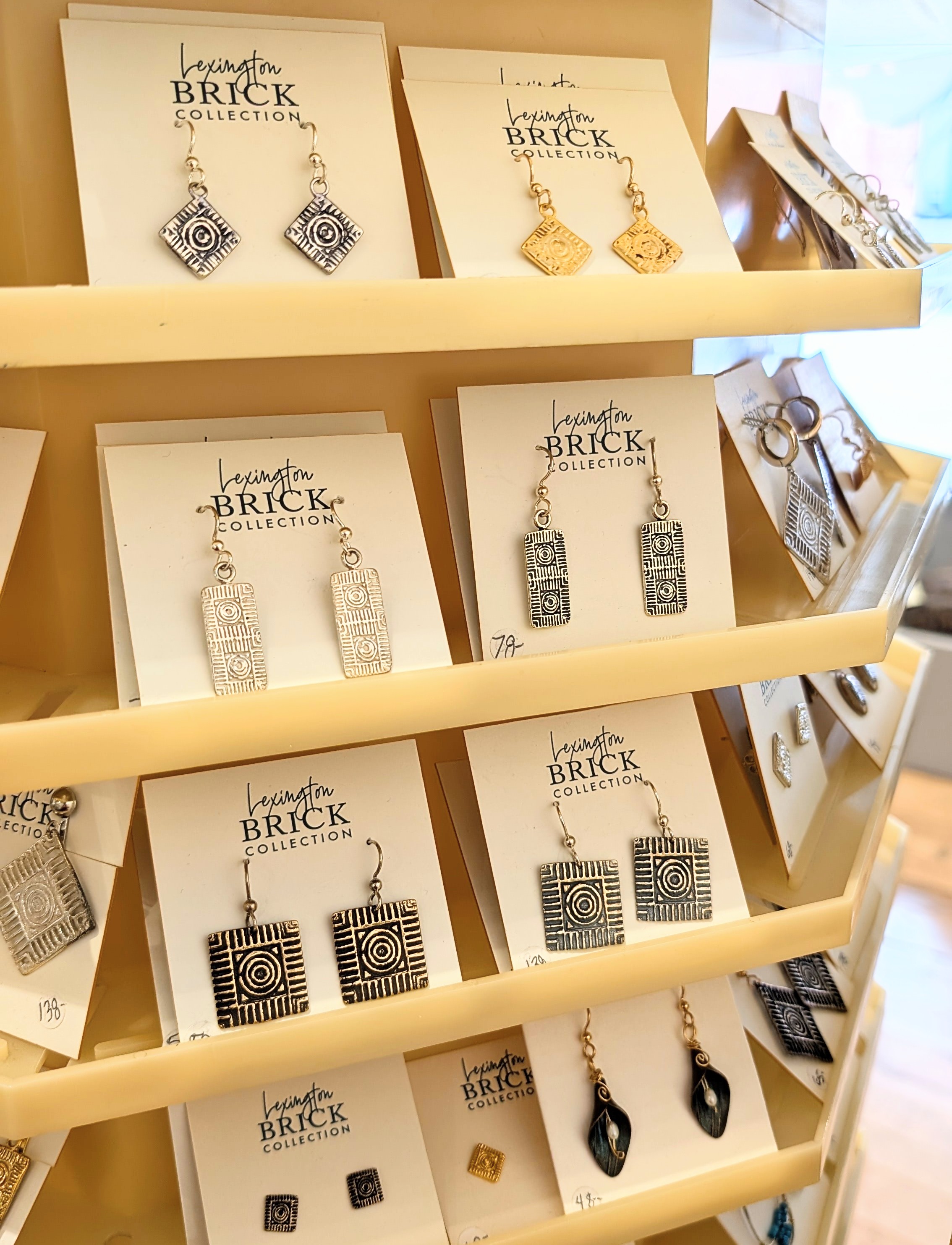
In a nutshell, jewelry and pottery. I will say, my background in college is cultural anthropology and so our little slogan is 'not the what, but the why,' so we do a lot of symbolic jewelry and our products have a lot of symbolism.
What inspired you to start creating?
Well, absolutely my mother did. She was teaching child psychology in Buena Vista. Before Southern Virginia, there was a women's college there. It was called a junior college – a two-year program for women that would go there and then usually transfer into a four-year program. She taught child psychology. She had gotten her doctorate from UVa and when the school started to go through the transition, becoming Southern Virginia, she became the academic dean. During that time there was a pottery studio at the school. With the academic dean thing, there was kind of a lot on her plate. She went from teaching, to like hiring and firing the people she had worked with. I think it was a lot of stress, so she started making pottery.
At that time, there was a man who was a painter in Lexington, his name is George Makinson, and he didn't want to sit in a shop all day long to sell his work because he wanted time in the studio. So he gathered together a handful of artists that would share the time to sit in the shop and my mother was one of those people. That was the gallery Artist in Cahoots, that's how that got started. I was watching this all unfold as a teenager when I was growing up. My senior year of high school, I had an independent study where I worked with my mother as part of my high school degree.
High school is when I started and I went to Hampshire College. I studied how the identity of the Pueblo Americans changed with their pottery because of tourism – they started to make pottery to appeal to Americans that were moving out west and how that changed the culture of their artwork. That was my senior thesis. It was just interesting to apply that to what I had grown up with at my home, with my mother being a potter.
What motivates you to keep making your art?
I was going to get my masters but I started working with my mother, who meanwhile had taken a sabbatical from Southern Virginia to focus on pottery for a year and to have a change. She loved it so much that she never went back. The two of us started working together on the pottery and the jewelry. At that time we started, the Japanese invented a type of material called precious metal clay, where they powdered silver and gold and mixed it with a synthetic binder so that you could make pieces just like you would with clay but when you fired in your pottery kiln, the ending result was the metal would just melt together in exactly the form you'd left it in. It enabled us to make metal pieces. So all of our jewelry had been hand sculpted pottery clay and our pottery was pottery.
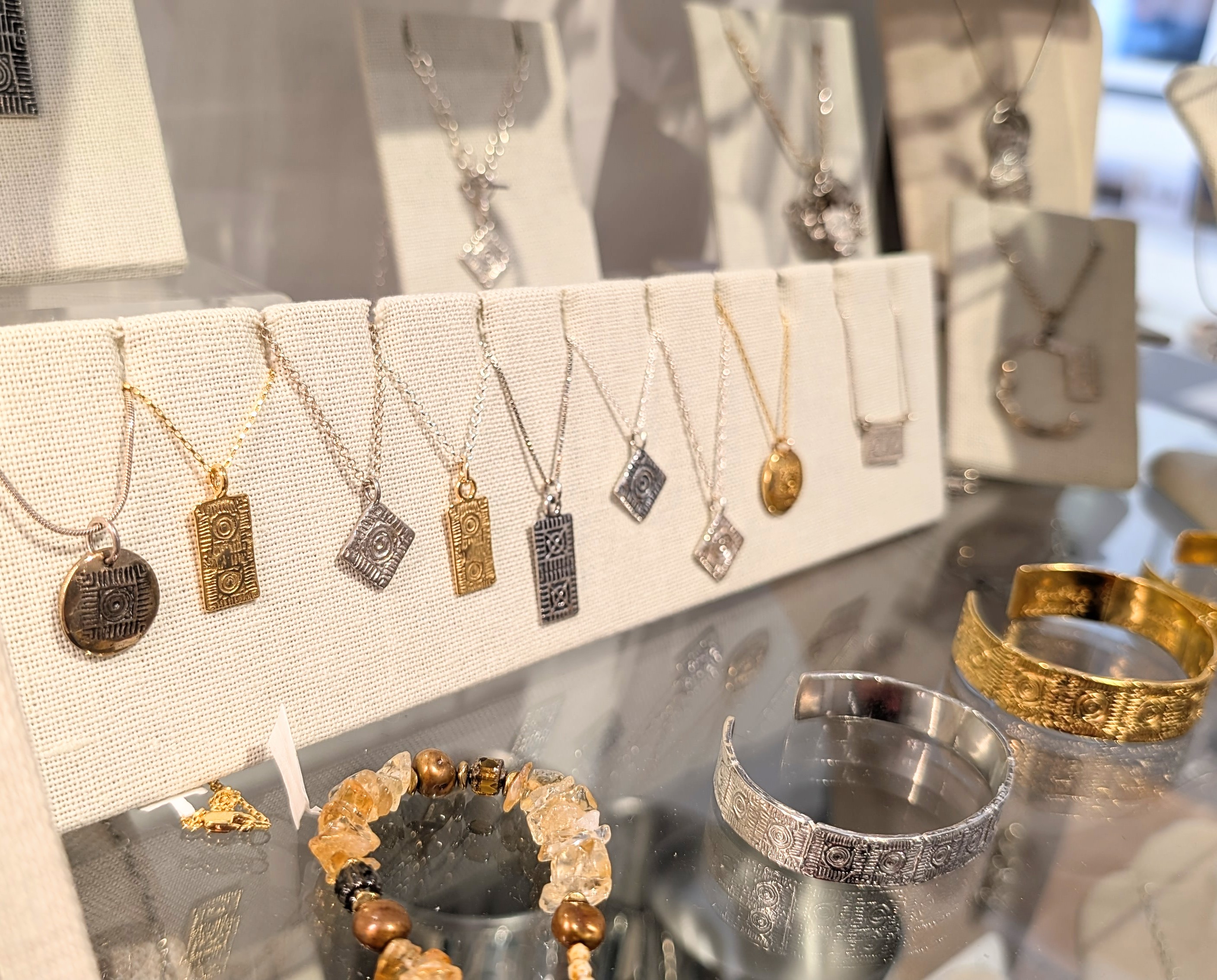
I grew up on Jackson Avenue and the Lexington bricks are right outside on our sidewalk. My mother, she took the back of a Bic pen and a toothpick and just made the circles and put the hashtags around it and did that in that precious metal clay. Doing that brick design sent us on the trajectory of learning about those bricks, the design, the history of them and why they're significant in America. They're a big part of my inspiration.
From the 90s, every law student that would see our brick jewelry would say, 'have you trademarked this?' and I would say no. I didn't understand what a trademark was and a copyright but finally I did understand and we did trademark the brick. So we have five trademarks with that brick design. I'm trying to brand our pieces but I also really want to save the integrity of this design. The Lexington people are very passionate about this brick design; it's been in our history. I'm not claiming I made the bricks and that I made that design. What I'm claiming is for the brick jewelry and the pottery that we make -- that these are the products that I'm doing. I've protected other artists with this trademark, mostly in Artists in Cahoots, but also Cabell Gallery had some artists. I've never charged anybody for the use of that. I don't think people understand that I understand as much about the history of the brick. I don't take it lightly. I certainly need to learn more and research more about it, but I'm in a tight space in Lexington where I want to honor the artists who use that design. I don't own the history of that design but I do want to preserve it and celebrate it.
Are there any artists you take inspiration from?
I was in Sally Mann's book ‘At Twelve.’ I was one of the 12-year-olds that she photographed and so of course I love Sally's work. I feel like I've gotten to be a fly on the wall of her career as a 12-year-old, and then following what I would read. I did have a chance to chat with her. So I'm seeing her be, like, an average normal person (we babysat her kids and she was just our neighbor) and seeing her go to this sort of crazy stardom. When you look at the onion layers and just see her as a really creative, thoughtful person that was moving in that space, it kind of gives you inspiration. She's worldwide famous now and to look at the small steps that became big steps, that became who she is as an artist has been an inspiration for me.
But my mother, as far as seeing her go from professor and working with schools, and then taking that leap of faith, 'I'm not going to take the six figure job anymore, I'm gonna do art downtown' and to ‘follow her bliss’ kind of thing. It's been an inspiration.
What sorts of feelings or ideas do you express in your art?
Well, I've told you that Lexington brick, that design, growing up with that and kind of celebrating it as a true American symbol that kind of got paved over and is re-emerging.
The other piece that I'm very excited about and proud of is the dyslexia symbol. My son is very dyslexic and, as a parent, I had to really dig in deep to not only help him in academics but his emotional side – when you're neuro-diverse and you're approaching everything from a different space. So I was part of a grassroots movement, Decoding Dyslexia, which was a parent-led grassroots movement. A lot of my friends went on to get degrees and certifications to train dyslexics how to read and my piece with that was, 'I want to create a symbol.' Just like the Lexington brick, or we've worked with other groups like National Cherry Blossom Festival or Martin Luther King Foundation, different groups to brand the message and advocate for something. So the dyslexia symbol is four circles which are the letters p, q, b and d and all the sticks of the letters would be in the center, and they're surrounded in a circle that's kind of like the circle of life, holding them all in. That symbol has been a major part of the last 15 years for me, helping my son and helping other families, to understand dyslexia. That symbolism, advocating and helping other people, and caring as meetings, that's inspires me a lot.
How does it feel when someone buys your art?
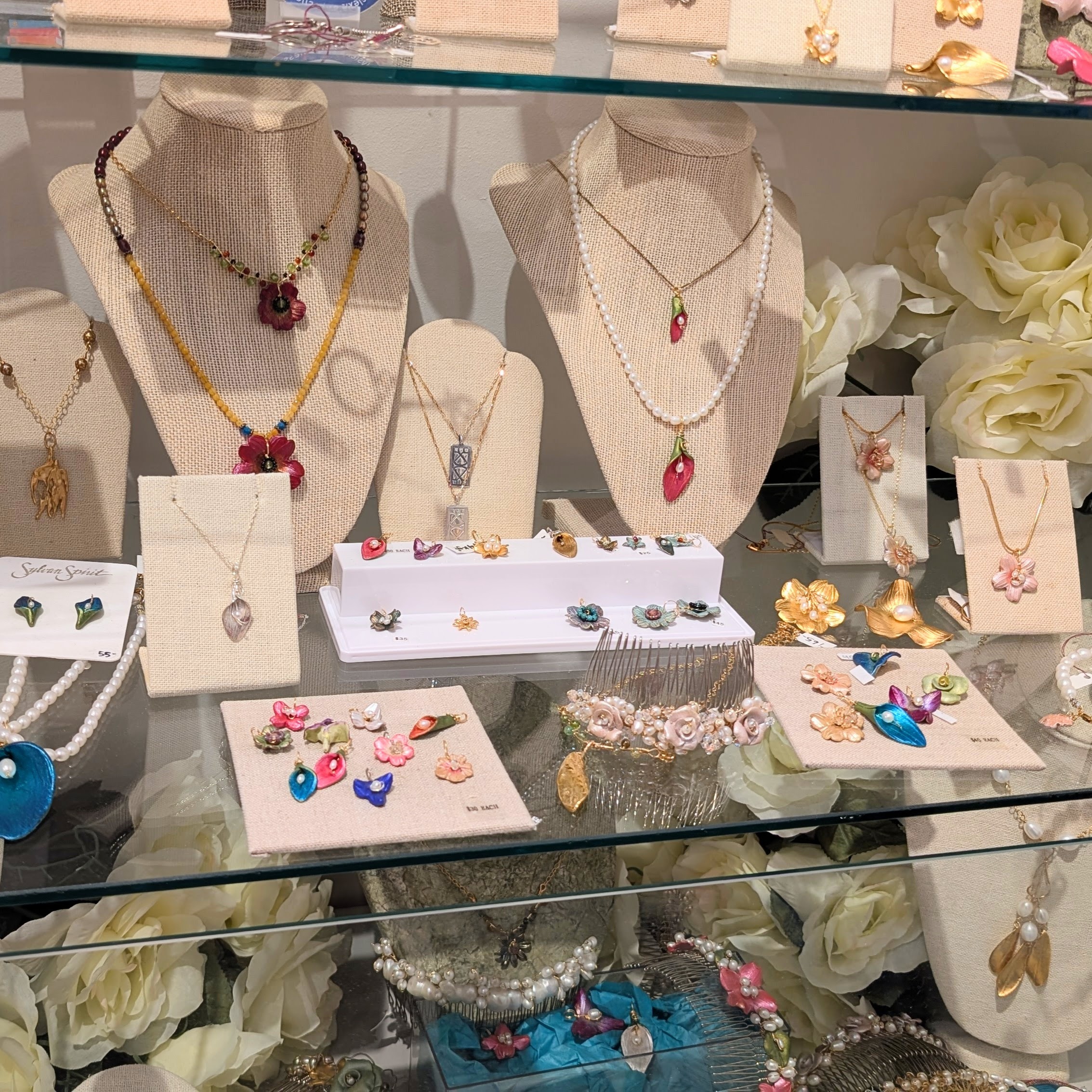
You know, one of the big things that we started, before we got into the metals when we were still doing the clay, was we made hand-sculpted flowers with pottery clay. We did a lot of weddings and, I know this sounds crazy to some people, we also did funeral jewelry. We did some burial pieces, like necklaces for women that they would be buried in.
So those are super intense examples, like celebrations of mile markers but even now, our jewelry, it's because it's bigger, sculpted and its hand painted, it's colorful – it’s gone through the cycle of 'everything's popular again.' It's coming back around and some of the shows I've done recently, the younger women in their late 20s and early 30s were buying my big colorful flowers and it was making me really happy to see the younger women coming back to it.
I'm always touched when someone buys artwork because to me jewelry is such a personal thing, especially like a wedding piece. The thing that you wear your head when you walk down the aisle, that's kind of major. The dress is major too but anything you're putting on your body. And then the funeral jewelry, that's like, the last thing people are gonna see.
So those, yeah, but it doesn't have to always be such a huge piece. Like, I'll do an art show and the people are like, 'oh, don't you hate when people can't make up their minds?' and I'm like, 'no, I love to see them tormented over which flower and which color, which size because I know they're really thinking it through and they care.' So that always makes me happy.
Do you have any advice for aspiring artists, at any stage of their lives?
There are so many places to go with that. There's such a business side of it, as far as making it work. I feel very blessed to be able to say that it's my full-time job and I take a great amount of pride in self-employment. When you check those boxes, who your employer is, and I can write 'self,' I just feel immense pride with that and job security.
No doubt it was my mother and I's partnership, but when I had my children, she told me, 'this is gonna be the hardest thing you've ever done' and I'm like 'ah, I'll do it in the evenings. I'll make earrings.' And I was, like, flat on my back asleep in the evenings. So she helped me through with that. Now she's 83 and she can't always do what she wants to do with it and I'm like, 'I got you mom. You had that for me.' We both go to these art shows, work our asses off and divide the money at the end of the night. Sometimes it wouldn't be that much and then she'd go buy my kids all their clothes for school, or something. It sort of seemed like it was almost the same pocketbook. It's so hard to make a living as an artist when you're all by yourself and you don't have another income. If you have a spouse that has an income and they can pay the bills, that helps. It's just hard and I don't want to tell people, 'just follow your bliss and start doing macramé.' I mean, you can't pay the bills. You kind of have to make it a side hustle until it's the main hustle, but I felt blessed where I was doing it with my mom.
I guess I would be like, you really do have to find your village. You have to find your tribe and for me it was with my mother but it was also with Artists in Cahoots. I love the little community. It's a really great group right now. It's about 12 of us and we all kind of have each other's back. We run that shop together so nobody has to sit and work retail day in and day out, which is pretty miserable. We just do a couple times a month and we're on the show together. So, I think it would be to find your tribe, find your people.
This would be another big piece of advice: you cannot wear all the hats in a small business. If you want to make your jewelry and pottery, or your paint your paintings, or take your pictures you might also be a terrible bookkeeper, or you might be a terrible resourcer – to buy your raw materials, or you might hate sitting retail and everybody wants to meet the artist so you have to sit in retail. So hire that out. Don't do it all. Get someone else to help you with it. For my mom and I, it worked really well. We have very different personalities and we were able to divide and conquer, but if you don't have your mom working with you or you don't have a partner, then hire that out. I've watched, with dyslexics, they're so good at some things and so bad at other things. You just simply have to cut bait on the things you don't like to do. It's not even not being good at it. If you don't like it, you're not gonna do it.