This interview series will be exploring a pillar in our community: religious organizations. The News-Gazette prints a “Rockbridge Area Worship Services” page and there are no fewer than 70 houses of worship on that list. The services represent numerous denominations, including but not limited to, Methodist, Baptist, Non-Denominational, and even Buddhist. Locations of these services can be as far away as the Greek Orthodox Church in Roanoke, but about 30 of these services are right here in Rockbridge.
In this series, we’re going to talk with the area leaders of a wide breadth of denominations, religious organizations and groups. We’ll learn about how they view their place in this area, the diversity of beliefs in our community and their opinion of how religion affects people and their community.
This week, I spoke with Tuck Bowerfind from Grace Episcopal Church.
How long has this church been here in Lexington and how long have you been with this church?
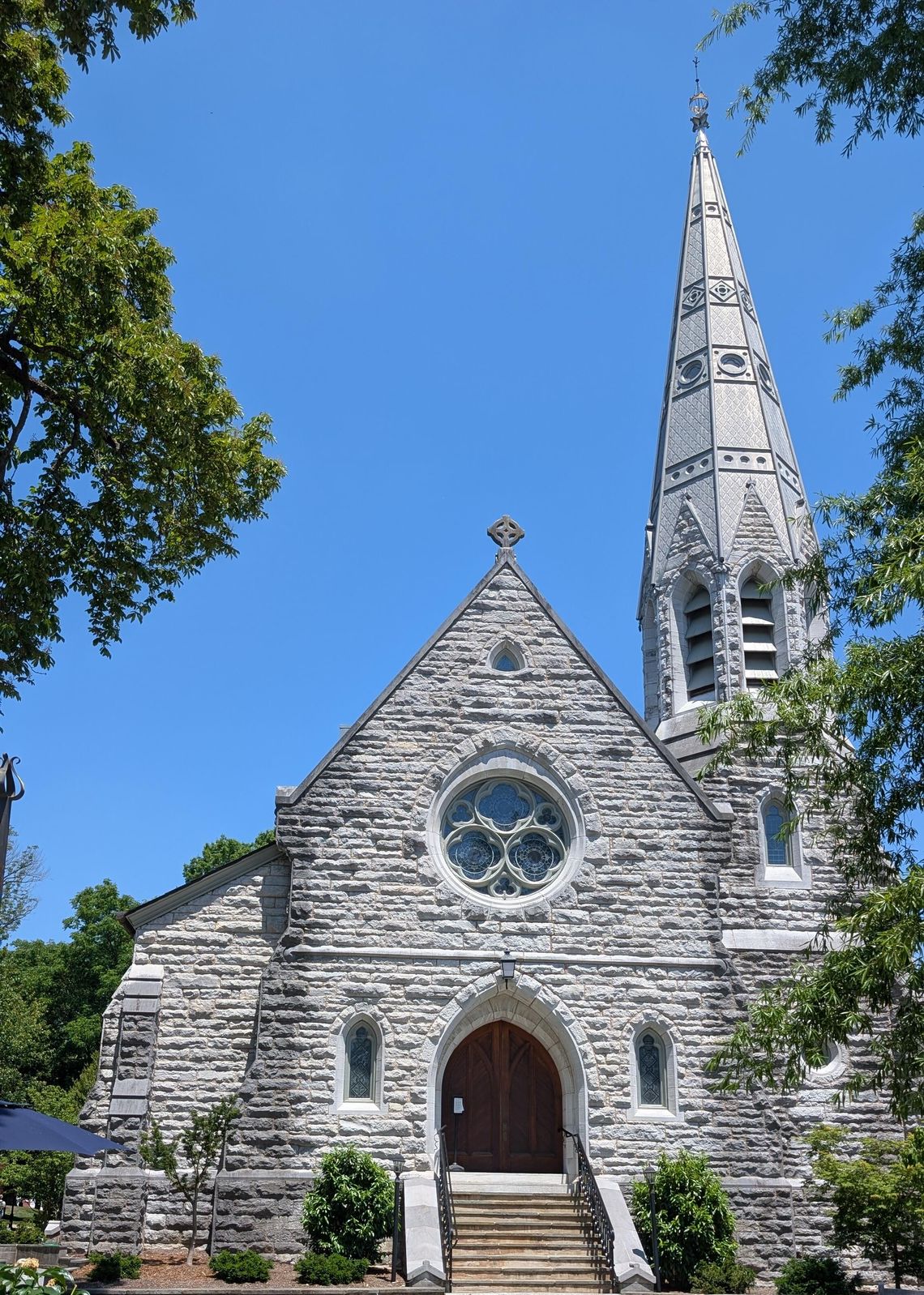
Since 1840, but at that time it was just a couple of founding members. The first building was in 1844. And then the building next door was built in 1883, that would replace the original building. I'm originally from Cleveland, Ohio. I was at a church in Alexandria, Virginia for 16 years and then accepted an Invitation to come here in December 2019.
Why do you think there are so many churches in the area, and especially just in Lexington?
I don't think there's an unusual number. I think you'd find it's not an extraordinary amount but one of the reasons is because the churches divided denominationally. So, originally Lexington was primarily Presbyterian and didn't have many churches. When this church began in 1840, there were only three or four Episcopalians here. What brought the Episcopalians was VMI because a lot of the members of VMI came from Tidewater, Virginia. When VMI was established here, a number of the leaders of VMI and students came from the Tidewater area which was largely Episcopal. So that sort of brought the Episcopalians in here. Then, different denominations arrived in the area at different times and each denomination began to establish its own congregation.
Another reason there are a few more than you might normally find is because there's a white Baptist congregation and a black Baptist congregation. There is a white Methodist congregation, there's the integrated black Methodist congregation. The Episcopal Church has this church, but then Saint Paul's is an Anglican Church. The Anglican Church, that denominator split off from the Episcopal Church when we ordained women. So, part of the reason there are all these different buildings is because the church can't get along with itself. It's not the way the church was supposed to be. Church was supposed to be where people love each other. But the church got co-opted by, or embraced, the attitudes of empires and when it did that, it began operating according to the rules of exclusion not the rules of inclusion. As we operate according to the rules of exclusion, we started dividing up into more and more groups. Now we're trying to find our way back.
Why do you think churches are typical elements in all cities, big or small?
Churches, synagogues, mosques, religious groups and organizations - human beings have always had an intuition of the divine and the long history of revelation. Trying to pay attention to that intuition, as well as to the revelation of the divine to us, resulted in some sort of set of rituals and practices in every place where people gather.
In some countries, the government has established certain religious practices and they're nationalized. In our founding history here, here's always been a multiplicity of religious groups because a lot of people seeking freedom to practice religion came here when there weren't any specific laws limiting it. There were already religious practices going on here through the natives that lived here. Some colonists were more sensitive to that than others. Some of them embraced an imperial attitude that led them to embrace the idea that they were justified in driving out people who were different from them, believe differently.
They're not that different. We make a big deal out of little things so we can fight with each other. We all want to be the winner so we have to define narrow ways to compete. The problem is that at a certain point, we turn away from the thing that we're fighting over and we start fighting over each other. That's Cain and Abel, Romulus and Remus. That's very human. So one of the things religion is here for is to help us remember: we can try to imitate God. And if we have a true vision of God who is love, we try to compete in love. Competing in love is trying to give to others, not to take. If we can take a breath and remember who God is and what the truth is, then maybe we can return to giving as the thing we're competing over. Be the best givers. You get a little bit less caught up in fighting over getting more for yourself. And if you can do that, we can live a little bit more in peace and justice with each other. That's the sort of the goal. That's what the message of Christ, of the Buddha, or God in the Old Testament, God in Islam is - that we need to be loving, not abusing each other.
What effects do you think religion has on a group of people or a community?
The goal of most of our religions is to draw our attention back to God, who's The Giver and who is so far above us that we can't try to be God. But we can try to do the works of God. The works of God are to be generous, to establish justice with equity, meaning there's no preferential option either for the rich or the poor. But those who have, have a greater responsibility because regardless what the law says, the reason that we're entrusted with wealth is not so we can get more wealth. The reason we're entrusted with wealth is so that we can help those who are suffering. So religion is, I think, trying to help us find that way of living in love and charity with one another.
Sometimes, different religious messages proclaim that has to do with judgment and condemnation and exclusion. See, I don't. From my perspective, I don't think those are the messages of God. That's the lie that we sometimes promulgate about God - that God is judging and excluding and condemning. But the truth about God is always that God is liberating. God has a deep care and concern for the inclusion of all people, for us to love all people and for us to take care especially of those who are in any kind of need, sickness, or trouble.
What do you think your religious organization brings to our area?
The Episcopal church brings a long history of a democratically, and I mean this in a nonpartisan way, organized form of conducting our religious life. And one of the impacts of that is that we respect rigorous debate. We respect the role of reason in revelation. I think largely because of some of these characteristics, Episcopal has been a leader in ordaining women, and then ordaining and opening the doors to LGBTQ people, and in confronting (not always effectively) at least the sin of racism. I'm not saying that the other denominations don't do that, because they also have. Many of them have long histories of very democratic processes and are in a very similar place, but there are some denominations that have kind of shut off that rigorous democratic form of debate and have prioritized certain principles or articles of faith.
Changing our name back to Grace, which was the original church name, was emblematic of an attempt, not to say anything about Robert E Lee, but to try to say that we are not aligned with the white supremacy that the Confederacy, for which Lee fought, was deeply aligned. and that the church can't be the church in truth unless it can figure out how to be Inclusive, welcoming, inviting the people of all sorts and conditions, races and genders, because God loves us all. We gotta be reflective of that, in some way.
And so that remains to be challenge, in part because of these deep historical divisions and in part because each congregation develops a style of worship. We trend to use classical music, traditional hymnity, and we have a traditional liturgy that may not necessarily feel welcoming to everybody, but we are. If people were to come to us, I think they would discover that. But we are peculiar, you know? We're peculiarly traditional in certain ways but that's the nature of every congregation. We have our own peculiarity. I think it's very important for all of us to try to be critical of ourselves and try to address those things that may be keeping some people from feeling like they're welcome and included in our congregations.
How would you describe your congregation’s demographics?
We're about 99 percent white. Average age is probably over 60. When we went through the name change, we lost a lot of our younger families because, I think, probably they didn't want to be in the middle of a congregation fighting over its name. We have a few younger families. A lot of our members are retirees. We have a few members who are younger college professors and their families.
How has your service attendance been over the years?
We're back to about our pre-COVID numbers. It depends on what time frame you want to look at. This church's attendance began declining before COVID. We're not back up to the numbers of people that we had attending, say 20 years ago, but we are back up to the numbers that we're attending 2018-2019.
Have you seen any changes, shifts, or evolution of the area?
When I think about during COVID, we lost our last teacher of color in the public schools and our last black owned business in Lexington. There has been an intentional effort by the NAACP, Stephanie Wilkinson, and others in the community to try to rebuild black owned businesses in the community, as well as to recruit and retain teachers of color into our schools.
Our faith demands that we treat every person with dignity and respect, and that we work to make the law just, not just to enforce the law as it happens to be. I've seen that, within Lexington, this desire to be critical of the way the law is and to make sure that we're trying to continue to do things that support the dignity of people of color, of black lives in our community where you have people of all sorts and conditions. In this last year, there's been a great coalescing of groups in our community around the issue of housing and security. And so a lot of us are beginning to work together to try to make sure that there are both effective ways of keeping people in their housing, and effective ways of rapidly rehousing them if they lose housing. Also, addressing some of the causes of housing instability, including lack of affordable housing, where the vulnerability of certain people to the economy or to violence are. Trying to figure out how to help people stay in or return to permanent, secure, decent housing is essential for the well-being of our entire community. We've seen that here and that's been great.
So, efforts of people to ensure that we try to support new black owned businesses and recruit and retain teachers of color, because every child in the school system benefits when they have teachers who reflect diverse backgrounds because that's the world they're going to be living in and because just having diverse perspectives is part of education, especially in a democracy, and then there's this effort to make sure people have access to secure, decent housing - I think those are great things going on right now.
How do you see the future of this area?
I'm very optimistic about the future of this area but I do have to say, there's another component to the future of this area that we have to be really, deeply sensitive to and aware of: the agricultural community that surrounds us. We have wonderful agricultural resources in this area, the farmers market is a great example, but in general we need to really support initiatives that support healthy soil, nutritious food systems, access to food for Campus Kitchen and other groups that are trying to make healthy food available throughout our county. Also, support local farmers in raising healthy food for all of us. If we can work together on that, I think the better our future is going to be.
I'll share one other thing that I think Grace, in particular, is sort of interested in and that is a more human justice system, especially a more human system of incarceration and punishment. We would deeply support diversion of people who have drug or alcohol problems into drug or alcohol rehab, rather than to incarceration. We have a program where we try to help returning citizens adapt to life outside of prison and be able to find healthy lives here in the community. We support any other ways that we can of trying to help people avoid incarceration and get the help and treatment they need, through other systems rather than through using the prison or jail system to warehouse people or simply to punish them instead of helping them to address the problems.