This interview series will be exploring a pillar in our community: religious organizations. The News-Gazette prints a “Rockbridge Area Worship Services” page and there are no less than 70 items on that list. The services represent numerous denominations, including but not limited to: Methodist, Baptist, Non-Denominational, and even Buddhist. Locations of these services can be as far away as the Greek Orthodox Church in Roanoke, but about 30 of these services are right here in Rockbridge.
In this series, we’re going to talk with the area leaders of a wide breadth of denominations, religious organizations, and groups. We’ll learn about how they view their place in this area, the diversity of beliefs in our community, and their opinion of how religion affects people and their community.
*Interviews have been edited for clarity and length.
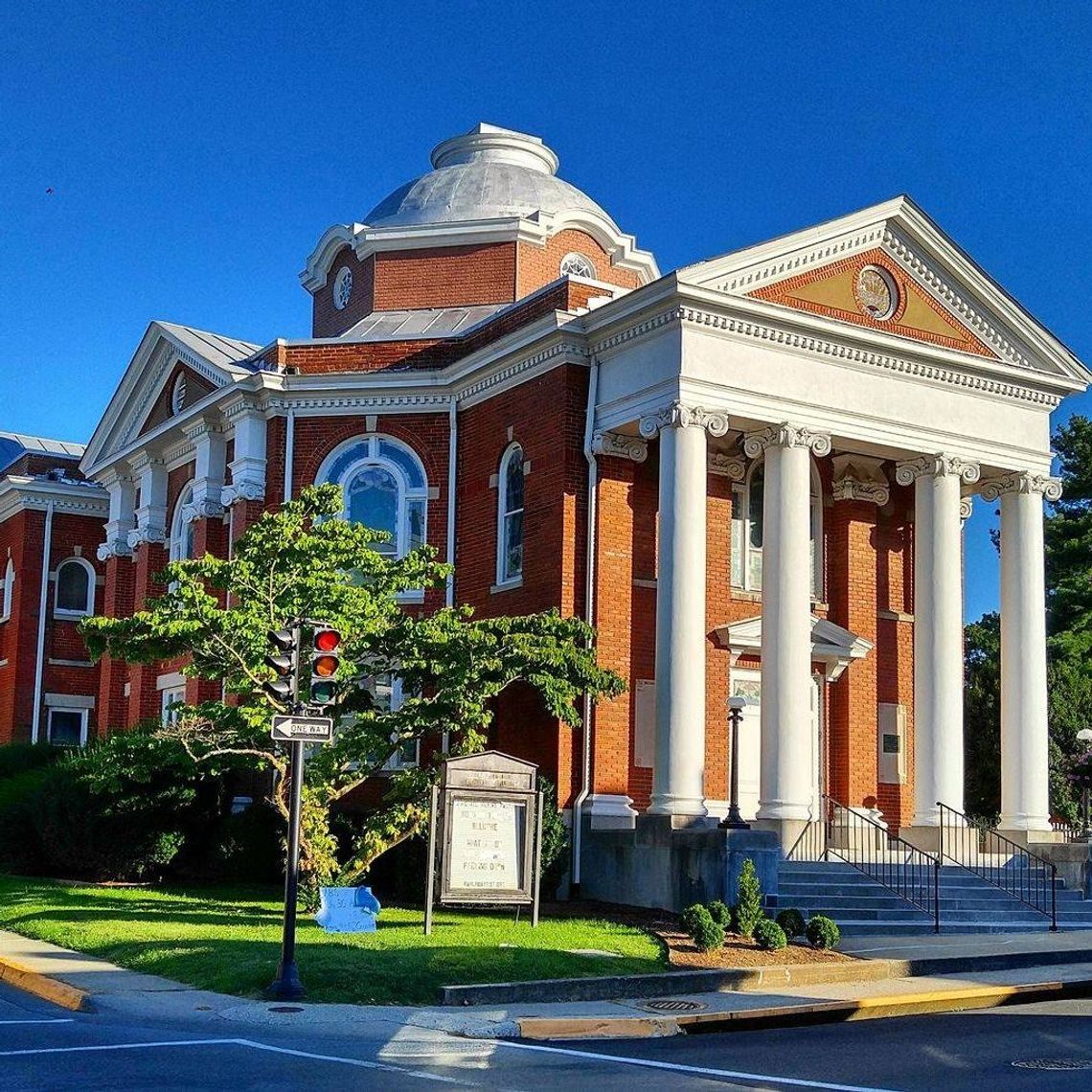
This week, I spoke with Skylar Daniel, pastor of Manly Memorial Baptist Church
How long has this church been here in Lexington and how long have you been with this church?
Since 1841. I've been here since 2022.
Why do you think there are so many churches in the area, and especially just in Lexington?
I think that, historically, you went to church where you could walk, within your denominational profile. So you couldn't have just one Presbyterian Church in the city or in the county, especially as theological denominations divide and things like that. Most churches in the good old days, let's say the ‘60s, they were still just running maybe 100 - 200 people on a Sunday. More people went to church before everything was open on Sundays and people had to work. I think the city actually demanded that many churches. In fact, I think it still would if people wanted to go to church as much as they used to, or could go to church as much as they used to. So I think we have, in a certain way, the right amount of churches but we don't have the right amount of people going to church.
Why do you think churches are typical elements in all cities, big or small?
One of my favorite quotes is by a guy named David Dark. He says, "Life's too short to pretend you're not religious." So there is a religious impulse within every human being on planet Earth, I believe, even if you are atheist or something like that. This is true of anywhere you go. I mean, any old ancient city you dig up, you will discover the exact same human impulse. So there is something fundamental to human survival and flourishing about faith. That's why there's so many churches in this town.
What effects do you think religion has on a group of people or a community?
I think that the effect of religion can go one of two ways, and maybe both at the same time. The first way religion can affect your life is it can help you make sense of the world around you and help you feel like there's some sense of control and order in this world. Another, different, way that religion affects you is that it can help you look deeper within and challenge yourself to change and become something better, different, more life-giving, and more loving for the world. In certain ways, those two things can coexist.
I think that a lot of religion tends to focus on the first option because it demands less of you as an individual. It demands less courage. It demands less vulnerability. So to the extent that our churches and our religions are really focused on control and making sense and understanding, it can lend itself towards greater judgment, greater hierarchy, things like that. But this more inward path, that I think the best of faith and religion can generate, I think that's where religion shines the most. I think that when you look at the Saints or the world changers of history, they were all honed in on that second effect of religion - which was 'how can my ego die and I can surrender to the love of God for the world?'
As a pastor, I really try to push our congregation to come to church to worship God, to work on ourselves, and to offer belonging to one another because oftentimes people come to church to work on one another. That's really unhealthy. That is a very common effect of religion; that 'this is a way for me to work on other people who are different from me people.' This kind of hierarchy is a ladder, it's a contest. As a pastor, I'm really trying to always get us to look inward. We're here to work on ourselves.
What do you think your religious organization brings to our area?
For starters, I think there's about 200 people in this congregation. I believe that to the extent that they engage in this church, some people only occasionally show up and some people are here three times a week, those people are more emotionally grounded. They are more grounded, more peaceful, more compassionate. They are better citizens due to their involvement in this church, than they would be if they weren't in church. They may still be kind of jerks, we all are kind of jerks to some degree, but they are less so because they are here. They are better neighbors to you, to anyone who doesn't go to church here, because they are involved in this church. That's the number one thing and that is huge.
There are people who may have taken their own life if they did not have their faith, their church, and the hope and love that they find in this place. I can testify to the testimonies that have been given to me of people who, because of this place, that their life was changed for the better and that made them better family members, better neighbors, better employees, better all the things.
Beyond that, our church is always very involved in this community and serving this community. We donate tens of thousands of dollars to non-profits. We collect truckloads of school supplies for the children of our local schools every year. We help Habitat for Humanity, we help RARA, we help Unity 4 Kids. Young Life, we let them use our building. They have a free office here. We have support groups that meet in our building for free. The Historic Lexington Foundation meets here for free. We are very much in service to this community, pretty much every day, regardless of where or if you go to church.
How would you describe your congregation’s demographics?
I really enjoy the socioeconomic diversity of our congregation. We do have everything from millionaires to extremely poor people. People who live on poverty wages, who live in slums. In our congregation we have people with PhDs and people who barely squeaked out of high school. Our congregation leans kind of blue collar, working class, so a lot of people in our church don't have a bachelor's degree or at best have a bachelor's degree. We have farmers. That's something I really enjoy about this place. It's very difficult to keep a farmer and a W&L professor in the same congregation but it's beautiful when you can pull it off.
How has your service attendance been over the years?
This church was declining until after the pandemic. During the pandemic, it was horrible. Then, as I think churches were all kind of reshuffling and rebuilding after the pandemic, ours is in a better place than it was in the last, probably, 10 or 15 years. We probably run about 120 on a Sunday.
Have you seen any changes, shifts, or evolution of the area?
I just can't positively say I've witnessed it, coming in here in '22. I've been able to lead a lot of positive change for this church that my predecessor just couldn't swing. I honestly think it was because he had different battles he had to fight, that he got done before I got here.
I grew up in a county almost precisely the same as this county - very small, same amount of people, totally agriculture. The only difference is it only had one college instead of three. So that town had so much more of a locked-down, close-minded, us-vs.-them, us-vs.-the-world, and all that kind of stuff. Whereas this town, I just think that the churn of the universities - the contact the people have with newcomers, it wears that down a little bit. But I've heard people say, this within our own church, 'in this church, I was still considered a new person after being here 10 years.' It's like, 'No, you're good now.'
How do you see the future of this area?
I just don't know. The future, I think, depends on what the community decides to do about housing. I mean, there's nowhere to live, there's nowhere to move into. If we wanted to, we could grow the population of this county a lot and that would change so much if it did. But honestly, probably the easier thing is not to do that. In certain ways, at least in the short term, is to not develop more housing and things like that. Because if more people move in, that's more newcomers, that's more racial diversity, more diversity, all of that shapes everything.
I mean, what do I really know? I don't have a crystal ball. I'm just a preacher. I just intuitively sense that when I talk to my people and their struggles with housing, their struggles with recruiting professionals for their various things, people can't move here. I don't know what it'll look like. I think that it largely depends on what happens in the housing industry.