This interview series will be exploring a pillar in our community: religious organizations. The News-Gazette prints a “Rockbridge Area Worship Services” page and there are no less than 70 items on that list. The services represent numerous denominations, including but not limited to: Methodist, Baptist, Non-Denominational, and even Buddhist. Locations of these services can be as far away as the Greek Orthodox Church in Roanoke, but about 30 of these services are right here in Lexington.
In this series, we’re going to talk with the area leaders of a wide breadth of denominations, religious organizations, and groups. We’ll learn about how they view their place in this area, the diversity of beliefs in our community, and their opinion of how religion affects people and their community.
*Interviews have been edited for clarity and length.
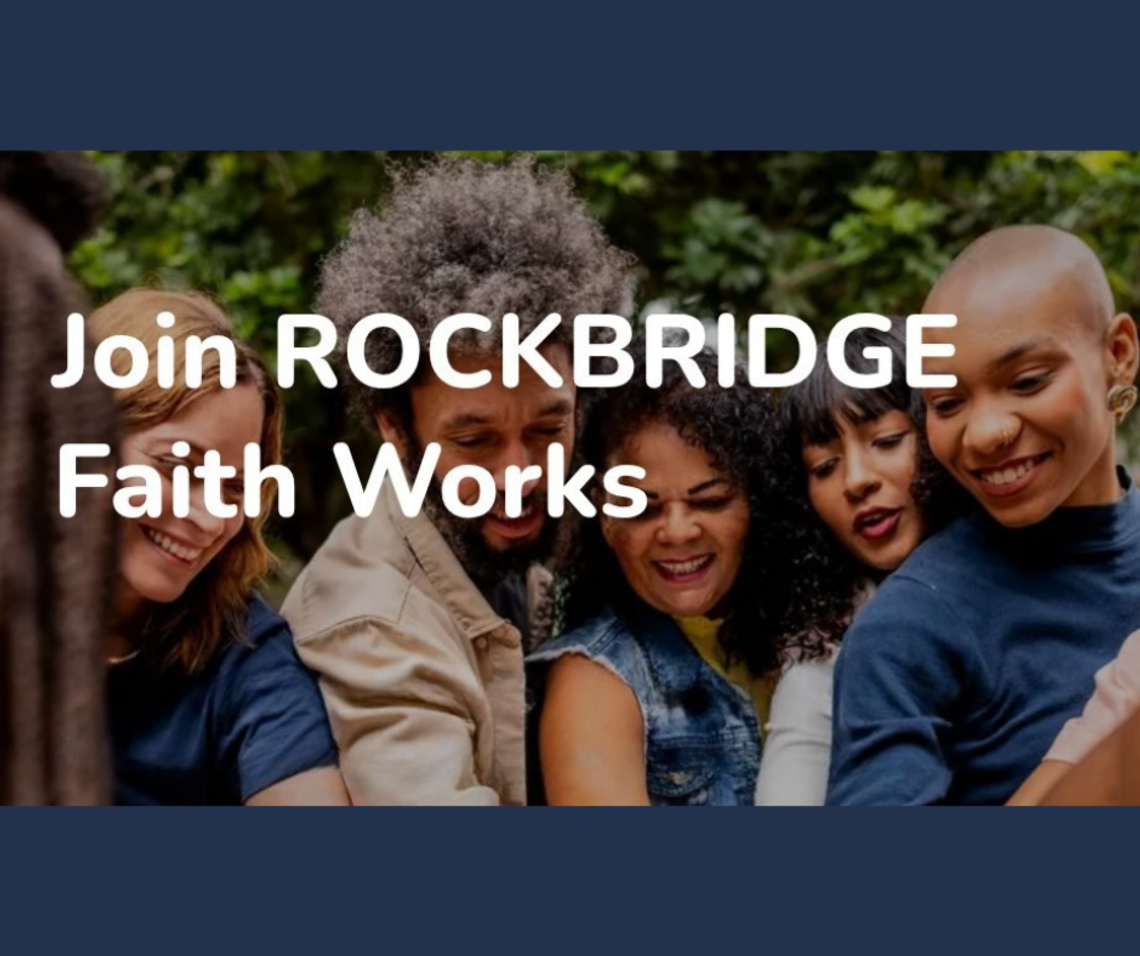
This week, I spoke with Ray Higgins of Rockbridge Faith Works.
How long has this church been here in Lexington and how long have you been with this church?
We started last November. Brand new. The first churches to get involved were Grace Episcopal church and the pastor of Manly Memorial Baptist Church. So those are the two key pastors that started the organization with me.
We're a faith-based non-profit organization, we're working towards our non-profit status, and so we're not a church per se, congregations make up the organization. We help congregations.
Why do you think there are so many churches in the area, and especially just in Lexington?
Well there's a lot of faith traditions here, especially the Presbyterians and others that go way, way back. The Catholic church is over 100 years old, maybe even more than that.
Why do you think churches are typical elements in all cities, big or small?
From my perspective, all these churches have a common set of values regarding "the least of these among us" from Matthew's gospel. They want to do something, they want to affect the issue of poverty. What holds them together is the desire to see, sort of, the kingdom that Jesus taught so much about in all the gospels.
So there's these churches, whether they're Catholic, Protestant, a Jewish congregation, or Muslim, or wherever they come from, they have a set of values they want to be able to sort of act upon.
What effects do you think religion has on a group of people or a community?
Well, we're going to demonstrate that it can bring about a significant social change; that it can bring hope to the hopeless, you know? There's this Homeless Connection we're working on right now. People are living in trailers, campers, their cars, tents. They're not on the street corners but they're hidden out in hollers, they're living on couches, and people can't afford to rent in Rockbridge County. They are a hidden group and so all these churches sort of share that and that's how they're going to become active in the community. We're hoping to bring together a couple hundred people to sort of bring to light this homelessness issue. We're going to invite the mayor, the county supervisors, everyone to come together to make a commitment to doing something about it.
What do you think your religious organization brings to our area?
We're part of what's called The Homeless Connection here in the area that's been meeting to look at issues of homelessness affecting people in the community. It's all the churches coming together. The first issue may be a warming shelter. There's no shelter of any kind for the homeless in Rockbridge County. So that's probably gonna be the most tangible thing that we're working on.
I teach them a model of how to do that by building relationships, doing what we call one-on-one interviews. What makes community organizing a little different than say some non-profits is we don't just tackle one issue and we don't just do charitable services. We really don't do any charity. We work for systemic change. So it's a very civic organization, sort of taking the gospels into the town center.
How would you describe your congregation’s demographics?
We've got about 12 congregations that make up the organization, that run the spectrum: from Rockbridge Church which is about 400 members, to Grace Episcopal Church with about 150, to Manly Memorial Baptist Church which has about 120 active on Sundays. We have some churches out in the county: Collierstown Presbyterian Church, Collierstown United Methodist Church, New Monmouth Presbyterian church. All these churches have come together to work on social problems like homelessness.
It's a mix of mostly middle class folks. We're reaching out to congregations right now that are more blue collar, so that's sort of the class makeup. There's mostly white people in Rockbridge County so it's mostly a white organization. First Baptist church, with McKinley Williams, was part of starting the organization so Marquita Dunn is another key African-American leader in our organization.
Mostly Protestant, we only have one Catholic church. Father Maxwell is supportive of what we're doing. We are primarily a Christian organization but we're open to all congregations of faith.
How has your service attendance been over the years?
We're just starting out at our monthly meetings. We have 15 to 20 individuals that come to our monthly meeting: pastors, lay people, a collection of people I've met with over the first four months of the organization. So that's our monthly gathering.
Have you seen any changes, shifts, or evolution of the area?
Lexington, as a city, when I grew up there was a Roses on Main Street. It was more of a blue collar town than, you know, right now the upper-middle class sort of Main Street. So that's changed. I remember there used to be a Grand's Piano down here, Sears up the road. Most of my relatives don't even come to Main Street because they don't have any shopping to do here, it's all boutiques. They go to Walmart.
I have seen it change, and a lot of ways change for the good. There's a real openness about Lexington, as far as political beliefs, cultural beliefs, the universities are a great influence. It really is a little melting pot for Rockbridge County. I enjoy that, living here. I think we, as an organization, have benefited from that as well, sort of that little more of a cosmopolitan flavor to little old Lexington.
How do you see the future of this area?
Well, I think we could be doing more for the poor and the disadvantaged and the marginalized.
When I saw that, in some areas of the county, poverty is as high as 40 percent, this is according to [the executive director of Rockbridge Area Relief Association] Lindsey Perez's study that she sent me. You know, that statistic stands out, that statistic is what inspired me to start organizing. Poverty in the county, in Buena Vista, Glasgow, Collierstown, Goshen. These are places with great need, much of it is hidden. My job is to get out there and do one-on-one visits and interviews, and get people active through their churches. In each one of those interviews, I ask for referrals, then those lists are how we build a grassroots organization.
*Comments and clarifications from Lindsey Perez, Executive Director, Rockbridge Area Relief Association:
- The name of the coalition is the Rockbridge Homeless Connection (RHC), which Rockbridge Faith Works is a member of. Rockbridge Faith Works does not speak for RHC (and any future media requests can come to me as the Chair). RHC is made up of nonprofits, local government representatives, law enforcement, and school staff in addition to churches.
- Rockbridge Faith Works is bringing people together through a faith-based perspective to address homelessness and poverty with the mayor and county supervisors separately from RHC.
- One of several possibilities RHC is exploring is a cold weather (warming) shelter, but we are currently focusing on coordinating resources and collecting better data on local homelessness. Rockbridge Faith Works is considering advocating for a warming shelter though.
- The 40% poverty in Rockbridge County stat came from the Central Shenandoah Planning District Commission's Regional Housing Study, not from me.
I have been attending Rockbridge Faith Works meetings as RARA, so there is some overlap.