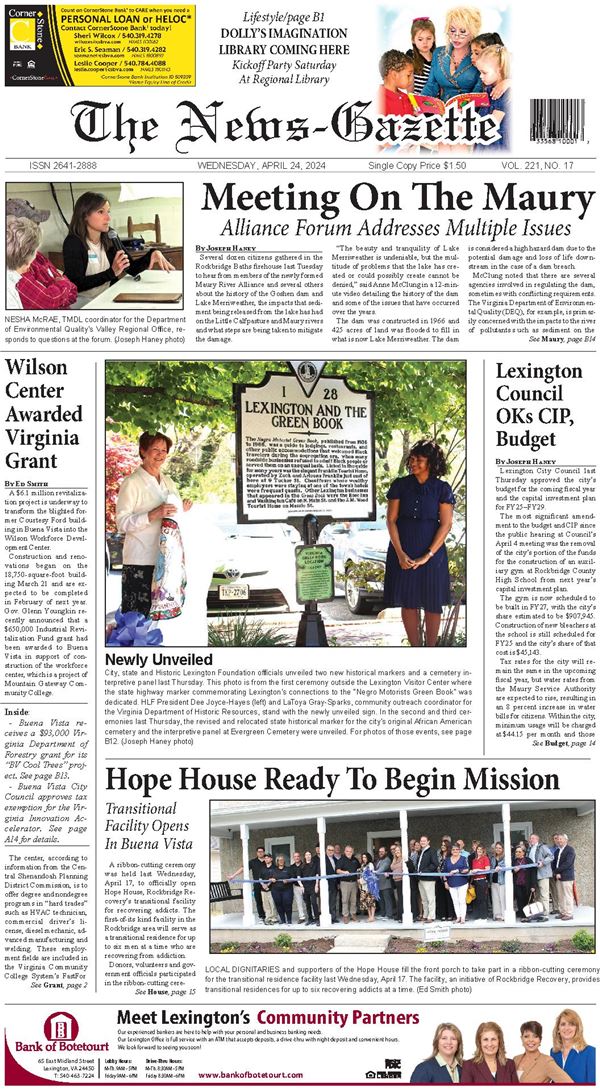
This interview series will be exploring a pillar in our community: religious organizations. The News-Gazette prints a “Rockbridge Area Worship Services” page and there are no less than 70 items on that list. The services represent numerous denominations, including but not limited to: Methodist, Baptist, Non-Denominational, and even Buddhist. Locations of these services can be as far away as the Greek Orthodox Church in Roanoke, but about 30 of these services are right here in Lexington.
In this series, we’re going to talk with the area leaders of a wide breadth of denominations, religious organizations, and groups. We’ll learn about how they view their place in this area, the diversity of beliefs in our community, and their opinion of how religion affects people and their community.
*Interviews have been edited for clarity and length.
This week, I spoke with Drew Ditzel from Lexington Presbyterian.
How long has this church been here in Lexington and how long have you been with this church?
1789, it was founded, no building at first, and this is the second iteration of the building.
[I’ve been here] coming up on four years now.
Why do you think there are so many churches in the area, and especially just in Lexington?
That is a great question. I think that some of it has to do with people having been here for so long and a desire to have a church. When we speak of, like, the differing Presbyterian churches, they wanted their local spot that they were able to get to, pre-cars and things of that sort. We have lots of country churches, or Parish churches as I would call it. Then, I think, out of that, as new ideas and new divisions came about you already had lots of little churches and then people getting upset, wanting to do new things, or being drawn to new ways of doing church. So I think that then created new churches along the way.
Why do you think churches are typical elements in all cities, big or small?
I think people desire to have a place where they're known and where they can get to know people, a place where they're a part of a story that's bigger than themselves. Those are few and far between, I think even now, but there's something about faith in general that draws you and feels like community is more of a necessity.
Even people who maybe don't have faith or aren't as strong still desire those values and I think, at its best, the church provides that. I think at its worst the church hinders that. For a long time people thought a church was a necessity to be a community, striving and engaging in whole living. I think it's still important but some might disagree more now than they have in the past.
What affects do you think religion has on a group of people or a community?
At its best, religion helps people understand their place and grounds them in a place. It allows them to see their neighbor, not as 'someone who is useful or not useful,' 'in the way or not in the way', but for lack of a better term: as a child of God - as someone, as an opportunity to love, to learn, to care, and to lean into who they were created to be. I think at its best, a church cares about and engages the common good. It desires that people have their basic needs met and have the opportunity to thrive. At its best, a church wants to be merciful and to seek justice.
And then at its worst, the effects of a church are increased division, increased fear, and things of that sort. I truly believe that the church has the opportunity to impact people and communities in unbelievable ways that very few other institutions can, but with that comes the ability to harm as well.
What do you think your religious organization brings to our area?
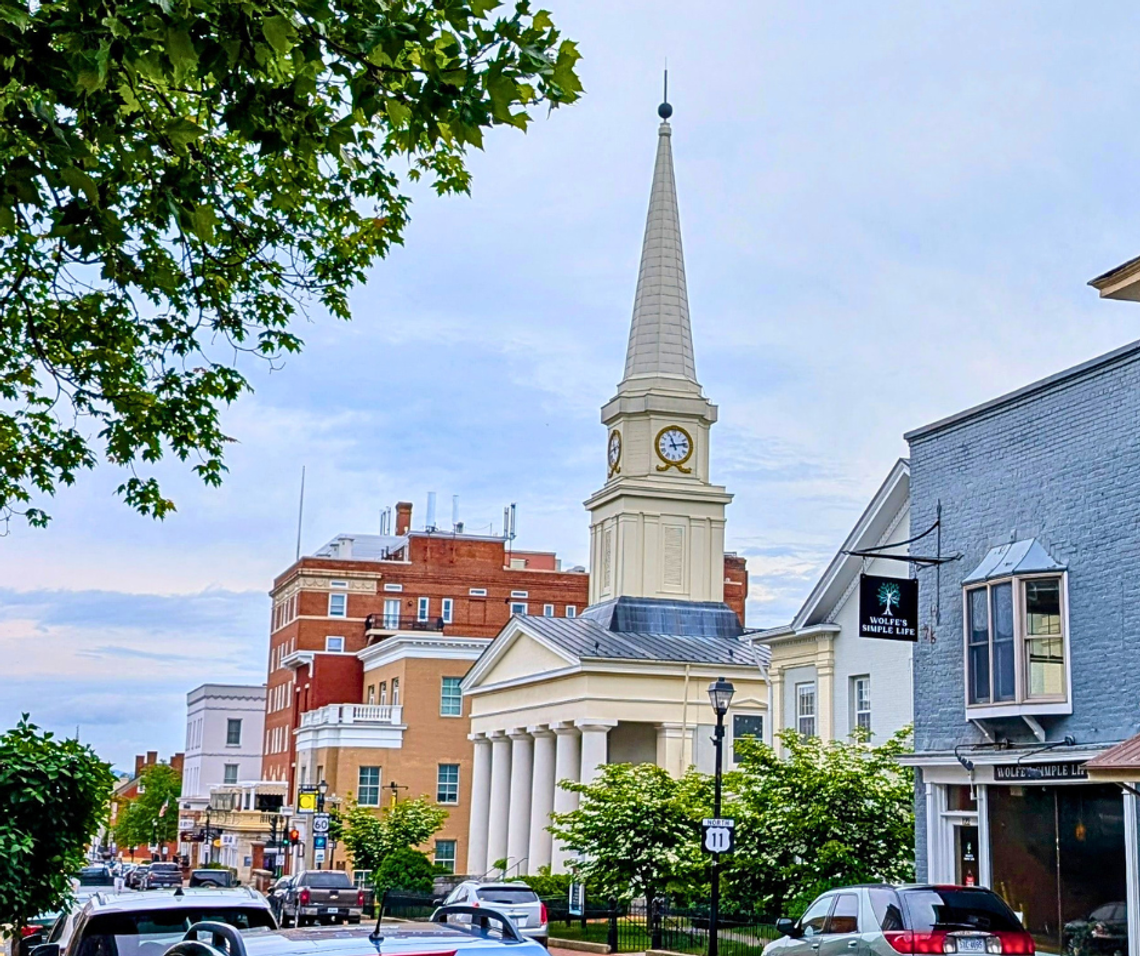
I think that Lexington Presbyterian certainly ties the community in the faith history of this place because it's been around so long. It sort of connects us, in a lot of ways, to our past. As a central geographic place, here in Lexington, I think it certainly stands out. It's pretty tall and so people are going to notice it.
There's many locally famous Lexingtonians that have worshiped here and so I think that those ties to the past are real and important. And in that way, I think it really tells a story of Lexington - some of the best of who Lexington has been and some of the worst, in the sense that Lexington Presbyterian can tell the history of discrimination and slavery as well as any institution can here. It can also speak to the ways in which we have grown and turned away from those things.
This community has always prided and really desired to use its resources to care about the local community, with time, with talents, and also financially, and in the same ways, you know, this church itself.
In the early 2000s the sanctuary burned and that helps tell the story of who this community is too, in the ways in which the whole community rallied and supported this place. I wasn't here but it just shows the kind of people that make up Lexington and how we care far beyond our little circles. But I would hope, whether it's small or big, that Lex Pres both lives what it believes and encourages others to live in a similar way of loving your neighbor, and caring about others, and desiring for them to thrive.
How would you describe your congregation’s demographics?
Our congregation's demographics: super majority is white, but within that there is a good bit of diversity in terms of people's political affiliations, people's understanding of faith and God. Certainly no one is in lockstep in terms of what they think about God, how they think faith impacts and engages the world. I'd say that we lean, in terms of population, older but we are diverse in the sense of most age demographics are represented. We have people from the county and people from the city. Plenty of 90 year olds, people coming from Kendal, plenty of college kids, and then lots of little ones running around. I think it's great. I think the church is at its best when it can be diverse, have these different perspectives, and really seek what we think is the truth with a capital T, but understanding no one individual has it and so having various perspectives helps us see and get the full picture of that truth.
How has your service attendance been over the years?
Since I've been here, and this is somewhat coming out of Covid, its increased from when I first got here. I think people were still returning. This community had been in a transition after Bill Klein, wonderful pastor, had been here for so many years. They had an interim for a couple of years, and Covid and all that. So it's been great to see how people have returned or new people have come.
It's certainly not the same as it was, you know, when organized religion was in its heyday and VMI Cadets were required to attend. As many churches as we have, there were a lot back then, but they were less options, less flavors. So if you're required to go to church, and most people expected you to go to church, it certainly would fill the pews more. We are a far cry from the heyday but it's just opportunity to fill the pews.
It's been great to see so many people coming and worshiping together. I'm a big believer in the power of habits and it's hard to go to church, especially if you're making the decision every Sunday whether to go or not and you're out of that habit. It is hard to return. I don't mean that as an excuse or as a judgment, it's just sort of like working out. It's hard to work out and it's even harder if you haven't done it in a long time. If you're not used to it, if you don't have a time that you're used to doing it, and I think Covid got a lot of people out of the habit. It’s a hard thing to return and then it just feels harder and harder the longer it's been. But it's always great when somebody returns and it's sort of like exercise: 'Oh, why don't I do this more often? This was actually quite enjoyable.'
Have you seen any changes, shifts, or evolution of the area?
I've only been here four years so I can't say I have seen many changes or shifts. You know broadly speaking, I can see one of the things that I do love about being in Lexington:
I came from Atlanta and there are a lot of churches in Atlanta. I have really enjoyed becoming colleagues and friends with the various pastors. It's much more doing-your-own-thing in Atlanta. Maybe not competitive between pastors but certainly a competitive in general feeling of what you're trying to do. That's just not here and it's such a gift to be able to see: if a church is doing well in Lexington, that's good for all churches. We very much feel like we're on the same team and we enjoy each other and it's just a cool thing to have grown into.
I would say that, I've talked to McKinley, that maybe pre-Covid it wasn't quite as collegial. A lot of ministers came either right when I did, or a little bit before, and it's just a real gift to be able to root each other on, support each other, and enjoy each other's companies.
How do you see the future of this area?
I'm not one to predict the future but where I would hope to see it... I think Lexington is a rare opportunity where you have this mixture of diversity in terms of thought. You have colleges, amazing vocational work at the high schools, various paths in life you can go, understanding different religions, but you can really get to know your neighbor. I would love, in the time of great division in a sense that people have been building up with fear, that we could be a place that bucks the trend. We have the opportunity to really get to know our neighbor, and listen to our neighbor, and enjoy our neighbor, and work together.
I love the idea that we could, in some ways, learn from our past and be people who seek reconciliation, a desire to truly be a whole community together. It's easy anywhere to kind of just go in your own lane and be with your own people. In a larger city, it's almost impossible to get out of your own lane. Here, it's actually quite easy to do that. It's hard work but it's easy to start because you go to school with them, you see them at Walmart, you can see them at the grocery store, and you might even worship alongside them. There are all kinds of events where the whole community comes together. There are real important issues that need work, like affordable housing and things like that, that we could come together and say, 'our community would be better if people could afford places to live.' You see it. You see people come together and work. It's amazing. So, to me, continuing to lean into that would be a great thing because this is a special place.