RHS Readies Series On 250 Years Of ‘Revolutionary Women’
Editor’s note: This is the eighth article in a three-year series of “Revolutionary Moments” commemorating significant local and national events spanning two and half centuries of “American Evolution.” It is authored by Eric Wilson, executive director of the Rockbridge Historical Society and regional co-chair of the Rockbridge250 Committee.
“Remember the ladies,” future First Lady Abigail Adams wrote to her husband John 250 years ago on March 31, 1776 (at the tail end of what is now formally recognized across America as Women’s History Month), “and be more generous and favourable to them than your ancestors.”
This April – here in Rockbridge, and throughout the year – her joint directive to both think on the past, while pushing for present and future change, now finds continued witness in a series of public presentations, as well as more interactive events based around relevant readings and movies, that have been organized by the Rockbridge Historical Society, in collaboration with the Rockbridge Regional Library System, and several local and regional universities.
Women’s History Month Extended
In the coming weeks, RHS’ paired series of “Revolutionary Books and Films, 17762026” invites both high school and college students to join voices with the generations ahead of them to learn, discuss, and debate the many and evolving roles of women in local and American history.
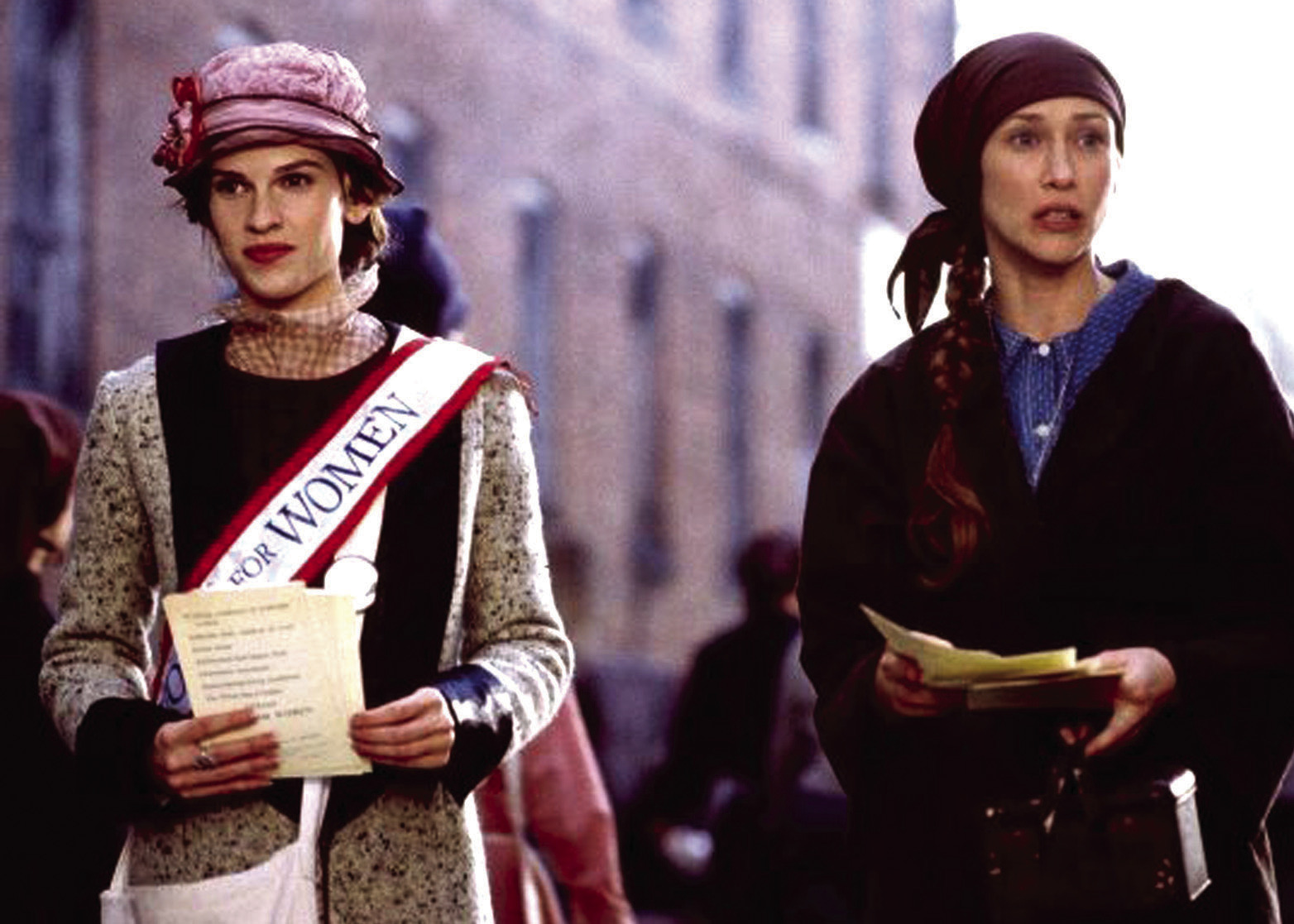
On April 14 at 6 p.m. in the Piovano Room of the Rockbridge Regional Library, watch the free screening of “Iron Jawed Angels” (PG-13, first released in 2004) chronicling the political campaigns and hunger strikes, and the broader sacrifice and strength of a cohort of female activists who constellated their efforts in the nation’s capital in the early years of the 20th century.
Then derided as “suffragettes,” if now conventionally heralded as such, these women persisted through broad and often violent resistance, fighting the U.S. Congress and President Woodrow Wilson to help pass the 19th Amendment. Finally ratified on Aug. 18, 1920, that foundational, democratic advance would extend voting rights to most if not all American women (women of color, particularly, would continue to push for the protection of such freedoms until the passage of the Voting Rights Act of 1965).
Originally attributed to Thomas Paine (avatar of the American Revolution, himself), their triple charge to “Lead, Follow, or Get Out of the Way” served as a clarion call for protest marches led by feminist leaders Alice Paul and Lucy Burns, blazoned on parade posters of the time, and serving as the subtitle for the film’s broader call to contemporary audiences.
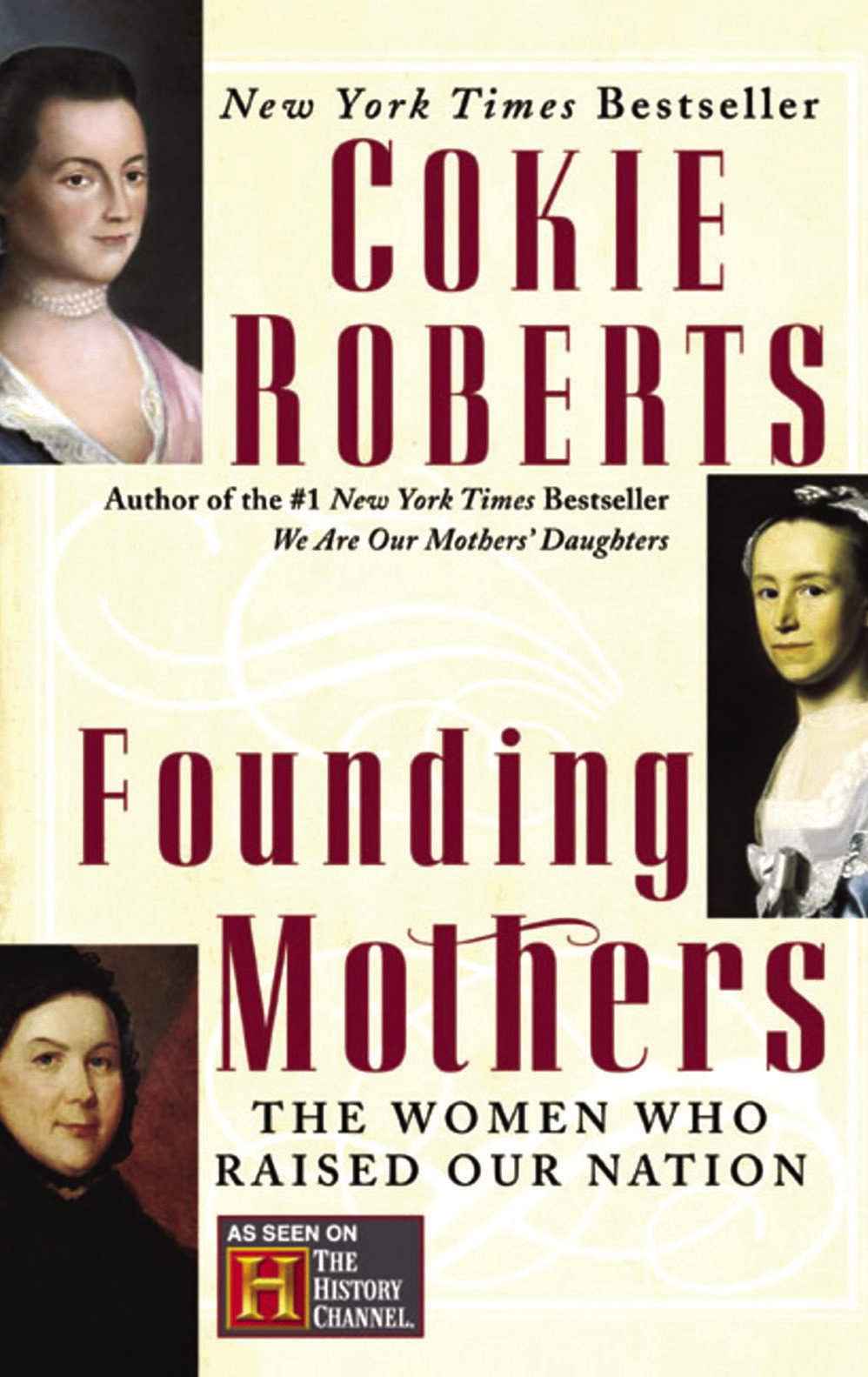
On April 22, the conversation turns back to the crucibles of the late 18th and early 19th century, themselves, as lensed through the late journalist Cokie Roberts’ “Founding Mothers: The Women Who Raised Our Nation.” That event will also take place at the Rockbridge Regional Library at 6 p.m.
Still a bestseller after its release over 20 years ago, Roberts’ book spotlights a series of “women who fought the Revolution as valiantly as men,” playing many roles during the war, serving as soldiers, spies, nurses, cooks, and writers. Those less familiar revolutionaries complement fuller accounts from the writings and leadership of that more iconic “American Trinity” of more celebrated First Ladies who later helped to ensure the survival of the Early Republic: Martha Washington, Abigail Adams, and Dolly Madison.”
A discussion of the illustrated children’s book Roberts adapted will invite elementary school readers to join during a summertime event at the library (date to be announced), in extending RHS’ series to all ages. Affordable paperback copies of Roberts’ book can be found in public and university libraries, and local bookstores.
Virginian Histories, Local Historians
On Wednesday, April 29, RHS will partner with faculty in VMI’s Department to History to stage the featured event of this series. Held in VMI’s Gillis Theater (Marshall Hall, 8-9:15 p.m., with a free reception to precede at 7 p.m.), the event invites the public to join a corps of cadets currently enrolled in over a dozen classes on U.S. Constitutional History, and U.S. History.
VMI Associate Professor Mark Boonshoft, the Conrad M. Hall ’65 Chair in American Constitutional History, will introduce the event, featuring a round table of professors, authors, and public historians who will variously spotlight “Revolutionary Women of Rockbridge and Virginia.”
The invited panelists will discuss historic events and some of the less-celebrated but influential women who have shaped our area, state , and nation, from the 18th through 21st centuries: stretching from even before the joint founding of Lexington and Rockbridge County in 1778, to the Supreme Court decision and implementation of coeducation at the Virginia Military Institute at the turn of the 21st century.
A biographical sampler of short presentations – followed by a conversation among the panelists moderated by VMI Assistant Professor of History, Liz Schroepfer, before Q&A from the audience – will speak to the experiences of particular women who defined and distinguished different eras, as well as broader generational and professional cohorts. Some of them shaped and re-defined early colonial and revolutionary histories. Other groups resisted Virginia’s Racial Integrity Act in a pair of 1924 lawsuits to receive marriage licenses in the Rockbridge Circuit Court, and in the 1990s, secured the admission and integration of women into VMI’s Corps of Cadets.
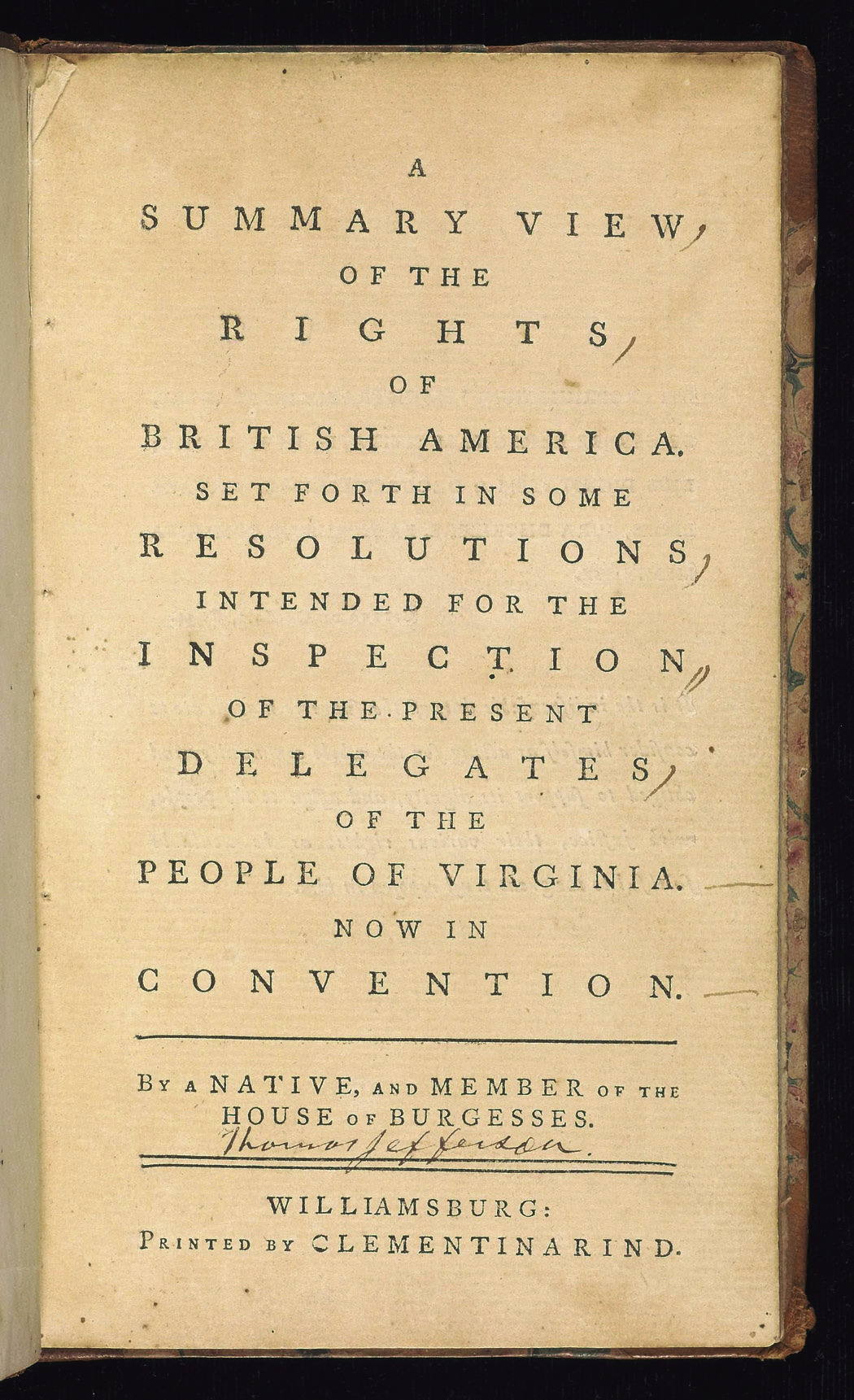
The diverse histories to be featured will also detail the contributions of women who used the press to advocate for women’s rights in the 18th-20th centuries, like colonial Williamsburg printer Clementina Rind, and Coralie Franklin Cook, a Rockbridge native, Howard University professor of rhetoric and oratory, advocate for women’s suffrage, and close collaborator with Susan B. Anthony and W.E.B. DuBois.
A special and timely nod will also be given to the Barbara Johns, the pioneering teenage activist who led the student strike to protest unequal and inferior conditions at the segregated Robert Russa Morton High School in Farmville on April 23, 1951 (now annually recognized across Virginia as “Barbara Johns Day”). The attendant lawsuit brought by students’ families and leaders in the Black community would become one of the five to be collectively reviewed by the U.S. Supreme Court in 1954 – more familiarly known as “Brown vs. The Board of Education.”
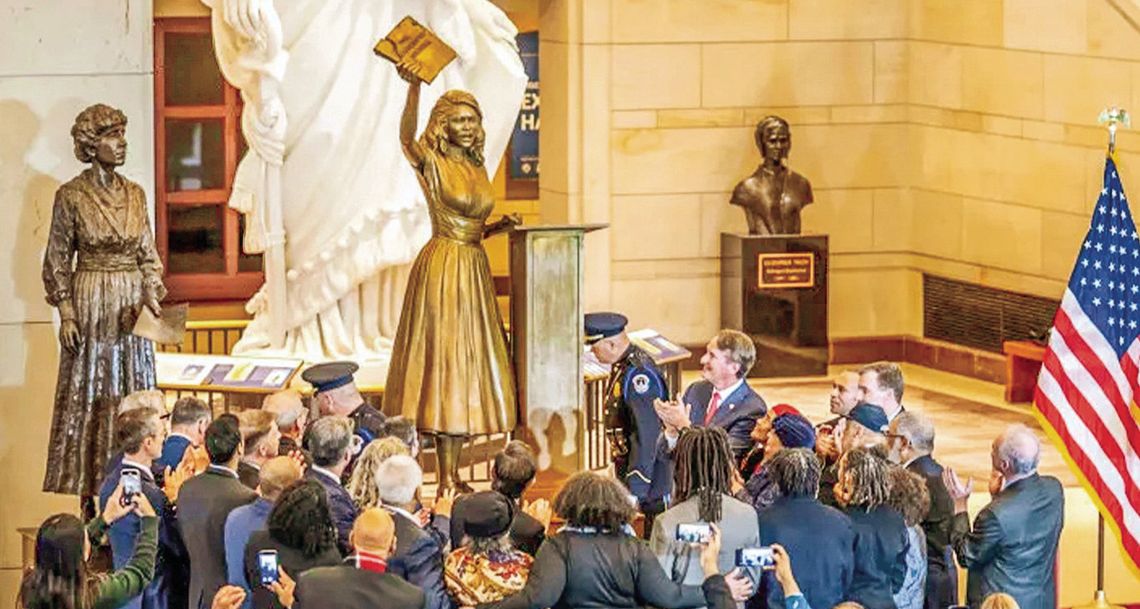
Barbara Johns’ charismatic leadership and determination were recognized in December 2025 with the installation of her newly commissioned statue in the U.S. Capitol. Proudly dedicated by then-Gov. Glenn Youngkin, along with a host of state and U.S. representatives, and descendants of those changemaking students. Her statue now joins George Washington as one of the two chosen to represent the commonwealth, replacing the statue of former Confederate General and Washington College President Robert E. Lee, after its removal in 2020.
“Barbara Johns’ courage and example was all in service,” said Youngkin in remarks at the statue’s unveiling. “Service of a noble mission to ensure that all Americans would receive an excellent education. This statue is a fitting memorial and tribute to a teenager in Virginia who became an American hero. A hero whose courage inspired a nation to overcome injustice and to more fully realize our founding promise as a nation. And now this fitting memorial has a fitting home.”
Featured panelists for the April 29 event, free and open to the public, include: Lauren Duval, assistant professor of History, University of Oklahoma, and Post-Doctoral Fellow, University of Virginia Karsh Institute for Democracy; Eric Wilson, executive director, RHS; Madeleine Forrest Ramsey, assistant professor of history, VMI; Michael Hill, associate professor and chair of Africana Studies, W&L, and director of the DeLaney Center; and Mattie Webb, assistant professor of history, VMI.
For more details on the program, and teasers on the figures mentioned above, and many more, see RHS’ Instagram and Facebook pages.
Reconsidering Women’s Words
To close where we started, “Remember the Ladies” remains the most popularly echoed phrase that Abigail Adams wrote, across the decades of well-chronicled correspondence she carried out with her husband. Those higher principles complemented the running accounts of her vital everyday efforts to sustain their family’s economic stability, and the health and safety of their children, during John’s service in the Continental Congress and growing political career.
When cropped to its core – and thus stripped of its fuller domestic and political contexts – her assured command sounds more like a call for electoral rights, than for more equity in domestic affairs. Women’s rights to own property, or sue for divorce, historians generally agree, were more central to her attentions. Although in the following sentences, she slyly barbs her husband, “with a heart so gay,” ventriloquizing his own political language: “If particular care and attention is not paid to the Ladies we are determined to foment a Rebellion, and will not hold ourselves bound by any Laws in which we have no voice, or Representation.”
However assertive or performative her lines have been taken to be, Abigail’s joint directive to both think on the past while pushing for future change still serves as a fitting feminist prologue for documentaries and historic re-interpretations like HBO’s award-winning docuseries, tellingly and singularly titled “John Adams.” The candid if ultimately unmet charge – whether made to a spouse, or to a revolutionary nation – has frequently stood as the precedent ground on which decades of scholarship and school curricula have framed two-and-ahalf centuries of purposeful struggle to extend and ensure gender equity “in order to ensure a more perfect Union.”
That aim for a “more perfect Union” would be more publicly and lastingly pronounced a decade after Adams’ more privately scripted family letter. That qualifying if resonant infinitive phrase, directly following “We the People,” grounds the opening sentence of the U.S. Constitution ratified in 1787.
In the heart of our own national commemorations of America250, Abigail’s memorable triplet can also currently be found fronting journalistic leads, or splashed as a feisty motto on T-shirts, coffee mugs, and the range of commemorative kitsch that’s been newly recycled from the patriotic flair commercially popularized during the big Bicentennial celebrations of 1976 (never mind the failure of the contemporary push to pass the Equal Rights Amendment, through those same years, and since).
Today’s ears might also recognize another highspirited trill sounded by one of Abigail’s “Founding Sisters”: Angelica Schuyler Church, famously beloved by Alexander Hamilton and Thomas Jefferson alike. Among the wide cast of characters broadcasting new visions of American identity and citizenship in Lin-Manuel Miranda’s hit Broadway musical, “Hamilton,” Abigail Adams does not find a voice on that stage. But Miranda seems to have had her well in mind when he scripted Angelica’s sassily syncopated lines, scored with her soaring soprano chords, calling to the audience at large: “When I meet Thomas Jefferson, Imma compel him to put women in the sequel.”
To be sure, her own “Declaration” is a fictional, hip-hop styling, rather than historical fact. But her knowing shout-out still remains a vital call. A prompting spur “to re¬member,” in our own efforts to be “more generous and more favourable” than our own ancestors.
For more resources, links and articles that RHS has published about local women’s histories – including summaries of their popular Women’s History Walks – visit the newly re-designed RHS website at: RockbridgeHistory.org/resources-bytheme.