W&L Theater’s Production Turns Theatrical Disaster Into Precision Comedy
Washington and Lee’s Theater Department is embracing theatrical disaster this spring with its production of “The Play That Goes Wrong,” the Olivier Award–winning farce by Henry Lewis, Jonathan Sayer, and Henry Shields.
Directed by Suzanne Delle, the production runs April 8–10 at 7:30 p.m. and April 11 at 2 p.m. in Johnson Theatre at the Lenfest Center for the Arts. Tickets are $18 for adults, $16 for seniors, $14 for W&L faculty and staff, and $8 for students, and can be purchased through the Lenfest Center box office or online.
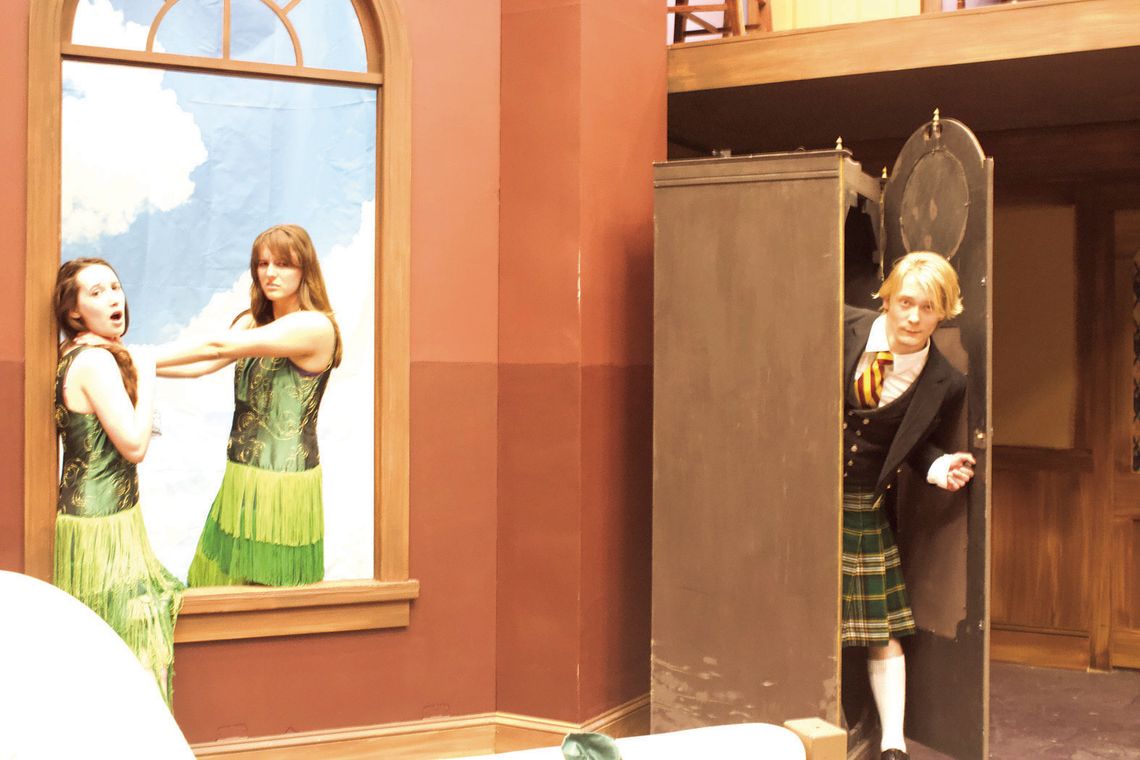
The comedy follows the fictional Cornley Drama Society as they attempt to perform a classic murder mystery titled “The Murder at Haversham Manor.” Unfortunately, nearly everything that can go wrong does. Props malfunction, actors miss their cues, set pieces collapse, and the evening spirals into increasingly chaotic theatrical catastrophe. While the show looks like a disaster onstage, the reality behind the scenes is the opposite. The production requires meticulous timing, physical choreography, and close collaboration between actors and technical designers.
Director Suzanne Delle is the visiting assistant professor of theater at Washington and Lee University. She is teaching courses in film, theater and arts management during the 2025-2026 school year. With a master’s degree in directing and master’s in arts administration, Delle has worked at colleges and universities across the U.S. and previously served as chair of Region II for the Kennedy Center American College Theater Festival.
“Comedy like this is actually incredibly technical,” said Delle. “Every moment that looks accidental is carefully rehearsed so that the audience can enjoy the illusion of everything falling apart.”
Because the show functions as a true ensemble piece, every performer plays a critical role in the evening’s carefully orchestrated chaos. The production features 14 Washington and Lee students, with a mix of returning performers and actors making their stage debut.
Several actors will be familiar to audiences from the fall production of “These Shining Lives,” including Ryleigh Love (Chris), Rachel Collins (Max), Chuck Rutberg (Robert), and Stella Adamopoulos (Tessa). At the same time, many W&L students are stepping onto the stage for the first time, including Zander Kitchen (Charles), Andriy Bondar (Dennis), Katy Wyrick (Annie), and Ava Grace Flory (Sandra), among others.
For the student actors, mastering the style of farce has been a new challenge. Unlike many forms of acting that emphasize emotional realism, farce requires performers to fully commit to absurd circumstances while maintaining precise comedic timing.
“In rehearsal we’ve been learning that the play only works if we treat everything seriously,” said Rachel Collins, ‘27. “For the characters, this isn’t a comedy. It’s a tragedy where their entire production is falling apart.”
As rehearsals continued, many actors also discovered how much trust the show requires between performers.
“The physical comedy only works if everyone is completely committed to the timing and trusts each other,” said Chuck Rutberg, ‘26. “Even though the audience sees chaos, the actors have to stay focused and work together to keep the show moving.”
That trust extends beyond the actors. The show’s carefully choreographed stumbles, collisions, and stage mishaps were developed with the help of fight choreographer Jeremy West, a certified stage combat instructor with over 20 years of professional experience, including at American Shakespeare Center, and Shakespeare Theatre Company in Washington, D.C.
The technical elements of the show play an equally important role. Visiting scenic designer Stefanie Hansen created the elaborate set for “The Murder at Haversham Manor,” designed to malfunction in increasingly ridiculous ways throughout the performance. Hansen is a freelance scenic designer and associate professor of theater at the University of Delaware, where she serves as resident designer for the Resident Ensemble Players.
Supporting the production behind the scenes are Washington and Lee technical staff members Tom Hackman and Paula Fritz, who work closely with students to ensure that every collapsing wall, broken prop, and mistimed cue happens safely and exactly when it should.
For Delle, the show also represents the culmination of her year as a visiting assistant professor at Washington and Lee.
“This play is a celebration of theater itself,” she said. “It reminds us how much teamwork, creativity, and problemsolving go into creating live performance.”