Go to main contentsGo to main menu
Friday, December 5, 2025 at 12:51 AM

Bodie Chronicled Rockbridge’s History

Bodie Chronicled Rockbridge’s History
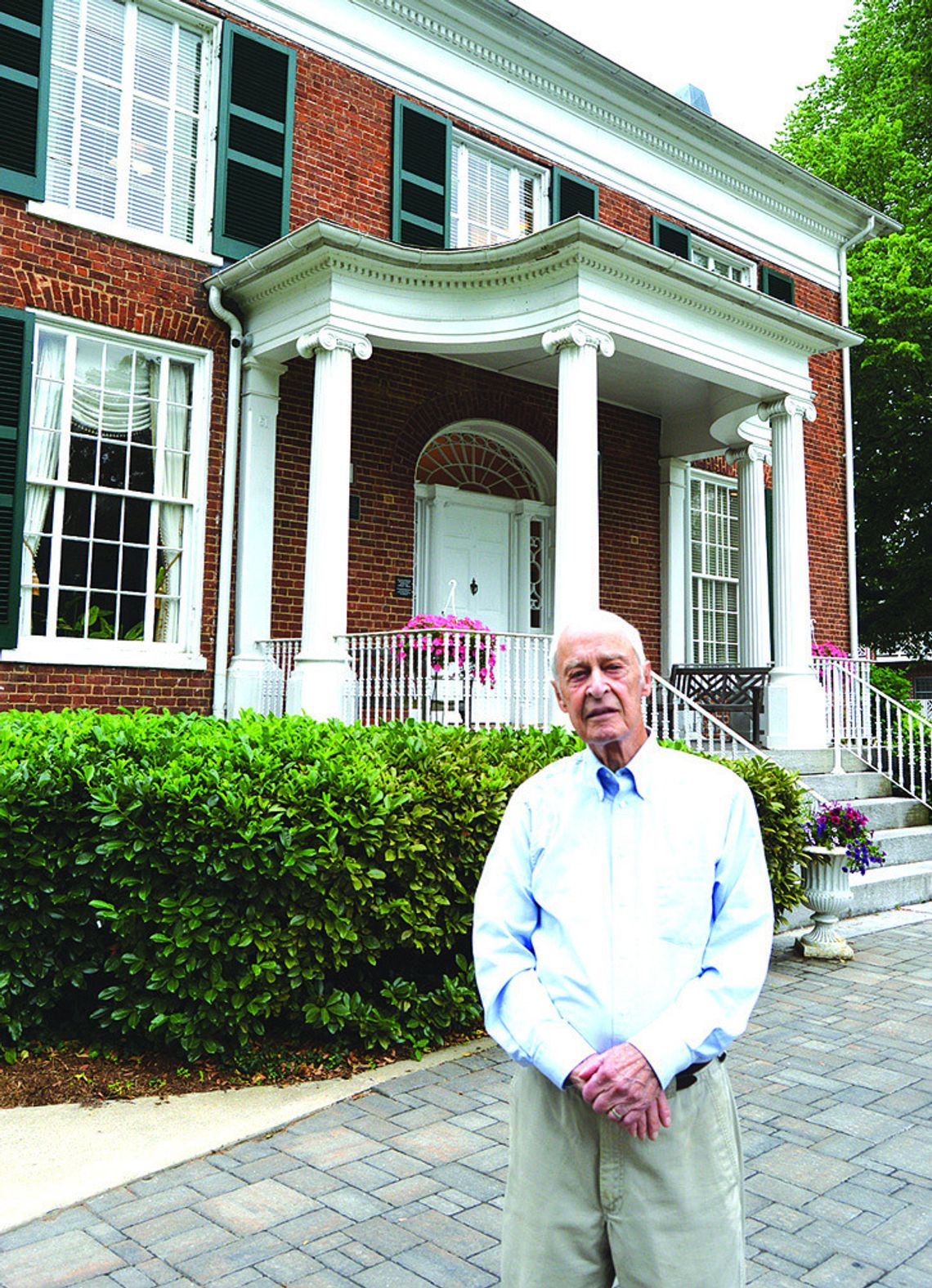
CHARLES BODIE stands in front of Col Alto in 2023, shortly after the publication of “James McDowell of Virginia: The Perils of an Antebellum Southern Reformer.” McDowell, a Lexington resident and Virginia’s 29th governor, built Col Alto in 1827 as a plantation house for his 328-acre farm. (N-G file photo)

Editorial

Charles Bodie lived a remarkable life. Educated as a historian, he followed widely varying pursuits. He was a high school social studies teacher. He raised Angora goats. He taught literacy to inmates at the Rockbridge Regional Jail. He was an avid gardener and beekeeper. He was a classically trained pianist and church organ player. He was an environmentalist who served as the first director of the Valley Conservation Council and as a director of the Rockbridge Area Conservation Council.

The role, however, that he will likely be most remembered for is a chronicler of Rockbridge County history. Bodie, who died last week at age 88, spent much of the last couple of decades of his life researching and writing about the history of the Rockbridge area.

He wrote what is arguably the most comprehensive history ever penned about the county’s history, “Remarkable Rockbridge,” commissioned by the Rockbridge Historical Society in 2003 and published in 2011. He was also the author of a thoroughly researched account of the life of Lexington native and 19th century Virginia Gov. James Mc-Dowell, published in 2023.

Bodie was a good friend of The News-Gazette. He was a regular presence here during the halfdozen or so years that he was conducting research for his tome on Rockbridge County. He spent many hours scouring the newspaper archives for tidbits of news accounts and even advertisements that added color to his vast academic research.

You see, his books were both academic in nature and easily readable for the general public. He proved that one, regardless of background, can both enjoy reading about history and become enlightened by it at the same time.

As Bodie told then-News-Gazette reporter Kit Huffman in a 2012 article about the book, “Above all, I wanted the book to be readable, not to go on a shelf and sit there. It’s a community book, for the community. I don’t want people to think of this as just ‘dry’ history, but rather a living tale about the area.”

Bodie’s history of Rockbridge County, as Huffman wrote, “begins with the earliest Native American settlements dating back to 11,000 B.C., moves on to the arrival of the Ulster-Scots (formerly known as the Scotch-Irish) in the 18th century, and then to the Civil War, Reconstruction and the boom era of the 19th century. The last four chapters deal with events in the 20th century, including the two world wars, the Great Depression and desegregation and technological changes.”

Bodie’s story about the county’s history didn’t shy away from including the darker moments of our past, such as slavery and resistance to civil rights advances. “I’m a historian,” he told Huffman. “It’s history. It’s our past. And you just don’t sugarcoat your past.”

Eric Wilson, executive director of the Rockbridge Historical Society, recalled that when he was hired in 2012 to direct the RHS, he was guided by two mentors, Ted DeLaney, chair of the Washington and Lee University history department, and Bodie, then the RHS president. Bodie had just published “Remarkable Rockbridge,” which Wilson described as “the first comprehensive history of our county since Owen Morton’s chronicle in 1920. And while Ted often cautioned that some communities could sometimes be a bit gauzy, highlighting only the sunnier sides of life, it was readily clear to me that Charles’ 400-page study was not that book.”

Wilson said he found that Bodie “was never afraid of the word ‘but.’ Not because he needed to play some trump card, but because he wanted to assure the integrity of a continued and accurate conversation. And as Rockbridge nears our 250th anniversary, it’s clear that RHS’s publications and programs have continued to advance that honest, inclusive posture, too, now in the heart of an everevolving 21st century. In Charles’s scholarship, no less than his personal care for both environmental and historic preservation, he was always attentive to the grounding influence of our local landscape: the Valley habitat that shaped the habits of people who’ve migrated and settled here, left and returned, for millennia. The documentary foundations Charles Bodie helped to build and connect will continue to edify generations here, in his wake.”

Another leader in the local history and preservation fields, Don Hasfurther, expressed his appreciation Tuesday for the contributions Bodie made to preserve, while incorporating his sense of humor, an accurate picture of the county’s past. “Charles was one of the nicest persons I met through my job at [the Historic Lexington Foundation] – a great deal of sarcasm under that grin. He will be missed.”

Bodie touched the lives of many and his chronicling of our collective history is a gift to future generations.


Share
Rate

Subscribe to the N-G Now Newsletter

* indicates required

Intuit Mailchimp

Lexington News Gazette