Every decade or so, folks who have been around long enough to remember how Hurricane Juan devastated our area share their memories. I have written about the experience on my farm by the river getting inundated, as well as those of my neighbors. I have written about how this flood did $100 million worth of damage in our county. Here it is 40 years since it happened and we are still trying to figure out how it happened, whether the worst of it could have been prevented, and why there was really little or no warning of the impending danger.
Could the worst of it have been prevented? The night of the flood, my neighbors and my family witnessed a rather sudden surge in the level of the already seriously flooding waters of the Maury. Speculation amongst us was that the dam at the Goshen Scout Reservation had failed, and that caused the sudden surge of water taking out bridges, washing homes and out buildings away, and making the situation even more devastating than it was.
Mind you, this happened at pitch dark of night. We never did hear anything, especially from the BSA, now Scouting America, about the flooding. But over the course of years a very plausible reason for the extraordinary high water seems apparent.
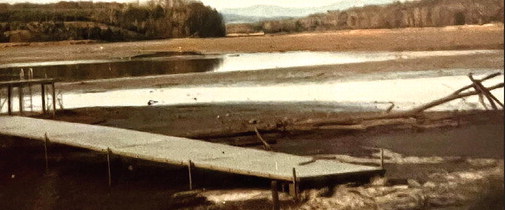
A few concerned persons visited the dam and lake right after the flood and as soon as passage was made possible. They took pictures which showed that the lake was empty except for the Little Calf Pasture running through it. Backing up a bit, it is possible that during the heavy rains, the lake filled up and was about to overtop the dam. Had that happened and caused the dam to breach, the situation could have been made much worse. It was good thinking that caused the gates to be lowered to relieve the pressure on the dam. However, when that was accomplished, the gates malfunctioned and could not be closed, thereby letting the whole lake escape to the already flooding waters of the Maury.
Another similar event happened in 1995, but disaster was averted. Since 1996, the county has not experienced any excessive flooding as a result of the dam malfunctioning. Mike Jolly, the dam operator for the past 30 years, has seen to that. It was during his employ that the practice of lowering the lake in advance of predicted torrential rains has surely prevented a similar catastrophe.
The dam is in a little better shape than it was in 1985, but there is always more that can be done to ensure the safety of those of us downstream. Currently there are two of 10 gates that are not in proper working order and these need to be addressed as soon as possible.
There are a few things that have been done other than the proactive lowering of the lake before large storms.
Alterations on the dam and its mechanisms have been made, yet because of its age, the dam needs continuous repairs and alterations.
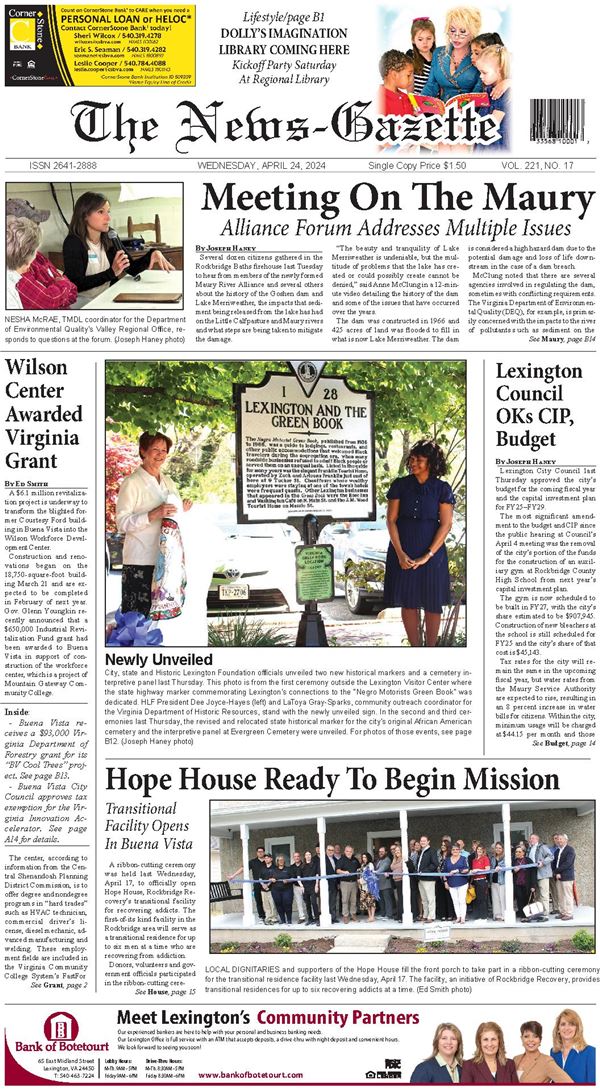
The scouts are currently up to date on their inspections with the next one scheduled for January 2026. The last inspection rated the dam as fair. A satisfactory rating would be in our best interest. As to warnings, there is more that could be done, but an Amber-like alarm system within the Rockbridge Emergency Alert System has been added. This alert is specifically for an emergency involving the dam. If there is need, the alert sends out a shrill buzzing noise to all cell phones in the area that would be affected. There is no need to sign up for this warning. It automatically goes out. However, redundancy of warnings is warranted. Not everyone has cell service, or their phones may be off. A siren system along the river is not out of the realm of possibilities. And, of course, any system still requires emergency workers to aid in warning and to help to get folks to a safe place.
Also since the 1985 flood, an Emergency Action Plan has been made. Every property owner can look at this plan, find a map of their property, find out how high the water could get on their property, how long it will take for high water to reach the property, and how long the water will be there before ebbing. A link to the plan is on the Rockbridge Regional Library’s website: rrlib.net. It is called the Lake Merriweather Files. This plan is required to be updated every six years and the next update will be due next year.
The Scout dam is rated as a high hazard dam, and it is old, having been built in the 1960s by the Army Corps of Engineers. It is so old that the Corps doesn’t even have an operating manual and apparently nor does Scouting America. Because of its status and the possible catastrophic damage that could be caused if it were to breach, vigilance must be unrelenting, and redundancy of warning systems for impending flooding should be in place.