Boxerwood Working With Schools To Create Environmental Learning Plans But Federal Cuts Shift Scope
What would it look like if all children took part in nature-based learning throughout their public school years?
The Rockbridge area is already a stand-out in outdoor learning thanks to a 25-year partnership between all three school divisions and Boxerwood Nature Center.
The long-running partnership, entitled Project NEST (Nurturing Environmental Stewardship Together), ensures standards-correlated hands-on learning for more than 2,600 students each year.
There’s always room for improvement, though, and last January Boxerwood and its school partners were awarded a significant environmental literacy planning grant to more deeply integrate – and expand – those opportunities across the preK – 12 curriculum.
The movement to create division-level Environmental Learning Plans (ELPs) is fairly new in Virginia, with most activity happening in large school districts. Funded by the Chesapeake Office of NOAA’s Bay Watershed Education Training program, ELP grants were awarded to only five applicants across a multi-state region this year, including Rockbridge, the first in the western part of the state.
Originally a three-year, $152,613 award, deep federal cuts to NOAA last month, however, has resulted in sudden loss of full funding.
“Basically we lost about $100,000 in anticipated external investment for this project,” explained Boxerwood program director Elise Sheffield, who is overseeing the grant. “That’s a loss for Boxerwood but especially for our school partners. The majority of the lost funding had been budgeted for paying teachers for their professional time in ELP planning and training workshops like the ones Boxerwood led this past summer.”
The cuts have shifted scope of the project, said Sheffield, who notes Boxerwood and its partners are still discerning the best path forward.
“Great work has already commenced,” she said, “and one way or the other Boxerwood is committed to realizing this project for the benefit of Rockbridge and its youth.”
Key aspects of the project feature Boxerwood working with two local school divisions to develop and implement a blueprint for cross-disciplinary environmental learning. The blueprint incorporates existing Boxerwood field programs as foundational experiences, but also envisions more teacher-led nature-related learning in classrooms and schoolyards as well.
“Basically it’s a map to show how all students will graduate from high school with the skills, knowledge, and dispositions to be informed and responsible Earth citizens,” said Sheffield.
Once completed and published, the Rockbridge ELP will be shared as a model for other communities via regional and national communication platforms.
Local activities for the project kicked off this summer with Boxerwood facilitating a series of work sessions for a cohort of 18 teachers from Rockbridge County Public Schools. The teachers represented a range of grades and disciplines, with participants not only classroom teachers, but also a librarian, two guidance counselors, and two CTE instructors (building trades and agriculture).
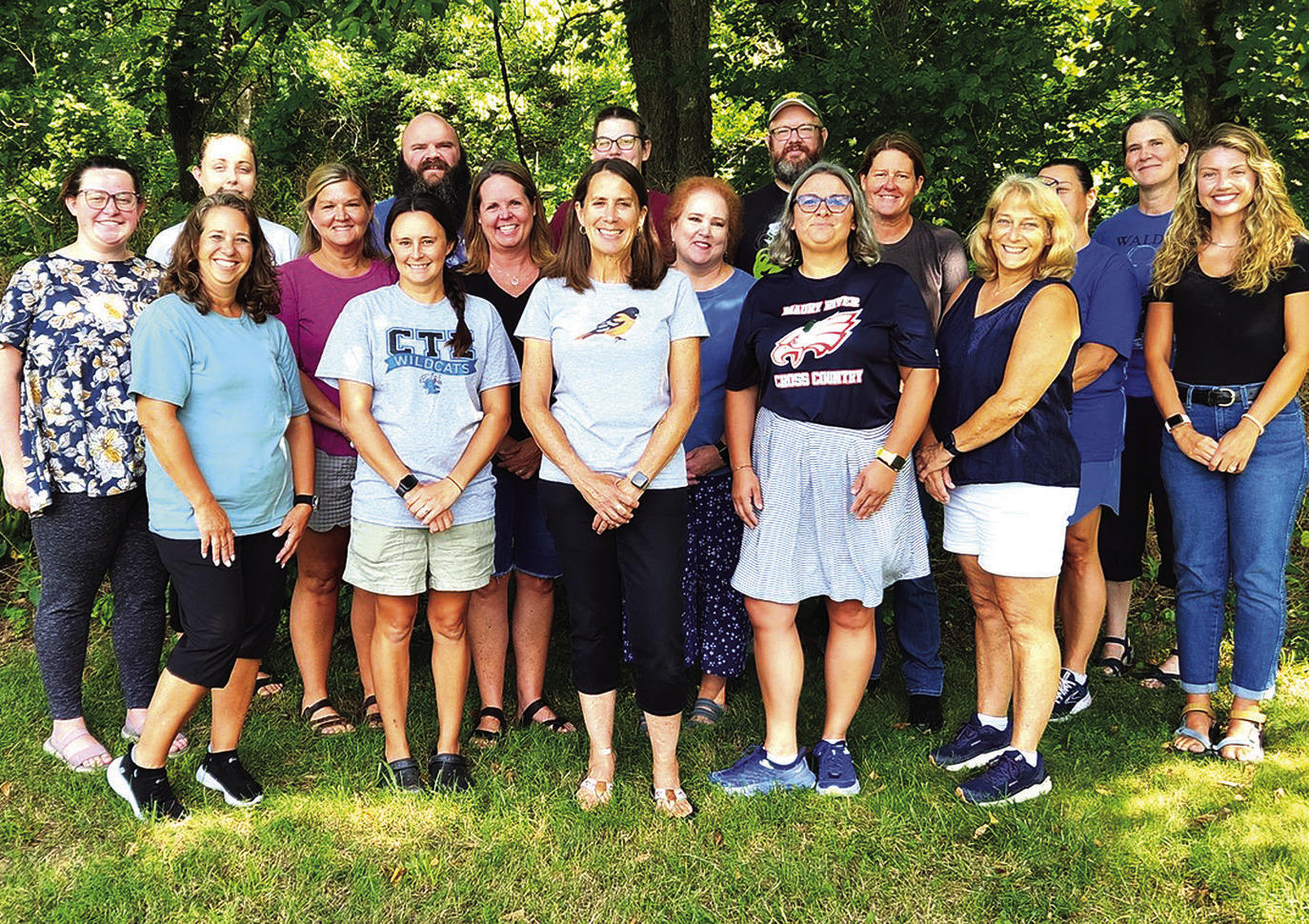
THE YEAR 1 cohort of ELP educators represented all six RCPS schools, as well as classrooms from preschool through high school. Disciplines included English, science/STEM, career and technical education, as well as guidance and library science.
Over the course of 40 hours, the teachers worked with Boxerwood to draft ELP goals for their division; mapped nature-based activities already happening; outlined an overall thematic structure for preK–12 environmental learning opportunities; identified core field experiences for all students; brainstormed additional optional school-based activities; and compiled a list of community partners.
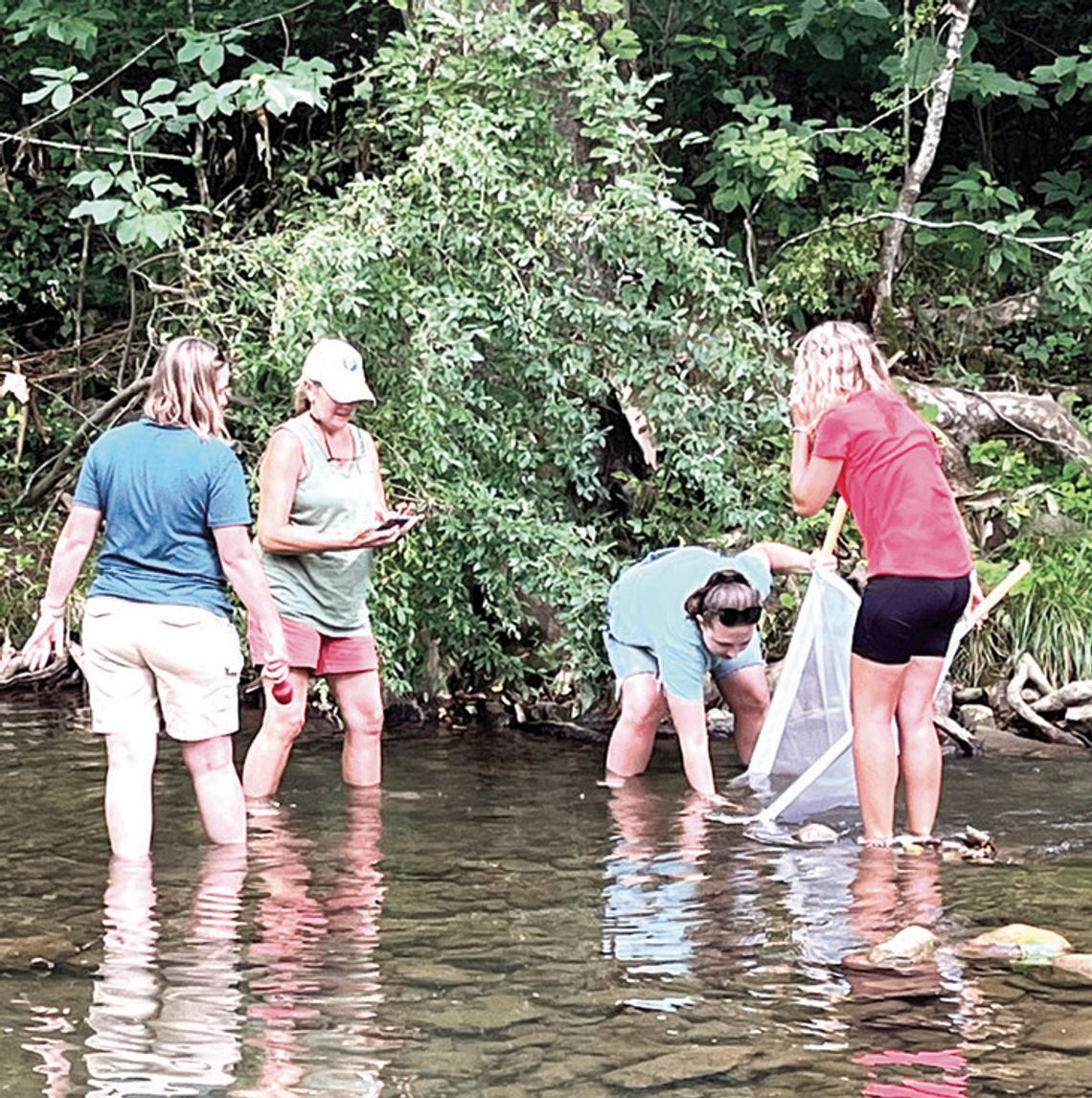
The teachers also boosted their own knowledge of environment-based authentic learning by participating in a hands-on watershed investigation led by Boxerwood educators along Colliers Creek, across from the Rockbridge County School Board office.
“That day was definitely a highlight,” said Sheffield. “Those teachers loved getting into the creek and catching crawdads and other aquatic bugs just like the kids!”
“These educators really gave it their all, both in the creek and back in the work sessions,” she added. One of the things that really stood out, she said, “was their delight in forming new connections across grades and schools. They told us they felt especially energized by finding ‘like-mindeds’ who also wanted to create more nature-integrated learning for their students.”
According to Sheffield, those summer connections are already bearing fruit.
“School year 25-26 was supposed to be just a planning year in the project, but the teachers wanted to get started on some elements they could easily pilot in their classrooms and schools,” she said.
In the first six weeks of the new school year, she noted several new ELP-related initiatives: new field-programs and a trout tank for RCHS Ag students; new student-run recycling initiatives at Natural Bridge Elementary, Central Elementary, and Maury River Middle School; and an enhanced, year-long Woods Creek watershed investigation project for all 6th graders.
“Despite the funding challenges, there’s a strong, collective interest in creating these additional opportunities,” said Sheffield, “and teachers are driving it.”
Using the material generated from the 2025 work sessions, Boxerwood will be crafting a draft ELP document this winter and gathering feedback from additional teachers and division administrators. Implementation of the plan will roll out in subsequent years, with another series of workshops planned for next summer, providing new funds can be secured.
Original plans for Year Two included expanding these opportunities for teachers from Lexington City Schools as well, the other grant partner.
“Students from LCS and RCPS both enter the same high school,” noted Sheffield, “so we’re grateful for the vision and support of both divisions as we keep working together on this transformative project.”
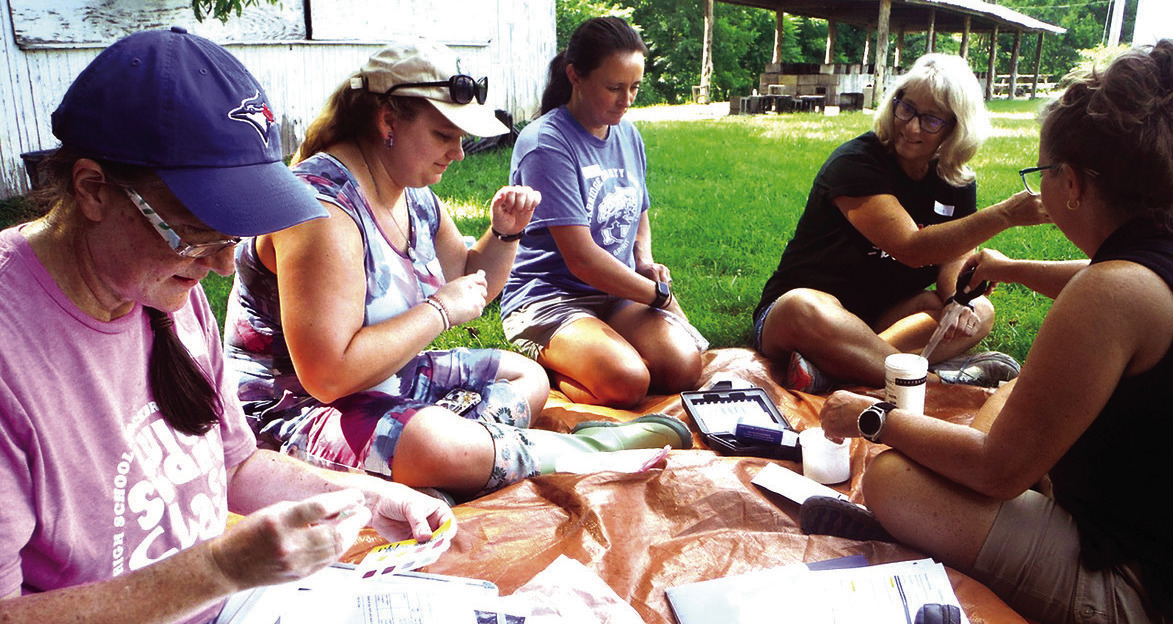
TESTING POLLUTION levels in Colliers Creek water samples was also part of the one-day field challenge. The goal of the hands-on session was to lead the educators through all elements of an authentic learning arc. This is a foundational instructional strategy already employed by RCPS across a variety of disciplines, easily integrated as well for local, environment-based topics.