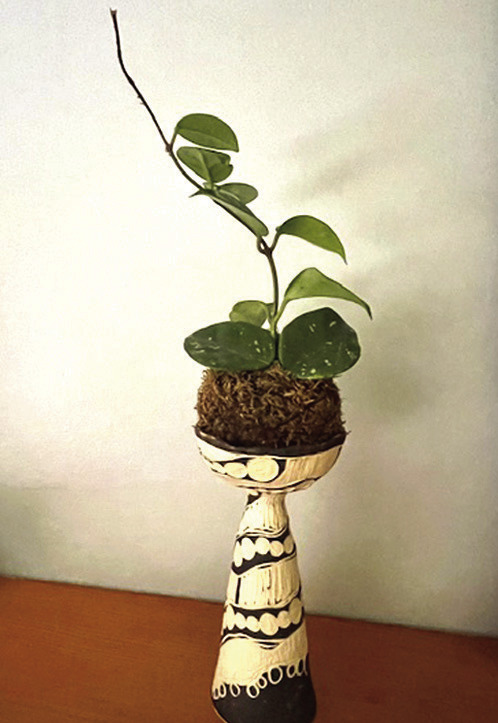
Chances are you’ve never seen a kokedama or might not know what it is if you did.
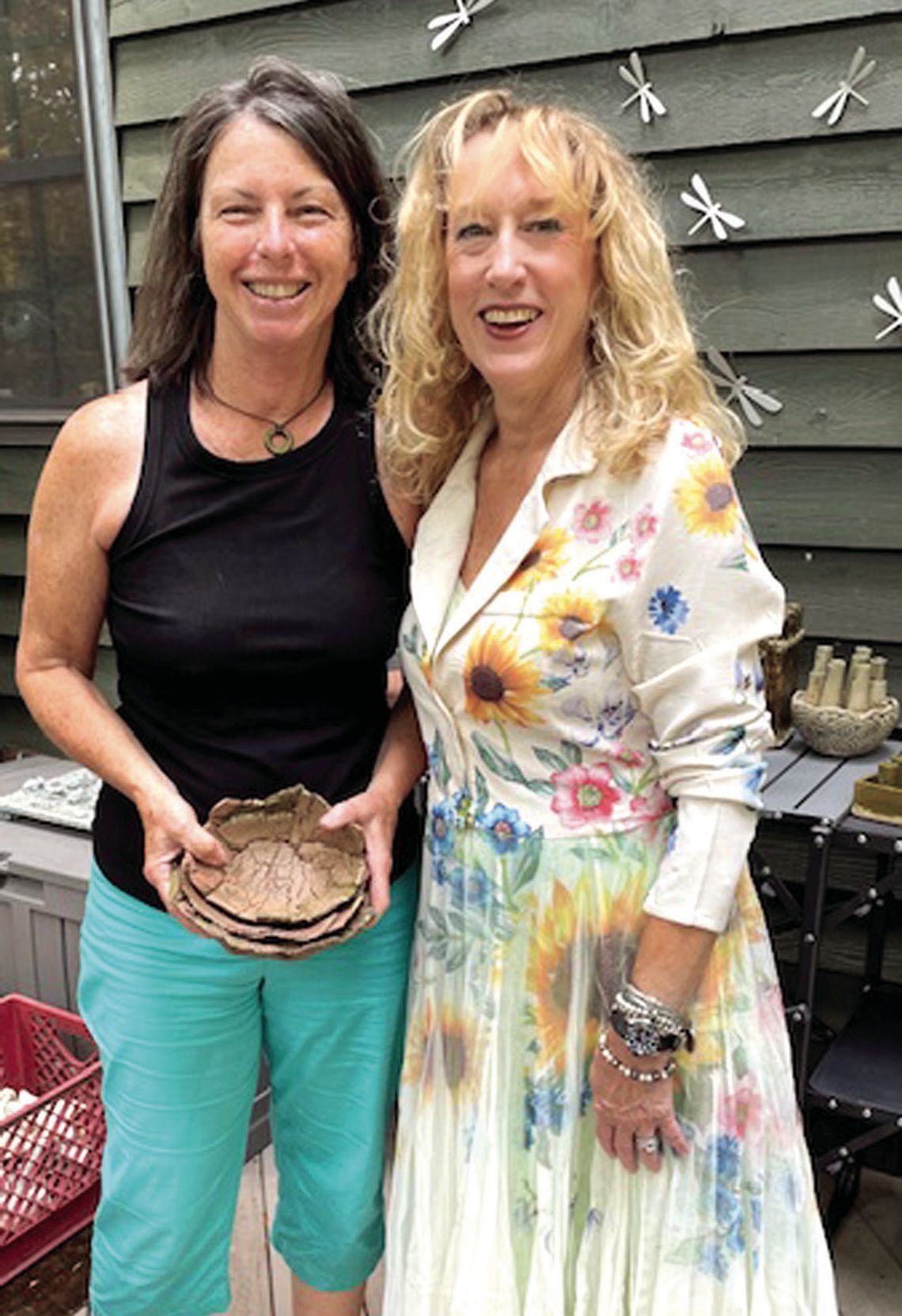
Recently, members of the Natural Bridge Garden Club were introduced to this Japanese art form by Sherry Godfrey, a potter/gardener from North Carolina.
Kokedama, or “moss ball,” is an ancient Japanese art form that is derived from the practice of bonsai, she explained.
The beauty of exposed bonsai roots, which would accumulate moss over time, was the inspiration behind kokedama. It was often referred to as “the poor man’s bonsai” because it was a simpler, more affordable way for people to enjoy the tranquility of a Japanese garden in their homes.
In kokedama, the root ball of a plant is coated in mud and covered in a sheet of moss, which symbolizes longevity and is in harmony with its surroundings. The plant doesn’t require a lot of attention and can last as long as three years.