Teacher Wins National Project-Based Learning Award
In Stephanie Tuttle’s fourth-grade classroom at Fairfield Elementary School, learning isn’t just a passive activity for students to sit through. It’s something they build from scratch, with their own hands, ideas, and voices.
With the first day of school coming next week — Aug. 12 for Rockbridge County and Lexington, and Aug. 13 for Buena Vista — Tuttle hopes that her passion for Project-Based Learning (PBL), which won her a national award this summer, will spread throughout area schools.
In July, Tuttle’s creative and student-centered teaching earned her recognition from PBLWorks, an organization that supports PBL in schools across the country. In June, Tuttle traveled to Napa Valley, Calif., to receive the John Larmer Lifelong Learning Award at PBL World 2025 — an honor given to just two educators nationwide.
Tuttle, who’s taught fourth grade at Fairfield since 2014, was the only Virginia teacher to win this year’s award. Her recognition not only celebrates her passion for hands-on learning but also highlights Rockbridge County’s growing embrace of project-based education.
Tuttle’s teaching journey began just down the road at Southern Virginia University.
“I did the teaching program at SVU, did my student teaching in Buena Vista schools, finished teaching there on a Friday and had a fulltime job the following Monday,” she recalled, “which is crazy.”
Since then, she’s spent her entire career at Fairfield Elementary, where she’s helped lead the local charge in implementing PBL, a teaching method that centers on real-world problem solving, student choice, and hands-on learning.
“I love a good project,” Tuttle said. “PBL lined up with what I already loved about teach- ing, which was having the kids see that learning is fun and hands-on.”
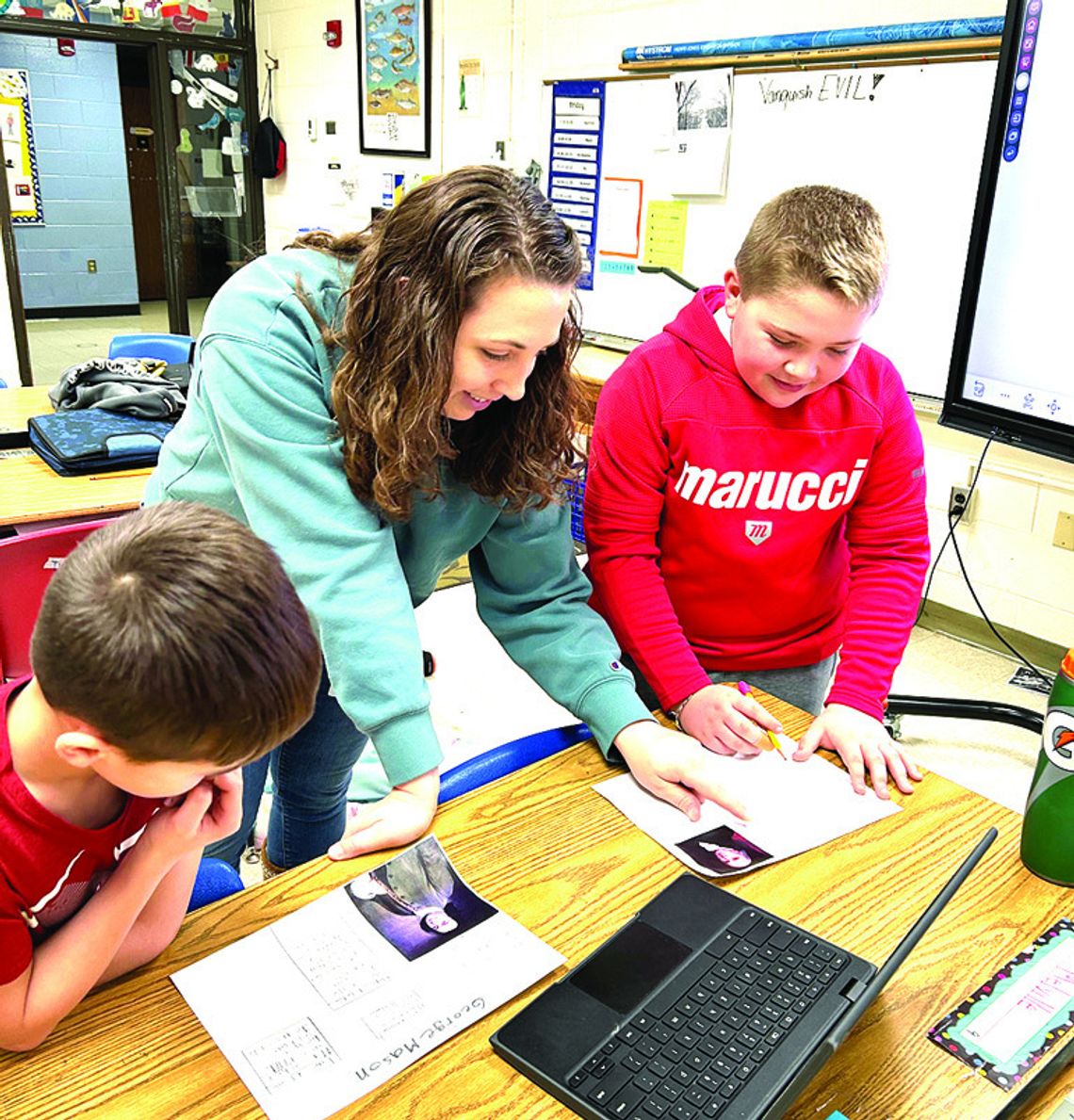
In Tuttle’s classroom, projects aren’t a fun reward at the end of lessons; they are the learning. Her students don’t just make posters after the unit ends. They tackle real-world problems from the start, with each lesson building toward a meaningful product or presentation.
“One year at Fairfield, we saw the problem that our water fountain leaked everywhere,” Tuttle said. “So we got with the kids and had this question we were trying to answer: how can we improve water bottle usage and these fountains at the school? We worked to learn how to write letters and do research as we wrote a letter to the school board asking them for it.”
Another standout project is the annual plant sale, where students raise money for local causes by growing and selling plants. In its first year, the class raised nearly $2,000 for Project Horizon, a domestic violence organization serving the Rockbridge area.
“They are so proud of what they’ve done,” Tuttle said. “To see that result, they’re like, ‘Whoa, we really did make a difference.’ Attendance is better, participation in class, all of that.”
And every student, she said, has a role to play.
“It’s not your high-achieving students — they’re always going to do well,” she said. “It’s the students you don’t expect, the ones that struggle, the English language learners. They often are the stars of project- based learning because this is how they learn. Now they get a time to shine.”
For Tuttle, project-based learning is especially powerful in rural schools like Fairfield.
“I try to add into my teaching a love for your community,” she said. “Some of them haven’t even been to downtown Lexington, and so we try to plan a field trip there every couple of years. It gives them the ability to see other jobs that exist maybe outside of Rockbridge County, or even within, that are beyond their own family systems.”
A sense of connection extends beyond the classroom and back. Students regularly interact with local organizations, from requesting plant sale donations to presenting their findings to community members. At the heart of it all is student ownership over their learning.
“Project-based learning is so important because it shows [students] that learning can be exciting, it can be fun. You have a voice in what you’re learning and how it happens… I’ve seen so many kids that are like, ‘No, that’s my project,’” she said. “They’re so proud of what they’ve created.”
Tuttle was among the first group of Rockbridge teachers trained in PBL back in 2018. Since then, every teacher in the division has completed PBL 101, something she learned is “unique” compared to other districts.
Her principal, Michael Loret, calls her an “exceptional teacher” and a leader in the school’s PBL efforts.
“She is that rare kind of teacher who is able to make rigorous learning fun while also cultivating meaningful relationships with her students,” Loret said. “What makes Mrs. Tuttle’s instruction particularly stand out is her dedication to PBL … She creates opportunities for students to analyze a problem, envision a solution, and collaborate on a product that addresses the problem directly.
“Whether she’s carrying out engaging hands-on history lessons or allowing students to navigate puzzles in science, or just joking around with her students, children love to be in Mrs. Tuttle’s classroom,” he said.
Tuttle also serves on the school’s PBL committee, supporting peers as they design their own classroom projects.
Unlike the other PBLWorks award categories, which require nomination by others, Tuttle applied for the award herself, motivated by the opportunity to attend PBL World.
“This is like the Super Bowl of project-based learning,” she said. “Why wouldn’t I go nerd out here?”
Attending the conference, where she was the only representative from her state, was initially daunting.
“I had a little bit of imposter syndrome,” she said. “But I met teachers from Hawaii, Louisiana — you name it. It was a lot of fun talking to teachers from across the country and learning that our struggles are the same, but our wins are the same too.”
Instead of lectures, the conference featured immersive, hands-on sessions where every participant designed and left with a fully developed project.
“It’s almost like they’re doing the same system with us at the conference,” she said with a laugh. “I got out there and was like, okay … I have to just dive in.”
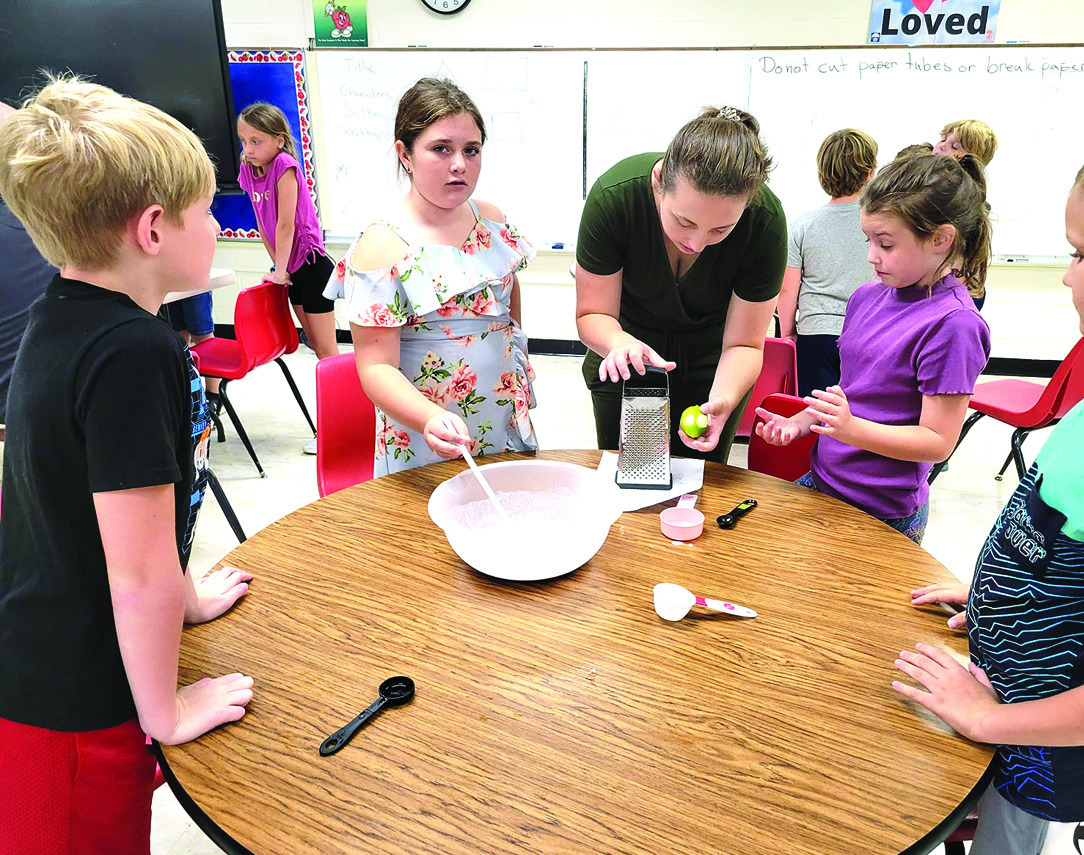
Tuttle used the workshop to plan ahead for future projects. She refined a classroom favorite, creating salt dough topographical maps of Virginia, by adding new layers of creativity and sculpting techniques.
She’s also planning a collaborative project with third grade where students will explore Fairfield’s nature trail, study animal habitats, and present their findings to community members.
“I think that one’s going to be fun,” she said.
As education evolves in the age of AI, Tuttle believes PBL is more important than ever.
“AI can write papers now,” she said. “But if you’re creating a public product that you have to present in front of people — great, AI wrote your paper. Do you even know what it means? Projectbased learning is powerful because it’s about understanding, not just information.”
Tuttle said her experience at PBL World showed her how teachers survive amidst adversity and change — by working together and holding fast to their purpose.
“We just keep teaching,” she said. “We just keep doing our thing.”