RHS Opens Exhibit On Historic Toys And Recreation
Editor’s note: This feature is written by Rockbridge Historical Society Executive Director Eric Wilson, describing the RHS Museum exhibit opening on Saturday. The exhibit will run through the end of this year.
We are all shaped by what we play, who we play with, how and where we play. This holds true as adults, of course, but those patterns are even more durably forged in childhood. In our younger days, play tends to be more solitary, often fanciful. Soon, more collaborative, spirited games take the stage, with others. As we age, new modes of play (team sports chief among them) more frequently involve competition: tests, trials, and satisfactions alike.
This weekend, a new exhibit at the Rockbridge Historical Museum invites visitors of all ages – children, adults, and seniors, each with their different generational lens – to reflect on those personal and social experiences across local, national, and historical contexts. Its installations and interpretive materials highlight both broadly familiar and more uniquely crafted playthings, toys, and recreational activities that have shaped everyday life for more than a century here.
Many of exhibit’s artifacts, historic photographs, and individually recorded accounts date back to the early 1900s, handed down through families, or driven by popular fads and commercial promotion. Some have passed on with time, while others have evolved into contemporary forms and variations: new portals for imaginative and interpersonal experience.
Shaped by materials from the Rockbridge Historical Society’s collections – drawn from nearly 100 years of community-sourced donations, and a range of new loans by local residents and descendants – the new exhibition is free to all, along with the RHS Museum’s other displays illuminating local history. The museum, located at 101 E. Washington St., is open noon to 4 p.m. on Saturdays and Sundays through December. Later this fall, two traveling exhibits shared by the Virginia Museum of History and Culture will additionally provide timely retrospectives prompted by anniversaries of the Revolutionary War, and the Vietnam War, each focusing on the battlefields and home fronts managed by soldiers and families from Rockbridge, Virginia, and the United States at large.
“The Play’s the Thing” Hamlet’s memorable quote got it right, coupling the performative and material forms of entertainment, alike. “Rockbridge At Play: Toys, Games & Histories” is structured by a series of themes, such as sewing and shopping, scouting and sports, even the memorable arrival of the touring circus. Over the past year, RHS Curator and Board Secretary Cathy DeSilvey has pored through its institutional archive of local history, selecting both unique and broadly available toys. They’re often paired with photographs of playful activities, athletics and recreation, that provide representative reach, along with imaginative pull.
Taking a wider view, she reflects on some of the particular items that may once have arrived with novelty, but still resonate in the 21st century.
“Toys ‘from the olden days’ that people saved and donated to RHS are not much different than what children play with today,” she said. “Our collection, starting with the late 19th century, includes dolls, blocks, drawing materials, marbles and toy vehicles of all sizes.”
She continued: “The movie ‘Snow White’ came out in 1937, just two years before RHS was established. Nearly 90 years later, children still play with keepsake dolls like the early princess we have on show, alongside other collectibles and ‘action figures’ that kids can now purchase online. Together, they show how certain types of childhood experiences are univer- sal and don’t always differ by generation, as much as we may think.”
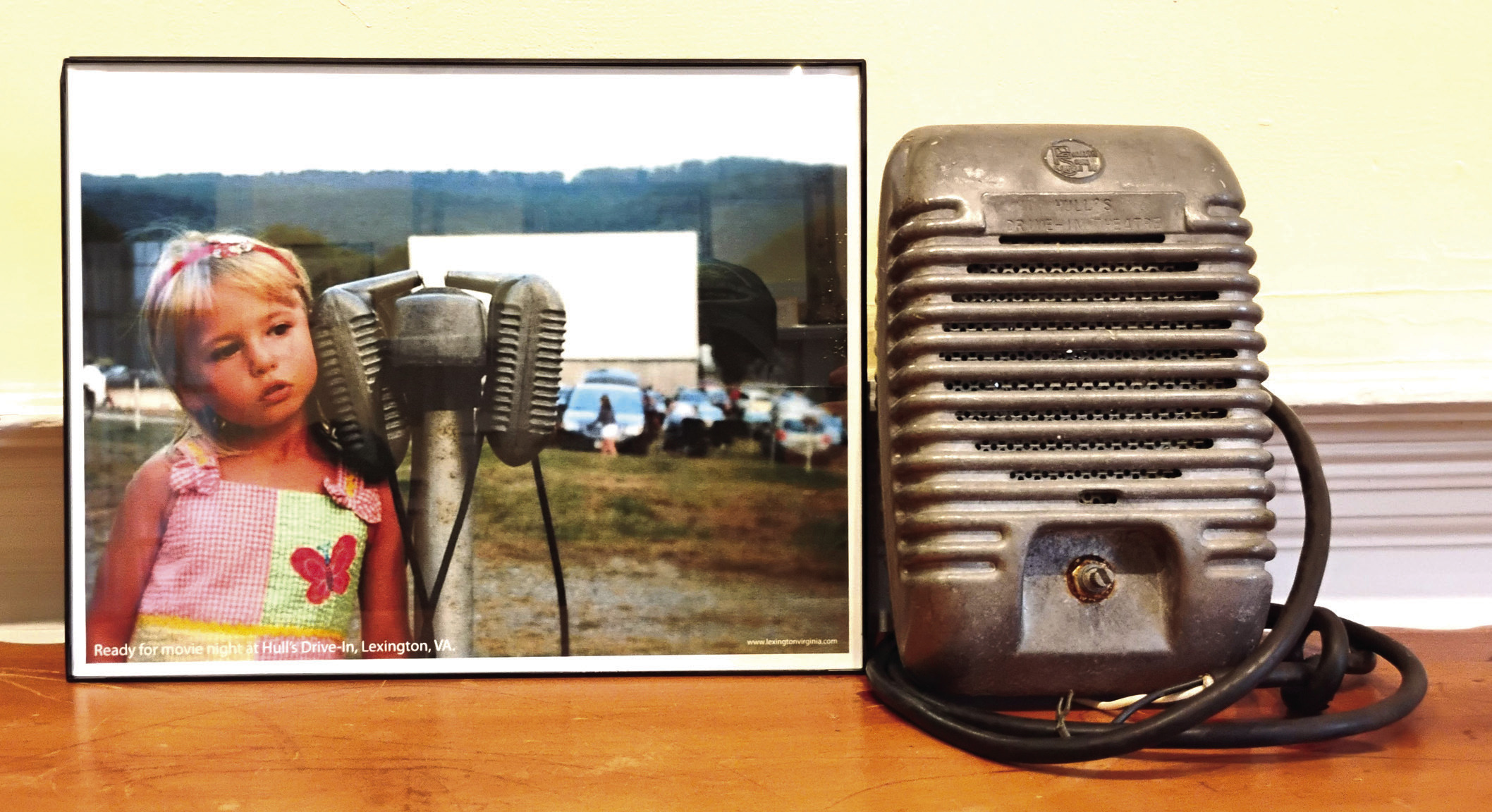
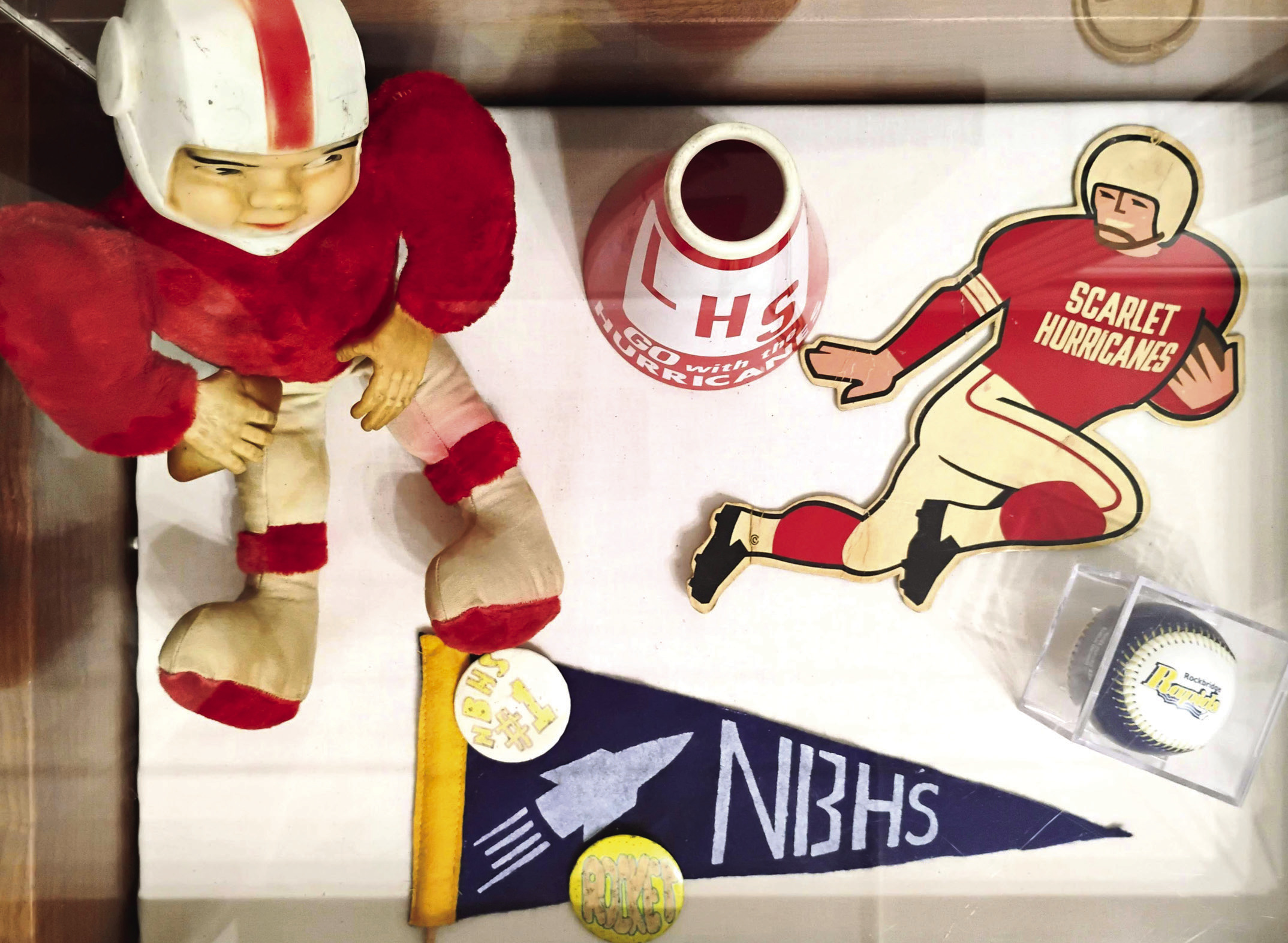
ABOVE, a photograph taken at Hull’s Drive In, now in its 75th year of operation, sits alongside one of the classic car-side speakers donated to RHS’ permanent collections. AT LEFT, memorabilia from the Rockets and Scarlet Hurricane are featured in another area of the exhibit, donated by the alumni associations of Natural Bridge and Lexington high schools.
Other iconic and rare objects showcase the lasting appeal of “things with wheels,” buildyour- own train sets, and model cars of different sizes. “Army guys” and military-themed puzzles pushed out during World War II stand next to colorful memorabilia from professional or high school sports. Hula hoops, a Roosevelt-era “Teddy Bear,” intricate needlework and samplers variously point to the turns of a popular craze, and the lasting craft that children can still enjoy by themselves.
DeSilvey highlighted what may be the exhibit’s most distinctive and suggestive artifact.
“My favorite item in this exhibit is the 1940s Girl Scout uniform donated to RHS by the family of Marjorie Barrett Moore,” she said. “It stands as a testimonial to this young woman’s dedication to learning valuable leadership skills, the teamwork and tools needed for camping, and the professional foundations of nursing. I imagine her proudly stitching each of those 31 merit badges onto her sleeve, every time she earned one.”
Memorable Toys, Local Stories
To bring the exhibit’s five core themes to life, RHS has made specific efforts to emphasize particularly local angles, advancing its broader mission to “preserve and promote the histories of the Rockbridge area, through public programs, publications, exhibits, and educational outreach.”
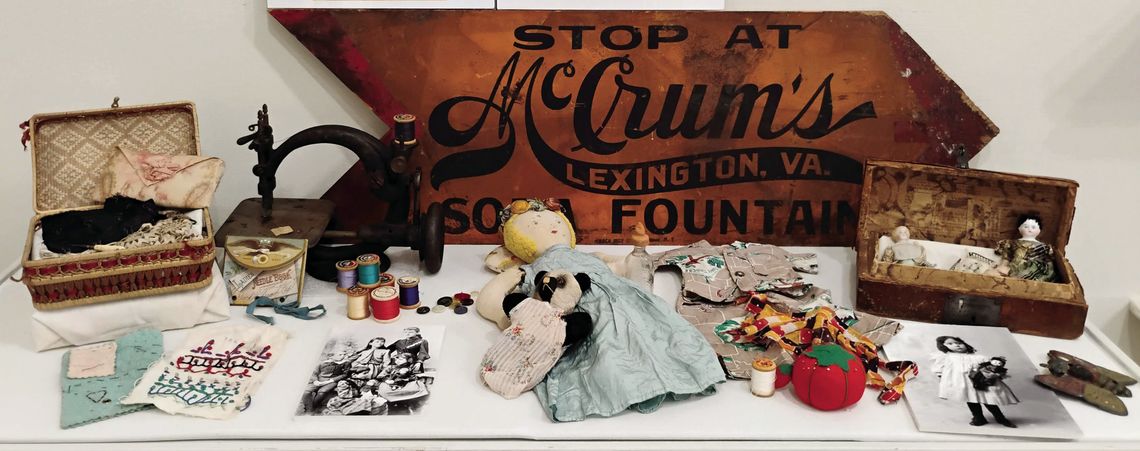
The shopping habits that availed these toys and supplies are witnessed by the familiar wooden sign pointing to the behind-the-counter attractions at McCrum’s Store. Or, a few doors down Main Street, the nationally advertised inventory shown in the plate-glass storefront of another anchor emporium named for Isaac Weinberg (who also owned and operated the town’s two movie houses, The State and Lyric Theaters, through the early and middle 1900s). Even Woody’s Chevrolet, whose dealership was located where the Lexington library now stands, pushed out toy models of its new lines of automobiles … in the more profitable hopes that parents would be similarly lured to buy the latest vehicles, themselves.
Other featured combinations pair the athletic enthusiasm and rivalries of local schools – in one case, the Natural Bridge Rockets and Lexington High School Scarlet Hurricanes – conjuring the jousts and cheers of still-living alumni, and ancestral stories and yearbooks passed down through families, and now digitized by RHS for school archives, trophy cases, and entryway screens.
Photographs and street-strolling elephants point to crowded downtown parades, and the heyday of the touring circus, when it set up shop on the fairgrounds off Houston Street, or at Jordans Point. Unfortunately, no pictures survive to color the local record of Buffalo Bill’s nationally-touring “Wild West Show,” when its Pullman Car and train of animals pulled in to Lexington, and other cities across the country in the early 20th-century.
Generations of Play
Children change over time, and not just as they individually age. Our very concepts of childhood evolve, too: varying historically, within a range of cultural contexts. Consider the diverse expectations for work and leisure, across different rural, urban, or suburban settings, as well as digital arenas today. Casual and competitive play has segregated activities and school teams for centuries, according to gender, race and religion.
Some of those terms are more formally visible in the exhibit’s displays on athletics and scouting, as well as more habitual assumptions about what’s appropriate, and what’s not. Age gradients variously direct opportunities and choices (the category of “adolescence” as a distinct life stage, in its own right, only emerged in the United States around the turn of the 20th century). Not to mention the sweep of variations on whether we confer “adulthood” in legal terms at 18, and its associated rights and responsibilities.
Many of these traditions - and the rituals and objects through which they’re confirmed - are generationally passed on within families and clubs, churches and schools.
RHS President Tom Roberts reflected on his own contributions to the exhibit, and why they matter in the contexts of both personal and community histories: “Toys often signal beautiful connections within our families, and between generations. As I began to see central themes develop from RHS’ collections, I looked back into our own family closets. In the process, I re-discovered a simple wooden tricycle that belonged to my father-in-law, and was made by his father, before him. Many decades later, my own children have played with it, too, the wheels of history turning through four generations now.”
Roberts continued, “I’ve also loaned a Cub Scout Pine Box Derby car from thirrd grade, having worked on this with my own Dad, sanding it down, painting it, adding weights: an experience warmly remembered by many boys of my era, and those before and since.”
In addition to those representative keepsakes, some of the exhibit’s items are more locally communal. As a parent, myself, I’ve always warmed to take my own young daughter and her friends to Hull’s Drive-In. The broader national market for those classic American gatherings had largely faded by my own childhood in the 1970s and ‘80s, so it’s all the more special that she and those friends now work there today, in sustaining that celebrated local landmark. In our exhibit, a sentimental color portrait of another young Rockbridge girl instantly evokes a specific local place, and window of time: backed by the large screen and Blue Ridge Mountains, and flanked by the car-side speakers that were just removed before this year’s summer season. Meaningfully, the one on display at the museum was donated to RHS’ permanent collections just last month, as their own technologies for entertainment - like those of every era - have taken new forms.
We hope some of these objects will cue you to think about your own memories and habits of childhood play, to smile in recalling your favorite toys or games. Some, you may have brought to school for recess, or for show-and-tell or trades. Others, passed on as legacies to children or grandchildren. Many more, lost to time and attics. But importantly, some everyday items become distinctive artifacts, donated and preserved in museums and other lasting places of care.
After touring the exhibit, visitors can also examine the RHS Museum’s new constellation of historic maps of Lexington, Buena Vista, and Rockbridge County, illustrating their own growth, as well as bygone places, in evocative detail. Another new entryway installation focuses on histories of Natural Bridge, the namesake of both Rockbridge County and RHS, and a lasting destination for recreation, mass tourism, and takeaway souvenirs, since Thomas Jefferson first bought the property on July 5, 1774.
Whether three-dimensionally, or digitally, we invite you to share your own stories with local audiences, and the lasting historical record - via RHS’ Facebook and Instagram pages - as we continue to curate a broader community archive, in the joint spirit of preservation, and play. For more details on RHS’ range of 2025 exhibits and related programs, visit RockbridgeHistory.org, or email [email protected].
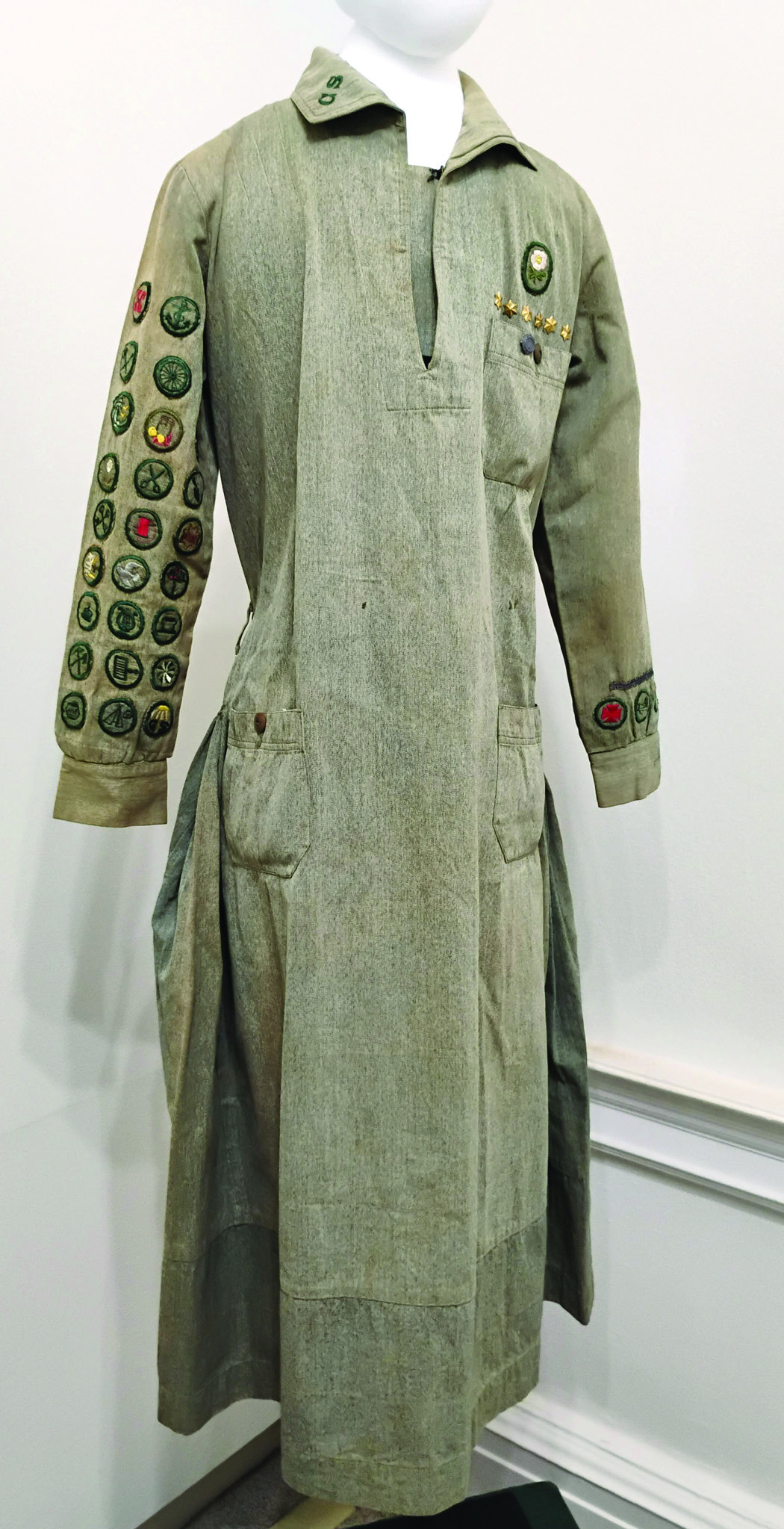
ON THIS FULL-LENGTH Girl Scout’s uniform from the 1930s-40s, you can closely examine over 30 merit badges representing the skills that both girl and boy scouts could earn. (RHS Collections)
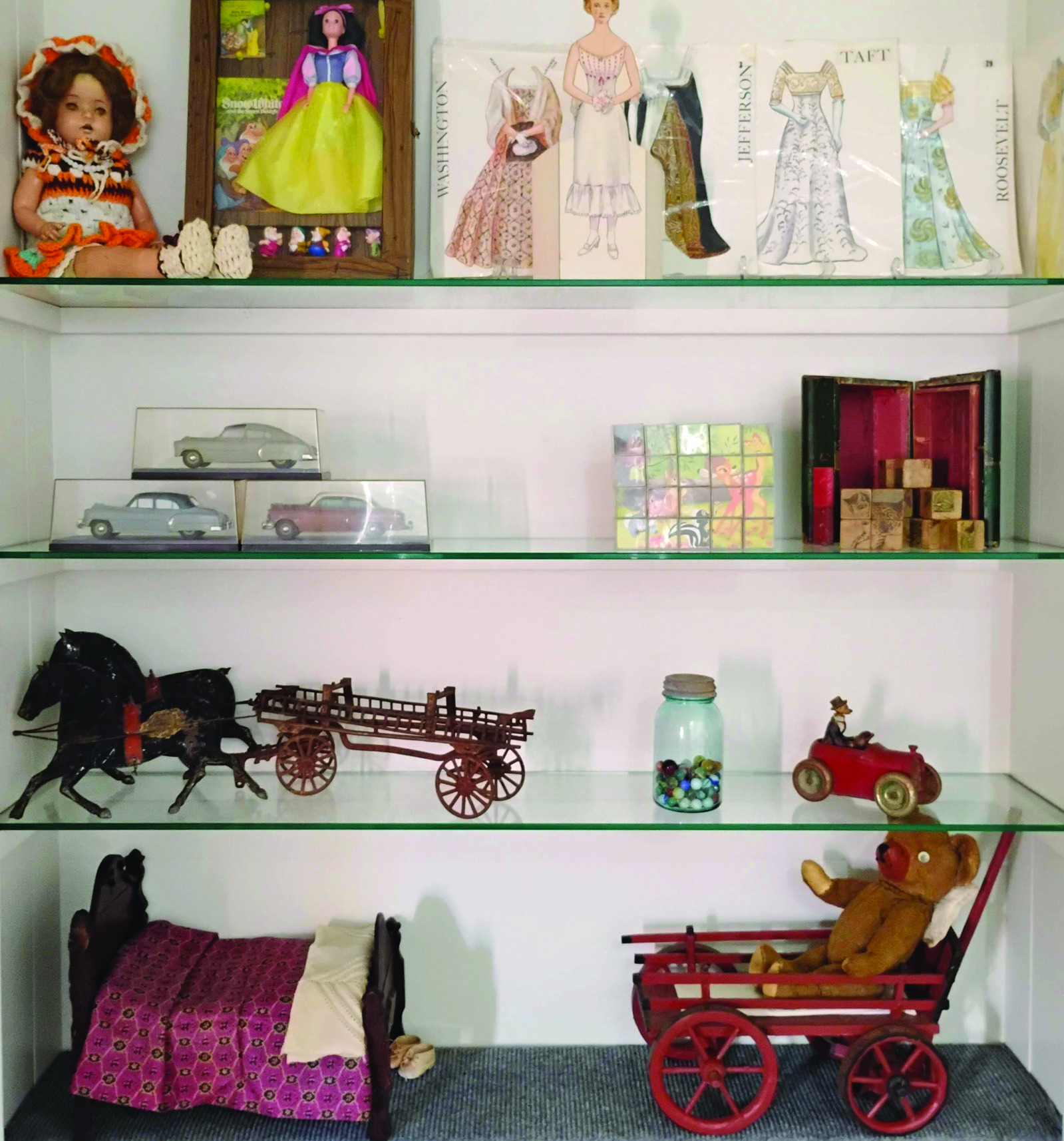
A CAST-IRON 19th century horse and carriage - loaned by the family of late RHS President and Lexington Mayor D.E. “Pat” Brady - sits beneath an iconic 1937 “Shirley Temple doll,” Snow White dolls marketed by Disney, and hand-painted paper dolls blazoning the dress styles of America’s First Ladies, from Martha Washington to Pat Nixon. Below them are a comical “Gumpmobile” spurred by the popular cartoon, and a series of model cars gifted by the former Chevrolet dealership anchoring South Main Street (RHS Collections and community loans)
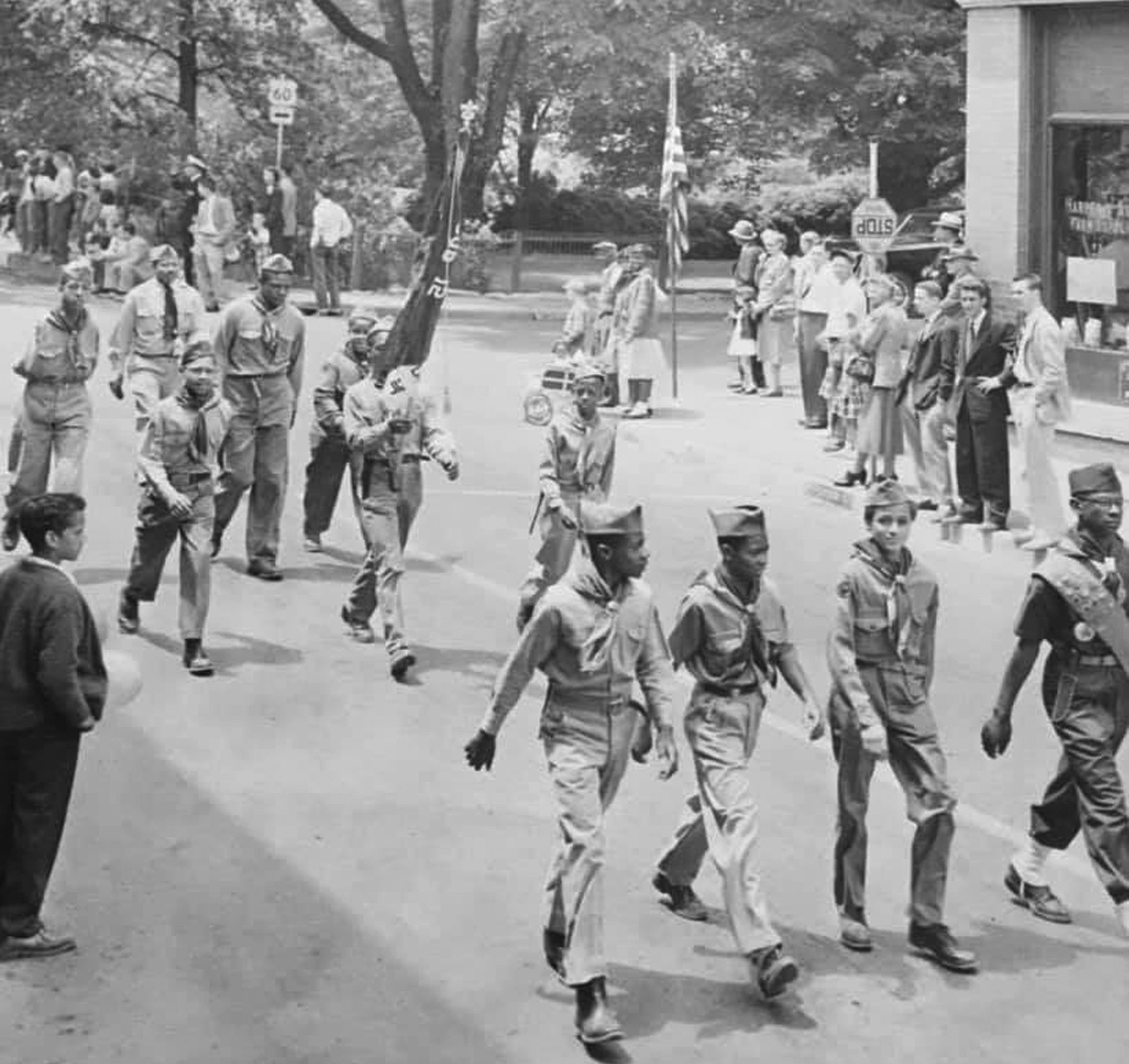
THIS POST-World War II photo shows Boy Scout Troop 57 - led by Leroy “Tiny” Richardson, namesake of the city park on Diamond Hill - passing the present location of Hopkins Green and The Palms in a parade. (Lylburn Downing Alumni Association photo)