Smaller Opportunities
One of my favorite sayings whenever I discuss agriculture in our region is “we are a lot more like Ireland than we are Iowa.” By this I mean we are a countryside of mostly small holdings of less than 50 acres, often consisting of difficult terrain, and connected by winding narrow roads. This pattern of landownership has direct effect on the things we can grow, markets we can access, and stewardship of our land and water.
The past two weeks this column has highlighted the convergence of land stewardship need and cash flow opportunity as a result of high cattle prices nationally forecast to extend at least through 2026. The two columns preceding this one addressed fencing and fertility needs for farmland owned by a nonfarming landlord and rented by a cattle farmer.
For the non-farming landowner with less than 30 acres, negotiating land stewardship can be difficult, especially if parcel size, water resources, and/or fences are insufficient to support grazing livestock. Many of these landowners have relied on a neighbor farmer to harvest hay on these parcels in order to qualify for agricultural use valuation for real estate tax purposes. But the cost of equipment maintenance and fuel are forcing farmers to reevaluate their hay making operations, even in light of high cattle prices. Harvesting hay at a remote site demands multiple trips with multiple pieces of heavy equipment and then transport of the hay all of which adds up to significant cost for the farmer. Virginia Cooperative Extension advocates for more efficient use of grazing and limiting dependence on hay through its branded program called “Graze 300” (online: https://ext.vt.edu/agriculture/ graze-300.html).
For the landowner with fewer than 30 acres, I urge them to consider engaging with a nearby farmer to explore possibilities for a mutually beneficial working relationship. Such a working relationship on such a small acreage is likely to require the landowner make a considerable investment. But the farmer can often bring heavy equipment and valuable expertise to bear on projects that allow the small acreage owner to accomplish land stewardship goals and at lower overall cost.
Suppose for example the landowner with 30 acres would like to develop all or a portion of their land as a pollinator meadow or a hedgerow along the slope contour (not in the fences or property line!). But such a project may require heavy equipment, strategic mowing, planting, or herbicide treatment.
If the landowner were to make a significant contribution to the cost of planting 20 of the 30 acres to alfalfa or an improved variety of grass, the value of such an improved field for hay could incentivize the farmer’s stewardship and care of the entire 30 acres.
Or, alternatively, the landowner could invest in good fences and water sources allowing the farmer to strategically graze the pollinator area or hedge in the late fall or winter and an improved grass species better suited for summer grazing could be established on the other acreage.
Stewardship costs money. Landowners who want to see their farm or forest improved must be willing to engage. The current high cattle prices are creating an opportunity for landowners and stockmen to build mutually beneficial partnerships but success demands communication, significant up front contributions, and a willingness by both parties to ‘take the long view’ of the effort. Stewardship is not a 12-month proposition.
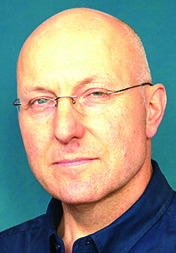
For more information on options to pursue land stewardship strategies, contact me, Tom Stanley, through the Rockbridge County Extension office or by e-mail at [email protected].