Eric Wilson RHS Executive Director
Over the next few years, the Rockbridge Historical Society and News-Gazette will periodically publish a series of “Revolutionary Moments” highlighting distinctive moments and figures in local and national history. Many will be tied to the 18th-century events now being commemorated near their 250th anniversaries. Others more broadly mark the goals, evolution, and progress of “The American Experiment” across the arc of four centuries, since Rockbridge County and Lexington were officially established by Virginia’s General Assembly in 1777-1778.
Revolutionary Moment #1: June 14, 1775
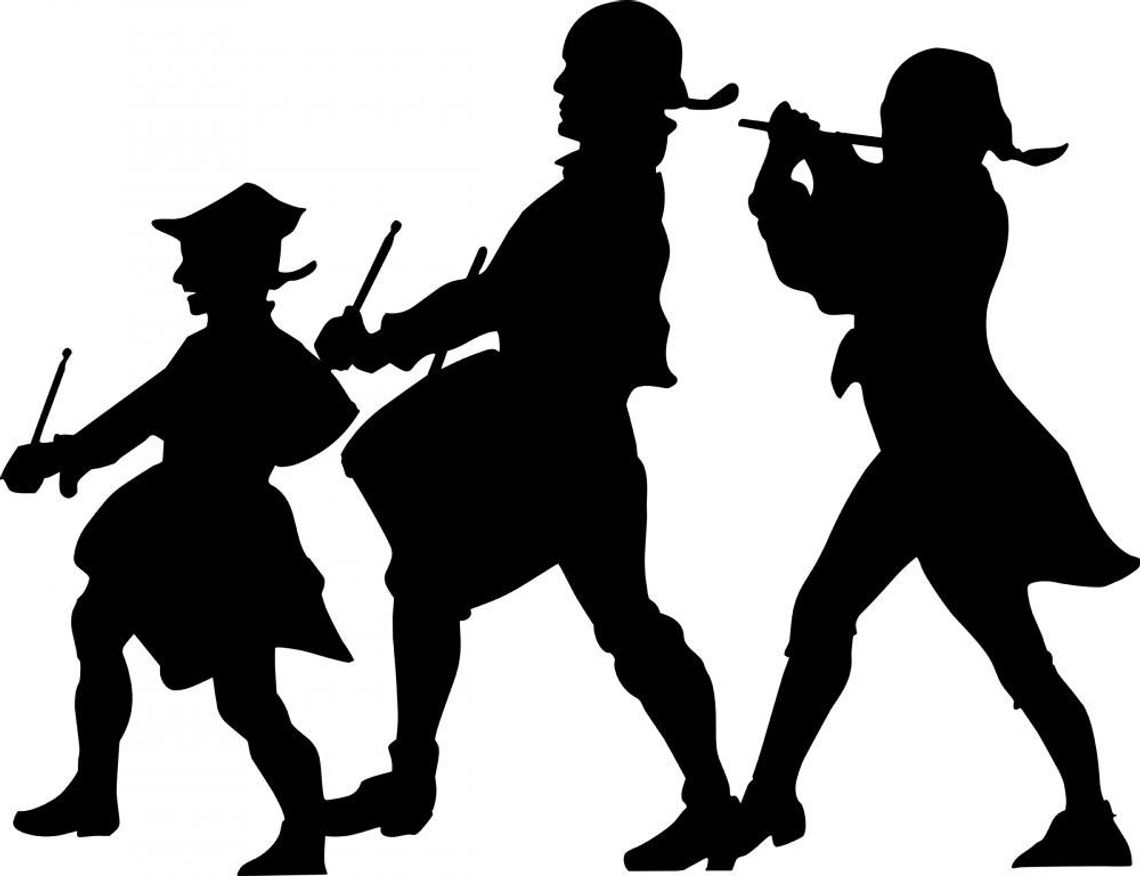
Even before there was a Declaration of Independence, there was an Army. On June 14, 1775 ‒ two months after the “shot heard round the world” ignited the Battles of Lexington and Concord ‒ the Second Continental Congress established the first Continental Army. It was formed and funded to both unify and strengthen the armed forces already organized and fighting as colonial militia from different states, or drawing more local volunteers and “minute men.”
As its inaugural Commander-in-Chief, the Congress appointed 43-year-old George Washington, who’d previously served as a British officer in Virginia’s provincial militia from 1752 to 1758. His first task when arriving in Boston was to train an undisciplined army, and to secure longer terms of service from his soldiers. With early and short enlistments soon to expire, and their pay uncertain, many were already returning home to the claims of their families, farms, and towns.
Nationally, over 230,000 soldiers served in the Continental Army during the American Revolution, although no more than 48,000 were enlisted at any one time. According to the newlyopened National Museum of the United States Army, nearly 30% of the Army would be wounded, captured, or killed: including 8,000 who perished from battle casualties, and twice that number dying from illness or starvation.
It’s difficult to determine how many soldiers hailed from Rockbridge County, which would not be legally carved out from Augusta and Botetourt Counties until January 1778. Several hundred local men are estimated to have gone to battle in companies under command of notable officers from the area, such as John Bowyer, Andrew Moore, John Bowyer, Samuel McDowell, John Gilmore, and Samuel Wallace. When the Army was finally mustered out in 1784, only 80 soldiers remained on active duty; the work of a more fully professional and consistently prepared American army was yet to come.
In 1917, this landmark date in American history would be further enshrined as “Flag Day,” when proclaimed by President Woodrow Wilson during World War I (later signed into law by President Truman after World War II in 1949).