RHS Program Slated For May 4
On National Ride a Bike Day - Sunday, May 4 wheel back into time with a public program hosted by the Rockbridge Historical Society, titled “The Bikecentennial in Rockbridge: 500+ Years of History along 50 miles of Route 76.”
Gathering at 2 p.m. in the Lylburn Downing Middle School cafeteria, you can steer further into the local, state and national past, guided by Virginia Tech history professor and director of the Bike 76 VA Project, Tom Ewing.
If you or your kids come by bike, you can even get a free tune-up in the parking lot, or expert tips on bike safety, after Ewing’s slideshow and introduction to his 30-episode podcast (see bike76-va.vt.domains for links and related resources). More informally, enjoy a chance to compare favored routes – whether riding or driving the byways of Rockbridge – on and along the historic trail segments that wind their way through our county, from Natural Bridge, through Main Street Lexington, to the crest of the Blue Ridge Parkway.
Throughout the area, the Valley and Virginia – and stretching across the nine-state, 4,200 mile TransAmerica Bicycle Trail established and named for its 1976 origins – black and white roadsigns with a bicycle logo still mark that route today. Those signs don’t merely signal directions, but invite you to travel back in time. For many, those imaginative journeys traffic through lived memories five decades ago. They can also wind through the many turns of two-and-a-half centuries of national histories that point back to 1776.
As Ewing emphasizes, “U.S. Bicycle Route 76 brings cyclists into local communities, including long distance cyclists and day riders from the region, in ways that allow them to explore historical sites while also engaging people and businesses along the route. In this sense, a bicycling route is different from automobile routes, which direct traffic away from population centers (interstate highways and the Blue Ridge Parkway) or the Appalachian Trail, which mostly avoids cities and towns.”
He further reflects on the value of the original research that he and his students have undertaken to provide accessible digital resources, as well as new ways of thinking about communities, through time: “Researching, writing and recording the podcast and posting weekly essays to our website has revealed traces of history that weren’t readily visible to those traveling through these regions, making it possible to historically connect eras and topics.
“Throughout this project,” he continues, “we explore ways that communities developed across history as well as actions that established, enforced or maintained separation and inequality. The project also examines the promises of liberation, equality and citizenship established in the Revolutionary era and the struggle to extend these rights across all social groups.”
With May annually proclaimed as Virginia’s “Bike Month,” RHS is partnering with Virginia Tech, the VA250 Commission, and a range of local and state cycling organizations. Valuable input has come from local riders and cycle shop owners, as well as leaders from the Virginia Bicycling Federation and Adventure Cycling, a leading enterprise which was originally, tellingly born from the pioneering initiatives of the Bikecentennial itself.
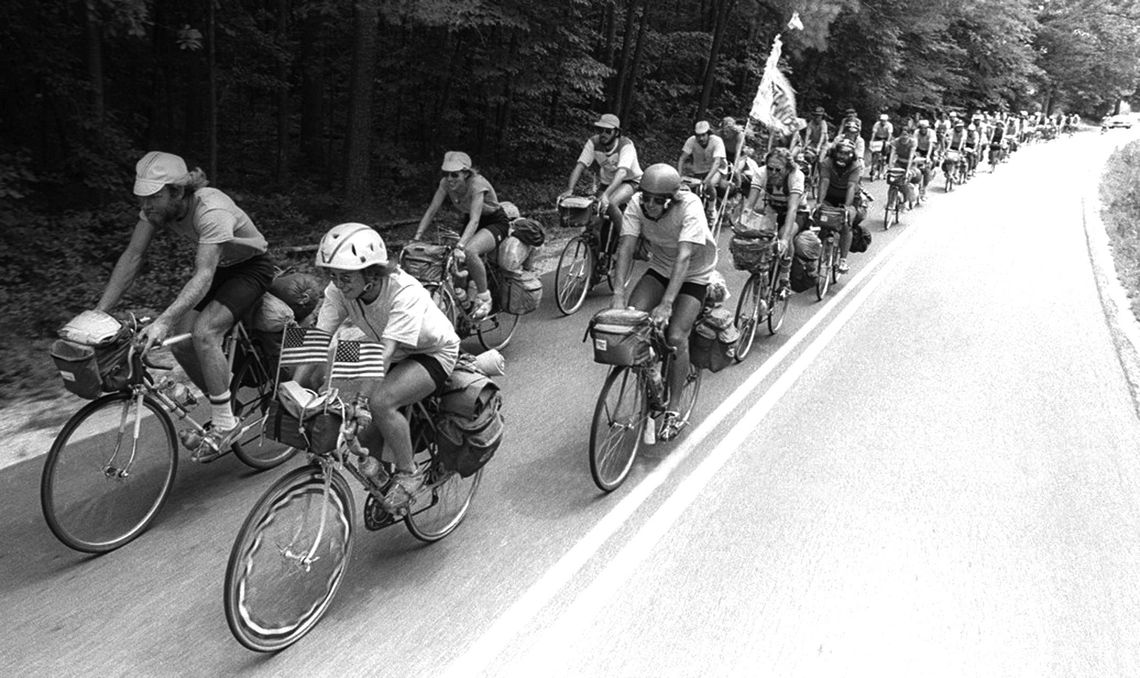
On May 14, 1976, an initial group of riders set out from Yorktown, heading through Williamsburg and Richmond, climbing the Blue Ridge before wheeling southwest through the Valley to the western foot of Virginia, then heading to the Mississippi River, and onward to the confluence of the Columbia River and the Pacific Ocean. Among the 4,000-plus riders who signed on to that year’s collective, go-at-your-own-pace enterprise, other riders set out on routes heading east from Astoria, where Lewis and Clark’s Corps of Discovery had arrived, at Cape Disappointment.
The Trail’s originally visioned path doesn’t simply connect a series of notable environmental and historical landmarks. It also constellates different moments in time: the securing of revolutionary freedom on the Chesapeake Bay; the exploration and annexation of French, Spanish, and indigenous lands in the early American republic; and the 1976 bicentennial itself. Fifty years on, the Bikecentennial has proved to be one of the unique and sustainable legacies of nationwide festivals during the bicentennial year, waving flags and gathering together in the still-near wake of Watergate and the Vietnam War.
Laterally, of the country’s 21,000 historical organizations and historic sites, over a third were established within just a few years of 1976. Today’s VA250 organizers similarly recognize that promise and the generative possibilities that this semiquincentennial iteration can hold, not only for historic tourism, but for business, arts and nonprofit initiatives RHS Executive Director Eric Wilson will open the program with remarks on how this project ties to other local and state initiatives and VA250 commemorations, and about developing plans for a community ride along the Rockbridge stretches of Route 76 in summer 2026. Perhaps the ride could occur on July 4, when Lexington’s annual bike parade brings our youngest riders through Main Street, that most trafficked stretch of the historic route.
In setting the stage for Ewing’s tour, Wilson will also direct attention to other significant roads through Rockbridge history, and the journeys that residents have visitors have taken: from the earliest migration paths of Native American peoples in the Valley, through the age of turnpikes, “The Negro Motorist’s Green Book,” and the “flyover” changes that have come with interstate and air travel.
During Q&A, comments are particularly welcome from attendees who’ve ridden the route individually or in groups in the “Summer of ‘76,” as well as those who have welcomed other riders to stay at their homes, or served them at their places of business, since and still.
As with other initiatives being pursued by RHS, this collaborative event connects with other community and university partners to develop creative initiatives to learn about history. But these ventures also provide distinctive opportunities to engage with history in different ways – individually and communally – through performing and visual arts, through foodways traditions and genealogical inquiry, outdoor recreation, and visits to Virginia’s celebrated historic sites.
For more, see RHS’ Facebook and Instagram pages.