Local non-profit organizations: We know who they are and we have a general knowledge of what they do, but a lot of what we see is just a fraction of their work and impact on our community. We see their booths at street festivals, they have freebies and swag tables, and they hold and sponsor events all around the county.
This interview series will provide a deeper knowledge and understanding of these groups and the needs they address in Lexington, Buena Vista and Rockbridge County.
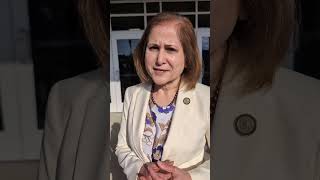
Judy Casteele is the executive director of Project Horizon, an organization that has been in the Rockbridge area since 1982.
What is this organization’s mission?
Our mission is to serve victims of domestic and sexual violence [and] to eradicate domestic, dating and sexual violence in the Rockbridge community.
What are some of the issues this organization addresses?
So, we’re addressing anything having to do with victimization of people who are victimized by domestic violence, sexual assault, child abuse. We work with victims of human trafficking, so any kind of intimate partner violence. People tend to think most of what we do is a shelter, which we do provide shelter and housing and 24-hour coverage, but that’s actually the smallest part of what we do. Most people think that’s the largest part of what we do. We shelter about 100 people a year but we have about five or six hundred people who come for some kind of counseling or advocacy or support within the system.
So, in addition to our direct victim services, we also do education and outreach – so we’re in the schools from say kindergarten to college and everywhere in between. We’re also starting a new program where we’re doing more community outreach. Community outreach with folks who make common contact with victims that don’t even think in those terms; the people that you might talk to over a longer period of time, for instance: tattoo artists, bartenders, hairdressers, the folks who hear people’s stories and they may or may not know what to do with those stories, or what resources to provide. We’re just beginning on the cutting edge and doing that – making sure that besides talking to children about healthy relationships and respecting boundaries and, you know, respecting differences in others, we want to say to the community, ‘We’re here if you need us and we’re going to look at different ways to address that.’
Do you have any statistics or data that helps illustrate the needs in this community and the impact of this organization?
Our annual report – it has the numbers of people that we served in the last year:
- 1,486 hotline calls
- 3,257 nights of emergency shelter
- 2,695 nights of transitional housing
- 542 counseling and advocacy clients
- 639 educational activities
- 2,713 volunteer hours
- 30 new volunteers trained
Why did you choose to be a part of this organization?
I moved here 23 years ago to become the executive director. I had been working in the field in Radford for 15 years before that, so I really grew up in the field. I did a college internship at the Women’s Resource Center in Radford and from the very first day of my internship training I knew that was the work I was going to do the rest of my life. It was kind of dumb luck because when I was in college I was working and I was going to school. You know, doing all those things, trying to earn money and my internship supervisor, social work supervisor, said, ‘Have you thought about the Women’s Resource Center?’ and I said I’ve never heard of that. She said, ‘Well, they’re open 24 hours a day,’and I thought, ‘Oh, that fits my schedule.’ So that's how I ended up there, dumb luck. But I knew from the first day that’s what I would do the rest of my life
So when I finish my career, in two years, it will be 40 years of providing direct services for victims of domestic and sexual violence. It is a gift that I’ve been given to be able to do this kind of work. People say, ‘Well, how do you do that?’ My response is, ‘How do you not?’ Very fortunate to able to be in a place to do that and in a community that supports that work.
What services and programs are available but not widely known?
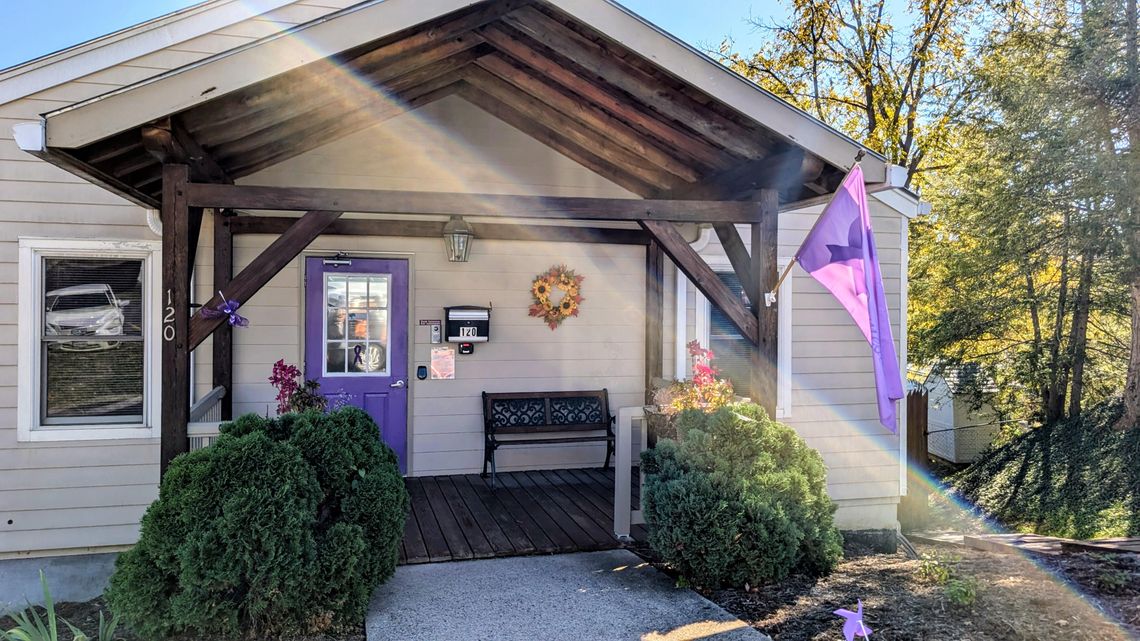
Some new things that we have going on are our transitional housing. In the last couple of years we started providing transitional housing for folks. That’s when they finish their time in the shelter and they don’t need emergency shelter anymore but they’re not quite ready for independent living, so we have a house in Lexington, we have the house in Buena Vista that folks can move into. They can stay for anywhere from six months to 24 months, as they’re working towards their goal. If we had more space, we’d have more people to do that.
One of the places where folks struggle when they’re working toward an independent living is just starting over. So if we have folks at our shelter, many times they come with nothing but the clothes on their back. So it’s like, how do they get to the next step? So, as long as money allows, but we’ve run out pretty quickly, we help with first month’s rent or utility deposits because starting over is very, very expensive.
Our legal advocacy program. We don't have an attorney but we have someone who goes to court with folks because court is a pretty scary place to be, even if you’re just going for a traffic ticket. But if you’re going and you’re facing the person who caused you harm, then that’s really frightening because that person has threatened you, they’ve hurt you in the past, they’re likely giving you some looks that you recognize of ‘maybe I better not tell what happened?’ So, we have someone who can go with that person, provide support for them, get them out of the way, help them in a private space, so that they don’t have to head-on look at that abuser while they’re waiting for court.
Another thing is we provide accompaniment for forensic exams. So, if someone has been sexually assaulted, part of the police investigation – your body becomes the crime scene. The police investigation is gathering that evidence. You don’t want the police to do that; trained forensic nurses do that. Folks can go to Augusta or to Carillion but Project Horizon has our own forensic center. We have nurses who come from Augusta and who come to Rockbridge to do that. We have our own place and that’s where people go for sexual assault exams. It’s not open 24 hours a day. They have to call us and set it up but it’s available locally. So, if folks are thinking, ‘I don't want to go to Augusta,’ maybe ‘I don't have the means to do that,’ or maybe ‘I don't want to go to Carillion where I’m going to see a neighbor.’ You know, you’re a small town. This is private. There’s nothing else that happens in this space. So somebody goes and they have a friend or family member with them that’s always in the waiting room, you don't have to worry about who else is there. And folks don’t know about that.
What kind of work goes on behind the scenes to make these programs available?
The kind of work that goes on behind the scenes is an enormous amount of fundraising through our annual holiday gala combined with grant writing and connecting with local donors. We get no automatic funding. In order to keep our life-saving vital services available, we have to raise over $1.4 million dollars every year. It’s like the analogy of the duck floating along the river while paddling for their life underwater where no one can see them!
That’s something I want people to know – is that we cannot do this work alone. We've got 21 staff. We've got about 35 active volunteers, maybe more than that because we just trained 20 new ones and they often roll over because of students. But we couldn’t do it without the support of our community. You know, if people like yourself, if the general public didn’t care and weren’t working to make a difference, we’d just be spinning our wheels.
We count on the community to give us paper towels and toilet paper and all the supplies we need and donations and that sort of thing. What we care more about is changing attitudes and changing the mindset that allows the cycle of violence to continue. That’s where we count on the community to go, ‘Oh, you’re right. This shouldn't happen.’ It’s kind of an easy one; it’s typically not a politically divided issue. Very few people, although we've seen it lately nationally, but very few people are going to come out and say, ‘Oh, it’s okay to hurt someone.’ We’ve seen some of that nationally lately but, you know, we don't generally see that. People are like, ‘Violence is bad. You shouldn’t hurt other people.’ And that’s part of our success, if you want to call it that – support of the community – because people say, ‘No, this shouldn’t be happening and I want to do what I can.’
What kind of needs does this organization have?
One of the things that’s happened in the last few months – it’s been happening for a long time – but people give us cars. In the last year maybe we’ve had four cars donated for folks who don't have transportation. This is people who are getting rid of their old car and they don’t know what they’re going to do with it. They’re like, ‘Oh, if I trade it I’m not getting much money for it, what am I gonna do with that?’ So, instead they transfer the title to us and when someone comes along and needs a vehicle, as long as they can pay for their insurance and they have a valid driver's license, we give them the vehicles. It can make all the difference in the world. If you can get a job but you can’t get to work, it doesn’t matter. If you can’t get your kids to school, it doesn’t matter.
I think one of the needs that we have is we need cars to connect people. They don’t have to be brand new cars. The most recent one we had was somebody’s daughter was graduating from college and they’re like, ‘She’s getting her first job and getting a new car and she’s driving the car Grandma used to drive.’ That’s gonna get somebody to work. That’s already getting somebody to work. So, that’s a big deal. So I think that’s something I’d want people to know, is that we can be that go between. Lots of people want to help folks, they just don’t quite know how to do it, and that’s one way they can absolutely do it.
What do you think the community doesn’t know about this organization?
The interesting thing about domestic violence is that there is no divide there. We tend to think that intimate partner violence happens to people with low economic status. Not true. The difference is that when we see that divide, it’s because people of lower economic status have fewer resources, so they’re gonna come to our shelter.
I got enough credit cards that I can buy a car with mine. I mean, you know, I have resources. I can go stay with a friend. I’ve got gas, I’ve got a car, I’ve got gas money, all those sorts of things, but it doesn’t keep me from getting hurt by someone. We tend to think it only happens to poor people, people in the other neighborhoods, people of the other races; it is not true and our statistics play that out. We see that very clearly. And I think we also see that in the people who support us. Now, certainly people with more means have more means to support us but folks recognize that this is an issue that touches so many people, that they know someone, someone in their family, a friend and it’s something they care about and that’s why we are so fortunate in this community that people care.
All services are free and confidential. 24-hour hotline: 540-463-2594