This area is fortunate to have a number of local farmers, artisans and farmers markets. Lets have a conversation with one farmers market vendor a week and get to know them, learn about their lives, their struggles and why they're market vendors.
Our goal here is to help folks see that there ought to be a place in their lives for the farmers market. It’s not that people should buy all of their food from the market, of course, but to recognize there is merit in knowing that you shook the hand of the farmers who grew the tomatoes in your salad, that you had a good conversation with the person you bought eggs from and all the ingredients in the bread and pastries are familiar and easy to pronounce.
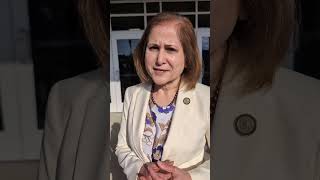
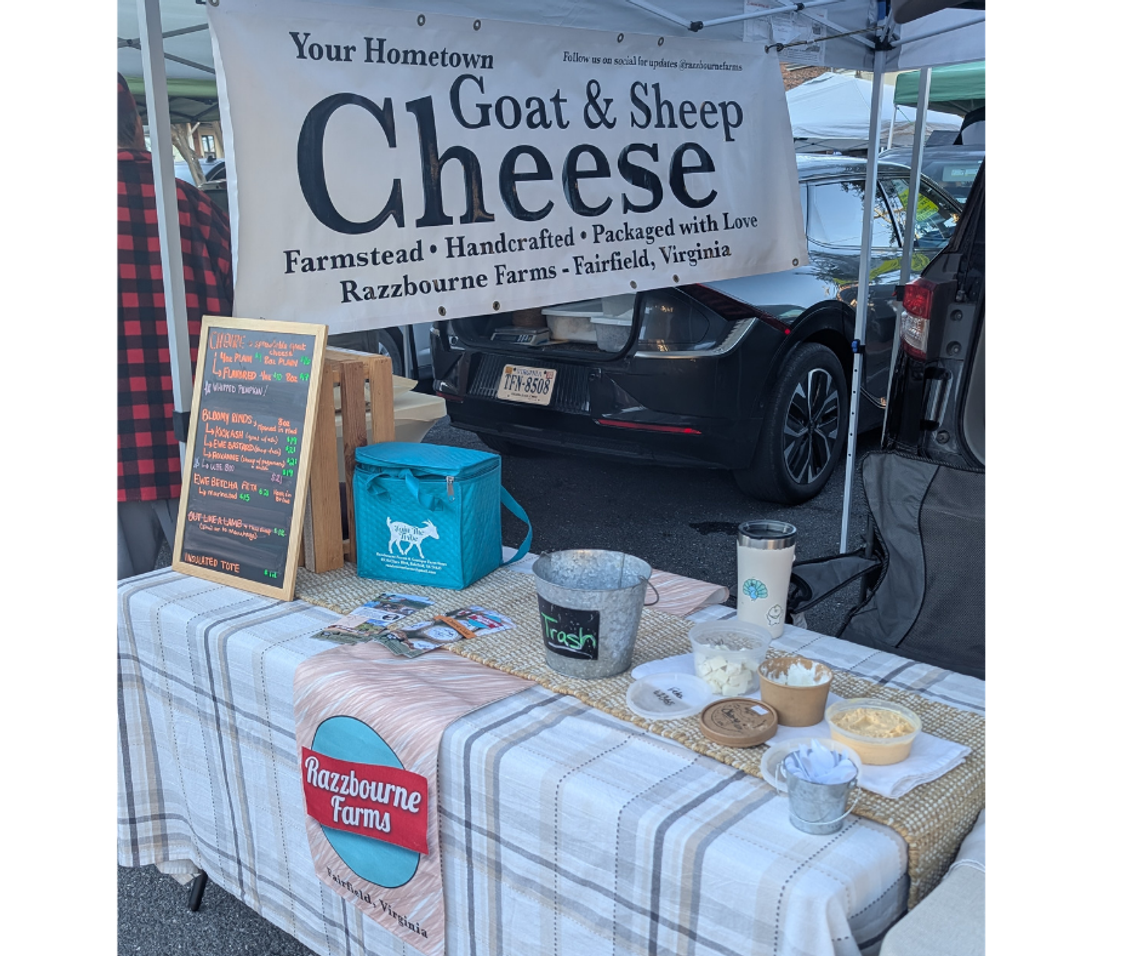
Meet Emily Heizer-Hall Razzbourne of Razzbourne Farms. Razzbourne Farms produces fresh goat and sheep cheese, right here in the county.
You can find cheeses from Razzbourne Farms at farmers markets in Lexington, Staunton, Waynesboro, Harrisonburg, Grandin Village in Roanoke and Salem. Their “Goatique” farm store has been open since 2024 and you can also find them at the Community Table in Natural Bridge. The percentage of income from market sales is 98 percent.
Did you always know you wanted to do this?
No, I did not. So as a little girl I wanted to be a vet but out of high school I was undeclared because I wasn't quite sure. I did continue on to get a bachelor's degree in graphic design and marketing. I was hoping to, you know, move to California or New York and get a big paying job but that job never came. With the bachelor's degree I'd probably applied to 30 or 40 jobs. I don't regret that degree because it's been very beneficial in the business but I guess farming was in my blood and that's how I got here.
What made it happen?
I had children at a young age. I had my son at 23 and it was very hard for me to grasp going to work 9-to-5 and paying someone else to raise my son. And then I had my daughter four years later and I knew I wanted to be home with them but also knew I needed to make an income, as well as have something worthwhile going on in my life.
As a young child I asked for goat cheese from the grocery store instead of candy. I really just enjoyed it and being a stay-at-home mom, sort of a homesteader type, I was like, 'it can't be that hard' and the first batch I made was terrible. It was disgusting. With research I found out that the best cheese comes with the best quality of milk. So I started out with two goats, just making cheese in my kitchen and that has really just snowballed. … I think we may be milking up to 60 goats next year, a real business. I always say that it was founded in 2014 but actually established in 2024, after divorce and relocating to a property where I did have the space to grow and the proper property for this type of business. Everything just really amplified in the last two years.
Can you tell me some of the process of your job – what you make/grow and what your market tasks entail?
Up until two years ago I was a one-woman show. So I was milking, then making cheese, milking again, finishing cheese, packaging the dishes, and that was bookkeeping, marketing, all of the above. Now we have essentially divided me into four or five different people. So we have an assistant cheese maker that's making most of the cheese but I'm still managing how much we make, of which type of cheese, what goes to which market, what's held back for wholesale, marketing, talking with the market managers and working on staff schedules and payroll. So it's really evolved the last two years. I'm still very hands-on and very busy, still very long days which is crazy because we keep adding people to the equation but it's just growing that fast, it's needed.
When I go to market I'm already exhausted from the Friday before, lining up the change and everything else for the other markets. Let's see, I was going to Grandin so I would get up around 5:30 or 6. We left from my home in Lexington because I would pack up cheese the evening before and get down there around 7:30, set up, sell for four hours, pack up, head back to the farm, unload, check on everybody and then the week starts all over again with cheese. It's really wild but it's pretty amazing.
Chevre is our, you know, our OG – original chevre. We milk in the morning and usually the two shifts of milk before making cheese, [which] goes into the batch. We filter the milk before its refrigerated and it's refrigerated before processing. So we actually cool it down and then we heat it back up for pasteurization, to 145 degrees to make sure it's safe, and then cool it back down to a set temperature. Then we set with culture and rennet and gently stir and let it rest overnight. The following day we will cut the curd and hang the curd to drain. Probably six to eight hours after that, we drop the curd, which is now cheese, and we salt it by weight and it's ready to be packaged.
What are some of the struggles you face with a year-round outdoor market?
This year was surprisingly amazing because we were able to be consistent. When we weren’t consistent, it was sort of annoying to go and not really be able to connect with the other vendors but the vendor girl for Lexington, Betsy, does a beautiful job. She’s created relationships with other vendors and our customers and that makes a huge difference. And, honestly, the biggest thing to do is having the change ready for Wednesday mornings because I’m just so busy and scatterbrained but it’s been a beautiful season – her going every week and we plan to do that from here on out.
I couldn't really afford to pay someone well and the person that we had going just wasn't 100 percent on board. Betsy is one of our original employees and has been with us for three years so she was like, ‘I can totally do that.’ She's just a very solid person and has her head wrapped around what we do and why we do it and what we produce and why it's important and that goes a long way from just throwing somebody out there and going to market for us blindly. She also was used to our setup from other markets that she had attended for us. So it was a couple different things. Definitely finding the right people and, you know, our staff is like family to us so the past couple years of people have stuck with us [and that] has made a huge difference in our customer response.
What are the rewards?
The connection to our community, for sure. Spreading a good, clean, healthy product for everyone around us is amazing. And then getting the feedback that people really enjoy our product and it's become a staple in their homes. It's a little different for us because we're seasonal so we don't have fresh chevre year-round, and this time of year we're slowing down, but we'll actually have a couple different items that we'll have year-round for the first time in forever. In the past, it's like, as soon as we started slowing down for the season … our outreach increased and everybody wanted cheese so that was pretty difficult. This year I think we can actually make it through markets and during the holiday season, which is pretty exciting.
The farmers market world, it's been around for a long time but I think lately a lot more people are opening their eyes to what's available to them in their communities and how much healthier it is for them and their families.
What do you wish people knew about going to the farmers market?
For real, it is rain or shine. You won't melt in the rain. Farmers are very happy because we're working in all elements and I really truly believe that helps your attitude. So if you're pondering sitting at home because it's cloudy or rainy outside, like you can still find these beautiful people and have beautiful conversations at the farmers market under an umbrella and still get the same products. So that's probably my biggest thing. And more than likely one of the vendors or somebody's gonna be dancing in the rain because, especially lately, we really needed rain. But we're a happy bunch most of the time at market.