Editor’s note: In recognition of the United Nations’ designation of 2026 as the International Year of the Woman Farmer, The News-Gazette this fall is featuring three local women farmers who enrich our communities in innovative and creative ways. Below is our first installment.
When Rockbridge County dairy farmer Jennifer Leech was a new Virginia Tech graduate in dairy science, a salesman arrived at her family’s Ingleside Dairy Farm and asked to see her father or her brother. She sent the salesman to where they were. Then her father and brother sent the salesman back to Jennifer.
“You need to talk to her,” they said.
Leech shares this story as a funny example of being a woman farmer, although she said that women farmers in her family, her mother and grandmother, never fit any stereotype. She recalls her grandmother, Mary Mackey Williams Leech, milking a lot of cows in dirty clothes and dirty boots. A picture of her driving a tractor hangs in the farm office.
“The community may’ve seen her dressed up, but I remember her doing farm chores before church or right after church,” Leech says. The women on the farm always did as much work as the men. “I remember my grandmother milking cows when I was a kid and then you would see her at church, and you’d never believe she worked as hard as she did.”
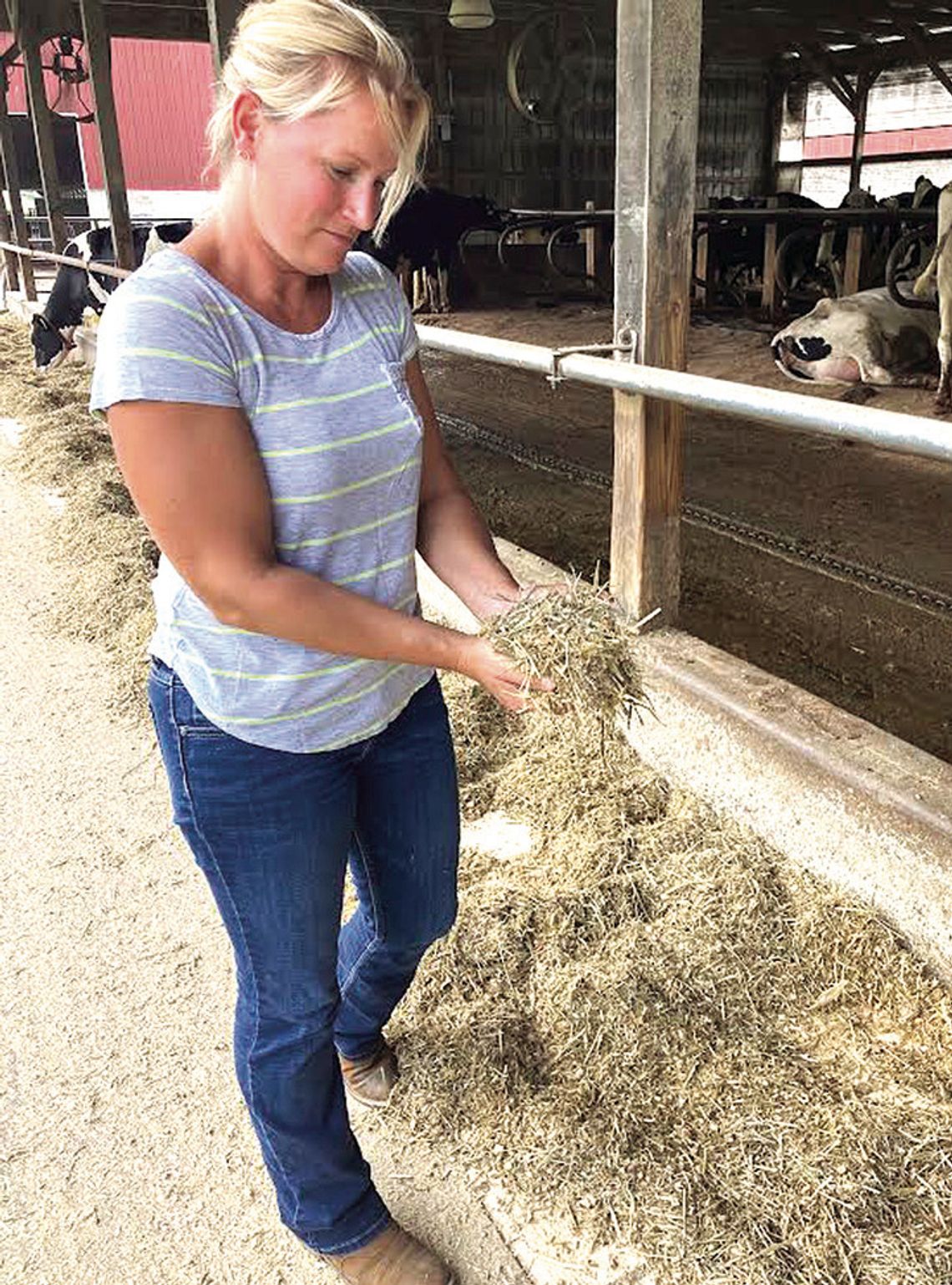
Leech works with the herd health of 325 to 350 Holstein dairy cows using Lely Astronaut robotic milking machines, and she does the book work.
When cows are ready to be milked, they have learned to walk to robotic milking machines, stationed in the barns. Machines read the neck tag for each cow to register teat placement. Lasers fine tune the milking attachments. As a reward, the robot milker gives cows food pellets. The number of pellets administered depends on the cows’ stages of lactation and how much they are producing. A cow may be milked up to six times per day if she walks to the milker. The dairy produces over 3,000 gallons of milk per day.
Leech tracks milking and other data on her computer. She shows exceptional technical knowledge as well as an endearing care for the cows and a passion and wonder at these remarkable machines. We watch a robotic machine work with a cow though a glass observation window.
“Think about it,” she says. “A cow just walked in there and milked herself.”
Using the cow collar identifications, machines track eating time, rumination, and activity to detect when cows are in heat and ready to be bred. All this information displays on Leech’s computer screen in the farm office. When cows are in heat, they get sorted, and she administers artificial insemination.
Most dairies the size of Ingleside have a mix of milking parlors and robotic machines, she says. Ingleside bought the robotic machines in 2012 and was one of the only operations like it in the area.
“We were the lone wolf out here,” she says.
In addition to raising dairy cows, the farm also grows corn for silage for the herd, hay for the herd, and corn and soybeans for grain sales. While dairy is her passion, Leech also works with Ingleside Trout Farm, started in 1990, which produces about 100,000 trout annually. She remembers helping to get it started as a child.
“Granddad was quite the innovator, and he couldn’t stand all the water flowing across the property line without harvesting some return,” she says. Her parents took a NC Extension course on trout farming, toured trout farms, and started the trout farm. They sell a large number of fish wholesale; to locals who want to put trout in their ponds; and they work with Trout Unlimited, which allows people to bring bait and tackle and fish March through June and in the fall.
The farm has three full-time employees and two part-time. Leech works with her brother, Charles “Beau” Leech IV, and her mother and father, Linda and Charles Leech, along with consultants, including a veterinarian and a nutritionist.
“We couldn’t do this alone,” she says, emphasizing communities that support the dairy farm, which has operated since the 1960s and has been in the family since the 1700s. Leech and her mother host visitors, including school field trips, Virginia Agriculture Teachers Association, and Young Farmers of Virginia.
The farm is a member of Dairy Farmers of America, a milk marketing cooperative that handles the sale of their milk. The cooperative’s milk can be found in brands like PET, Kroger, Food Lion, Mayfield, Dairy Pure, True-Moo, Borden Cheese, and Plugra butter.
Leech was elected as a board member of Dairy Farmers of America, a grassroots co-op with over 80 locations across the country, which works to help get milk from local dairy farms like Ingleside to the customer quickly and efficiently.
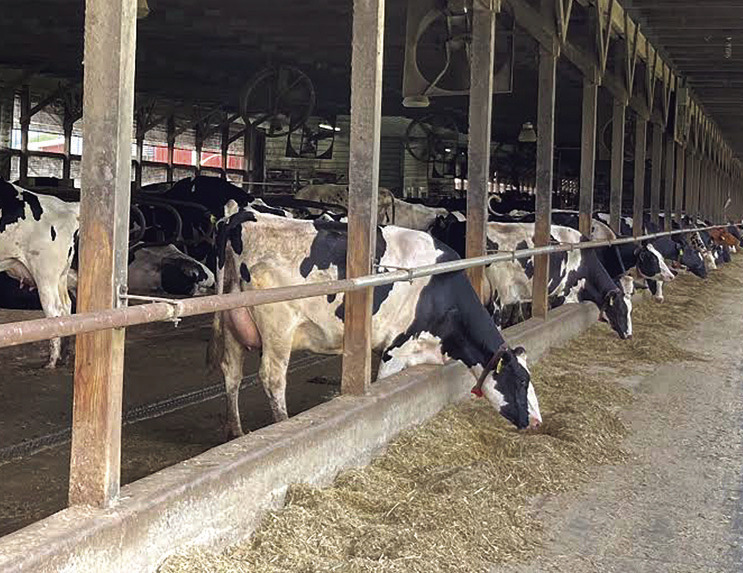
Ingleside cows move peacefully through open barns at Ingleside Dairy Farm in a remote southwest corner of Rockbridge County. Cows respond to a visitor’s talking. They nudge each other; some lay on pads to rest.
When asked what may make women farmers unique, Leech responds, “Women, generally speaking, have a nurturing characteristic that fits well with caring for animals and plants.”