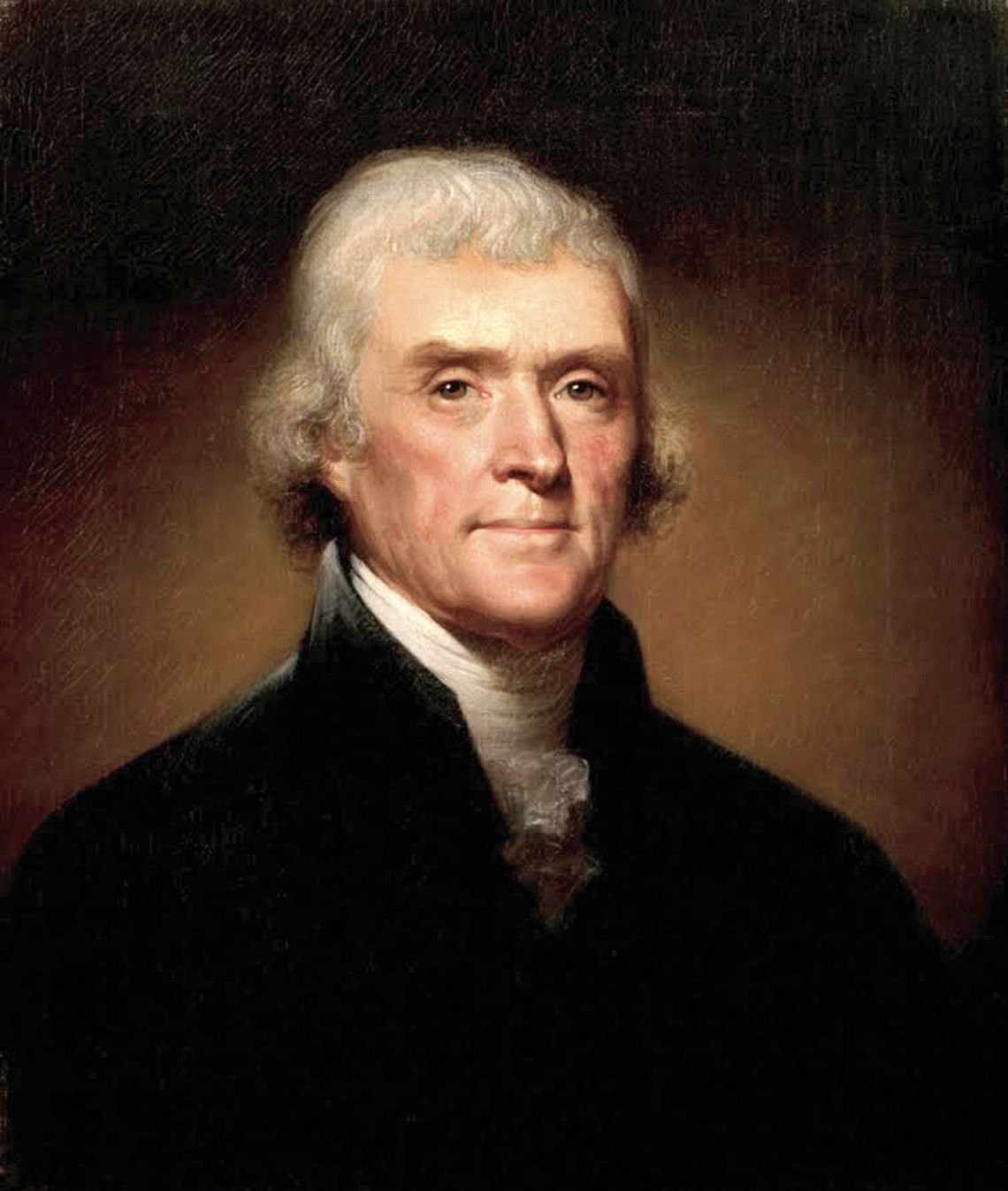
250th Anniversary Events Spotlight Jefferson And Adams
Editor’s note: This is the 12th article in the series “Revolutionary Moments,” published periodically by the News-Gazette, and written by Eric Wilson, executive director of the Rockbridge Historical Society and chair of Rockbridge250. The three-year series commemorates two-and-a-half centuries of “American Evolution” since the Declaration of Independence in 1776, and the joint birth of Lexington and Rockbridge County in 1778.
Friendships, like nations, are not sprung full-grown, or in a singular moment. Generally, they are forged and built through a series of commitments, alliances, and tests. Often, they’re managed through compromises, challenges, and even rivalry. At their best, many are strengthened and rewarded through personal or joint resilience.
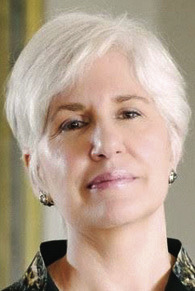
On Monday, Oct. 19, at 5:15 p.m. at Washington and Lee’s University Chapel, Jane Kamensky will take up those personal and political themes in an address titled, “Thomas Jefferson, John Adams, and the Lost Art of Civic Friendship.”
Kamensky is Trumbull Professor of American History Emerita at Harvard University, and former director of the Radcliffe Institute’s Schlesinger Library on the History of Women in America. Since 2024, she’s served as president and CEO of Thomas Jefferson’s Monticello, where Jefferson and Adams’ distinctive yet emblematic relationship has been fronted in a new interpretive tour she helped to pioneer, “Founding Friends, Founding Foes.”
Dr. Kamensky’s remarks will be extended through a moderated conversation with W&L politics professors Brian Alexander, who published a groundbreaking edition of Jefferson’s “Manual of Parliamentary Prac- tice” last year; and Lucas Morel, author of the 2020 book, “Lincoln and the American Founding,” and inaugural member of the America250 Commission. Concluding comments will reflect on national, state, and local outcomes that Morel, Kamensky, and I have respectively worked to develop through United States’ semiquincentennial commemorations, through our roles with America250, VA250, and Rockbridge250.
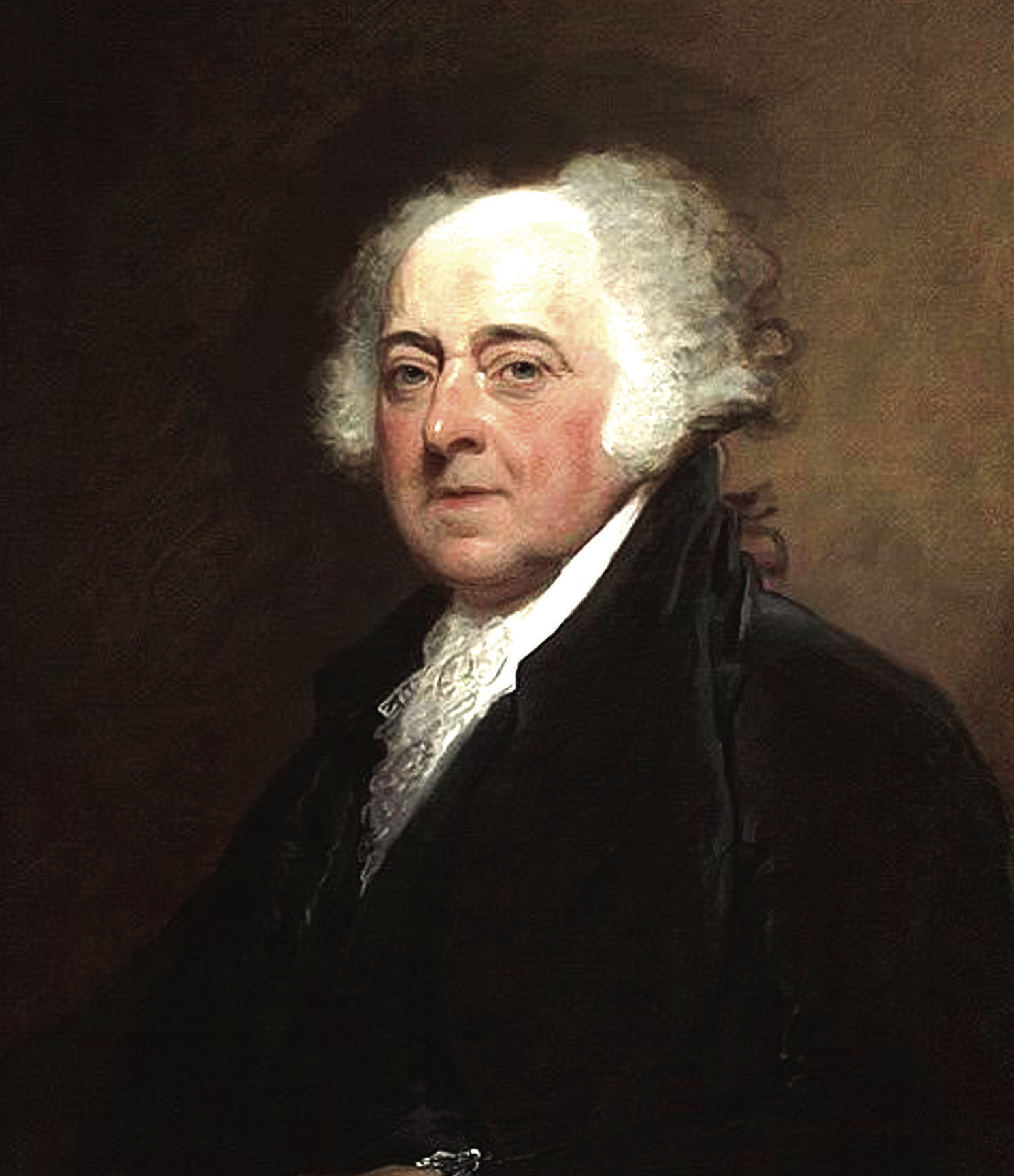
JOHN ADAMS
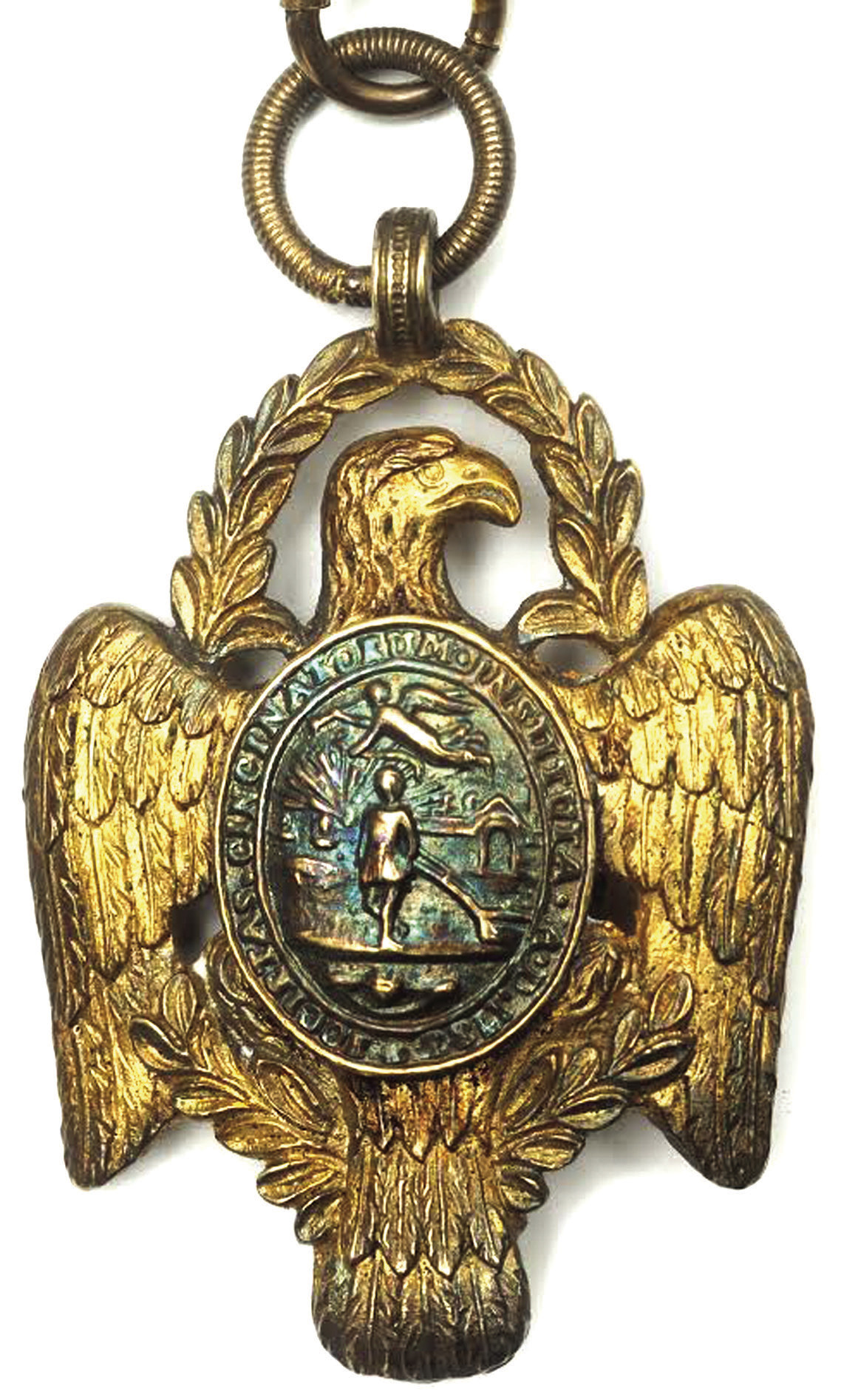
OWNED by George Washington Cole, this 1821 medallion features the Roman general Cincinnatus, retired to his plow: the insignia of America’s oldest patriotic, hereditary society, which honors Revolutionary War officers and their descendants. (courtesy Society of the Cincinnati)
Free and open to all, the talk and roundtable are co-sponsored by the Rockbridge Historical Society, the W&L Politics Department, and the Virginia Society of the Cincinnati.
The oldest patriotic, hereditary organization in America, the Society was established in 1783 “to preserve inviolate those exalted rights and liberties of human nature,” and “to render permanent the cordial affection subsisting among the officers” who’d served in the Continental Army. Fittingly, the Virginia chapter’s sustaining impact here was first evident in 1824, when it conferred a $25,000 gift to Washington College: established as “Liberty Hall” in 1776, then renamed for the national Society’s first “President General.”
While in Lexington, Kamensky will also visit with professor Alexander’s seminar, “Thomas Jefferson: Man, Myth, and America.”
And her lecture will be flanked by two other public events in RHS’ monthly series, “Revolutionary Films & Books: 1776-2026.” Together, these free community gatherings and discussions invite residents to credit Jefferson’s contributions (along with those of his contemporaries and two-and-a-half centuries of successors) to our cultural visions of liberty and governing institutions. Detailed below, both events begin at 6 p.m. in the Rockbridge Regional Library’s Piovano Room, on Tuesday, Oct. 13 and Wednesday, Oct. 21, respectively.
Words Matter
In illuminating the long arc of Jefferson and Adams’ evolving relationships, Kamensky has emphasized the critical value of “Defining Moments in American Democracy” (accessible in a short YouTube video, as part of a series by UVA’s Karsh Institute for Democracy). To frame the critical division between this one-time pair of friends, decade-long political allies, now-former U.S. presidents, she spotlights a letter written by Adams on Jan. 1, 1812, resuming their correspondence “after an eleven-year complete break in their civic friendship.”
As divisions sharpened between Federalists and Democratic-Republicans – the parties for whom Adams and Jefferson had become respective avatars – shrill public accusations crested in the presidential election of 1800 that many still reckon as the most bitterly contested in U.S. history. Severed by that amplified political crisis, their own relationship dissolved into estranged silence.
In May 1804, Abigail Adams would write a sympathetic letter to then-President Jefferson after the death of his daughter “Polly” in childbirth at age 25. In a tart reply, Jefferson’s thanks were salted with a more partisan accusation of Adams’ appointment of Federalist jurists under Congress’ so-called “Midnight Judges Act,” in the lame duck hours before he left the presidency in 1801. Unsurprisingly, the triangulated exchange only fueled rather than tempered their feuds.
Seven years later, another attempt to reopen the door would be made by Dr. Benjamin Rush: one of the era’s most eminent scientists, the only medical doctor to sign the Declaration, and founder of Dickinson College. Demonstrating his own civic purpose, Rush hoped to nurture the rivals’ reconciliation in a letter addressed to Adams on Dec. 11, 1811.
Three weeks later, on New Year’s Day, Adams picked up his pen and wrote to Jefferson for the first time in over a decade. He opened in a familiar, everyday key, noting that “I am writing you, friend, to share two pieces of Massachusetts homespun.”
Kamensky characterizes Adams’ brief, unanticipated ‘update’ as entirely “without drama,” as if they hadn’t so totally distanced each other, politically and personally. But she also broadens the frame to emphasize the simple note’s enduring significance, the first of more than 100 letters they shared over the last decade-and-a-half of their lives.
“January 1 is always a time for reflection, renewal, reconciliation,” she continues. “But what makes this a touchstone moment for democracy is that it reminds us that people can have an awful lot of work and business together in coalition, can have that work collapse as they’re both torn in different directions, and then can come back and realize that they have more in common than what separates them.”
“DECLARE: A Civic Gospel”
Jefferson and Adams would famously, uncannily die on the same afternoon, July 4, 2026, the 50th anniversary of the signing of the Declaration they’d jointly drafted. An iconic “American Moment” all its own, that stirring deathbed scene serves, inevitably, as the climax of Ken Burns’ 1997 documentary, to be screened by RHS a week before Kamensky’s address. Core scenes will also be counterpointed by commentary from Monticello Vice President for Research Dr. Andrew Davenport, capping the six-episode-docuseries released by the History Channel last year.
While Adams’ famous last words declared (or perhaps asked) “Jefferson still lives,” Davenport lenses Jefferson’s dying moments alongside the servants and family members he’d continued to hold in bondage. Jefferson’s first recorded memory was being carried on a pillow by a slave on horseback; that recollection is flanked by accounts of the final care and comfort provided by Burwell Colbert, the enslaved valet (and one of only five people freed in Jefferson’s will) who carefully adjusted one last pillow, and the now-funereal bed sheets.
Two nights after Kamensky’s lecture, community members are invited to discuss “DECLARE: A Civic Gospel.” This meeting inaugurates a broader series of reading groups – organized by RHS and funded by a W&L Community Grant – to be staged next year for community nonprofits, and students and teachers from local high schools and colleges. Signed copies can be purchased at the W&L Bookstore, as well as Monticello’s online shop.
Timed to herald the 250th-anniversary year of American Independence – and accompanied by a series of artful illustrations, and eight newly commissioned poems – the anthology includes a range of essays contributed by Monticello staff, alongside curated reflections inviting readers to sample diverse topics. Its eminent authors, scholars, and civic leaders include Jill Lepore, Walter Isaacson, George Packer, Maggie Blackhawk, Gen. James Mattis, and Coleman Hughes, a popular writer, musician and podcaster whose own ancestors were enslaved at Monticello. An evocative short story by Pulitzer Prize-winner Geraldine Brooks continues to conjure the range of haunting thoughts that constellated around Jefferson’s deathbed.
Group discussion of “DECLARE” will be colored by choral readings from the volume’s poems, including an acrostic prologue by former U.S. poet laureate and UVA professor Rita Dove, which inventively reworks the Declaration’s opening clause.
Visions Ahead
Kamensky’s own foreword lyrically describes the book’s origin, stemming from the recent loss of a massive tulip poplar tree: one of the twin “Junos” by Monticello’s West Portico, likely planted and tended by Wormley Hughes in 1807. The tree’s harvested, historic wood has now been resurrected and re-purposed into an artistic, published form. Metaphorically and materially, she insists, the legacy of its expansive roots and branches may still meaningfully flourish in democratic reach today.
Asked about his own civic hopes as an educator – as his students prepare for a class with Kamensky – professor Alexander maintains, “To understand Jefferson is to understand what it is to be an American, to understand the promises and the struggles of a society that aspires to uphold the rights of all. By studying Jefferson under the rigor of an academic setting, we grow both as students and as global citizens. We learn how to understand history, and ourselves, whether those understandings are ‘self-evident,’ or socially shaped.’” As we all look back on two-and-a-half centuries of American evolution, we also consider not only what an American Tercentennial might look like in 2076, but – at our best and most hopeful moments – the next quarter-millennium of civic enterprise.
My own favorite “Jefferson Moment” returns to a line in a letter he wrote to Adams from Monticello on Aug. 1, 1816. In a crisp chiasmus that I annually, hopefully front to my own students, Jefferson characteristically reaches from everyday challenges – with all their contingencies, conflicts, and contradictions – to a more existential key: “I like the dreams of the future better than the history of the past.”
Jefferson’s very last letter was written to the mayor of Washington, D.C., just 10 days before his death, regretting that his health would prevent him from attending the capital’s semi-centennial celebrations. But he took pains to affirm the value of that anniversary, as well as the words of the Declaration he’d scripted with Adams, then signed with others (including several Revolutionary leaders who seeded the Society of the Cincinnati after the war) who would “mutually pledge to each other our Lives, our Fortunes, and our sacred Honor”: “May [the Declaration] be to the world, what I believe it will be, the signal of arousing men to burst the chains under which monkish ignorance and superstition had persuaded them to bind themselves, and to assume the blessings and security of selfgovernment … These are grounds of hope for others. For ourselves, let the annual return of this day forever refresh our recollections of these rights, and an undiminished devotion to them.”
KAMENSKY