This area is fortunate to have a number of local farmers, artisans and farmers markets. Lets have a conversation with one farmers market vendor a week and get to know them, learn about their lives, their struggles and why they're market vendors.
Our goal here is to help folks see that there ought to be a place in their lives for the farmers market. It’s not that people should buy all of their food from the market, of course, but to recognize there is merit in knowing that you shook the hand of the farmers who grew the tomatoes in your salad, that you had a good conversation with the person you bought eggs from and all the ingredients in the bread and pastries are familiar and easy to pronounce.
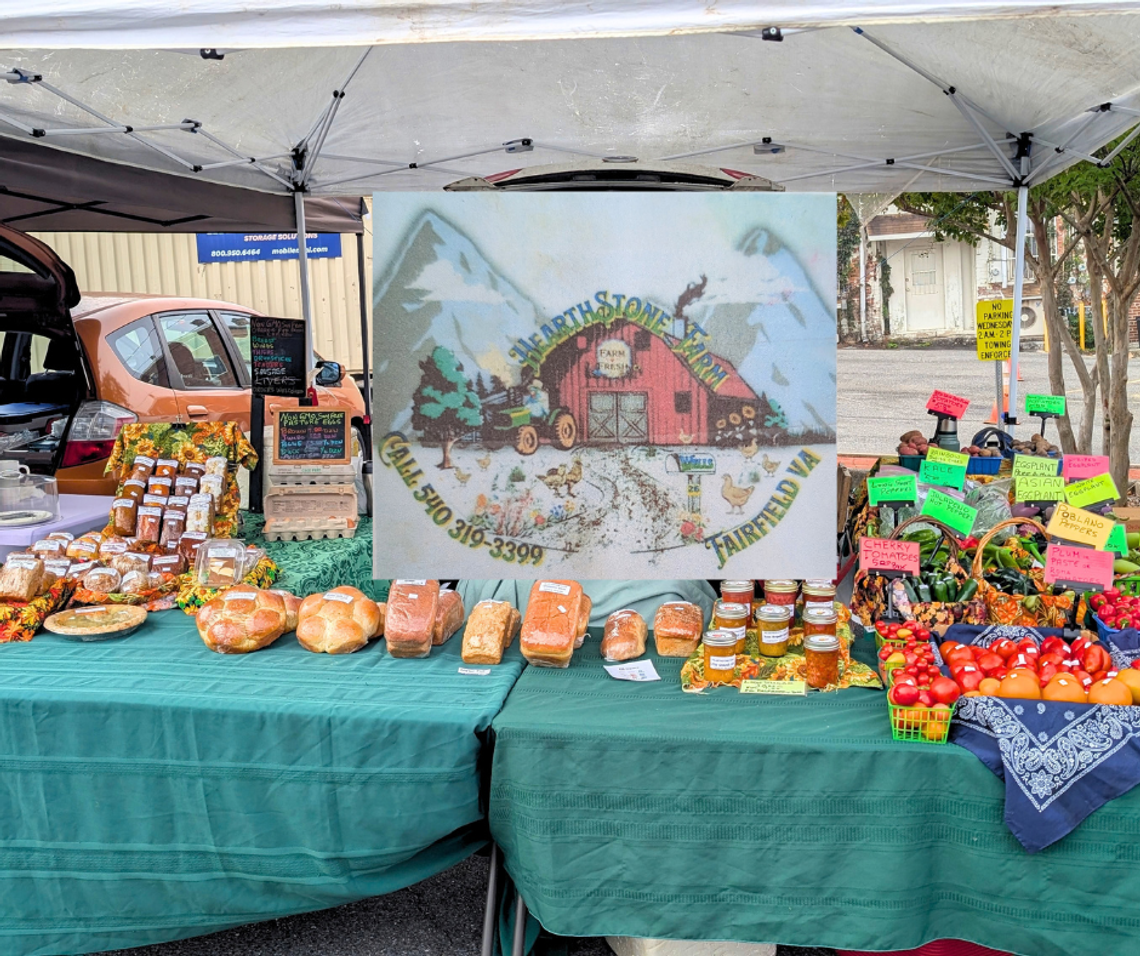
Meet Michelle Wells of Hearthstone Farm in Fairfield. She will be celebrating nine years as a vendor at the Lexington market in December. Hearthstone Farm sells locally grown veggies, eggs, chicken, turkey, herbs, flowers and baked goods.
You can find Hearthstone Farm at the Lexington farmers market on Wednesdays and the Waynesboro farmers market on Saturdays. The percentage of her livelihood from market sales is 95 percent.
Did you always know you wanted to do this?
No. When we moved down here from New York, my husband had a job and then later I got a job and the store closed that I had a job in, so I was scrambling. ‘What the heck are we going to do? We still need a two-income family.' I know how to bake, so I talked to the market manager, which was Mitch at the time, and he said I can come for the December Christmas Bizarre, and we'll go from there. I did and I've been there since then.
What made it happen?
We moved from New York to Pennsylvania, from Pennsylvania to Virginia. We moved from Pennsylvania because my folks at the time were going to Florida and we didn't want to. We were too young to go to Florida; it's for old people. So we went halfway down and that was Virginia. I always liked the mountains. We didn't know we were going to go back into farming and baking but life has a lot of twists and turns.
Can you tell me some of the process of your job – what you make/grow and what your market tasks entail?
My husband does all the growing. He was an 11th-generation potato farmer from Long Island and they used to have 500 acres with his father and three sons, including him. We do grow all-year round. The summer you can have crops like tomatoes, cucumbers, peppers. When you can't really do that in the winter time we have what is called high tunnels or hoop houses. In those we can put the winter crops: cabbage, kale, Swiss chard, broccoli, sometimes cauliflower, depending upon how bad the winter is.
Now for me, I have certain days I do certain things. Some days I do my yeast rolls and then I put everything right in the freezer because there's no preservatives. Monday I do my quick breads and my little zucchini fudge cakes and things like that. On Tuesday I do my quiches and what I call a mushroom twist. If I do pumpkin pies coming up soon I would do them on Tuesday also. I'll just put them in the fridge. And I'm always scouring the internet for more recipes. That's how I got all of my recipes mostly. I like making new things. I get tired of making the same old, even though they're a good seller, same old, same old, all the time. Like right now, in October I'm making a lot of pumpkin things. I make my own pumpkin. My flower is King Arthur's which is unbleached, non-GMO.
I'm baking today and he's picking tomatoes and peppers and whatever else you could find out there in the hoop house. What we do tomorrow, I get up at four in the morning, we start getting everything consolidated, we pack up the car, make sure we have everything – which is not always the case – and then we drive. For Waynesboro we have to leave about 6:30. For the Lexington market we leave about the same time. And then it takes us about an hour, hour and a half to set up because we've got lots of stuff. Today wasn't a good day for me, I didn't want to get up but you have days like that. The animals have to be fed so. I have about 250 chickens. We have meat birds, which we in keep a barn, and they're organically raised, and then right now we have eight turkeys for Thanksgiving and then the rest are chickens for laying eggs. I sell the eggs in the markets right now. The reason why I started baking is because I did have all these chickens and I was having so many eggs, so I had to do something with them. I didn't want to throw them away so I started baking.
What are some of the struggles you face with a year-round outdoor market?
Um, hot, hot in the summertime. You can't take off any more clothes otherwise they'll put you in jail, and in the winter time I'm so bundled up I can hardly move. I'm pretty warm up on top, but my feet, I don't know what they do in Alaska to keep their feet warm. My feet get very cold from, you know, concrete. The other thing that's a problem there is because it's on a hill, everything, of course, with gravity goes downhill. So like this past week, we dropped a couple of potatoes. We had to run after them before they hit the street.
The other thing is there's a lot of overlapping, like I have eggs, Mitch has eggs, Cara has eggs, some other people have eggs. The only good time is like now; if I'm out they can go to the other person. At least the customer is happy that they've got eggs and they didn't have to go to the store. Then some people come in with baked goods. As long as it's not exactly the same, I'm okay with that. Otherwise my sales go down. I gotta start looking for another market if the sales go down too far.
A lot of people think you take a seed, you throw it in the ground and it grows. You got bugs. You got rodents that eat it. We've had eight groundhogs this year that we've had to dispatch because they would just eat the beans right down to the ground and that's a lot of money you lose. That's one of the worst things. Deer, even though we put fences up, they somehow learn how to break the fence. There are the pests and bugs that you can't do much about.
And unfortunately, our farmers market, most of the prices are pretty high because we don't have a conglomerate like Walmart that can buy in warehouse varieties and sell cheap. That's where a lot of people don't come to farmers market because it is expensive.
What are the rewards?
Paying bills, and then there are some people that say, ‘Thank you so much for being here. We don't like going to the grocery store because we don't know what the heck we're getting from them. We know it's local. We know what you put into it and all the love that you put into it.’
What do you wish people knew about going to the farmers market?
You know, I still have people say, ‘Oh, I didn't know there was a farmer's market.’ Hello! We've been here I don't know how long. I've been here nine years.
What would I like them to know? That we try our hardest to bring the best to the market. And they don't understand when we have a crop failure. My number one vegetable I sell is potatoes. This year I think I got five pounds of potatoes and that's it. Usually I get like hundreds of pounds. So they don't come to me then, looking for potatoes, they go someplace else and I lose a customer. That's a hard part.
And we like to try new things, like when we do have potatoes we had the purple potatoes that are purple all the way through, we have the red potatoes all the way through, besides the Yukons. I do purple beans. You know, I like to put a little pizzazz in my food. You're supposed to eat with color so I try to grow colorful stuff.