Glasgow residents got some answers to their questions from Town Manager Allyson Finchum at last week’s Town Council meeting, but tensions between Council and the citizens continued to show themselves during the public comment period.
After the first speaker during that period finished, Councilman Brandall Branch, instead of waiting for the designated period for Council comments, stood up to offer his opinion on the situation.
“All this got started out of a vendetta,” he said. “That is my opinion, that this got started by a disgruntled former employee. … We were approached by a mob with pitch forks and torches. The questions are all legitimate. I don’t have a problem with any of the questions, but it’s the way we were approached and attacked.
“We’re not perfect and we’re going to make mistakes along the way,” he added. “When Allyson came here, she had ideas. We sat down with her and we were trying to come up with ways to make Glasgow more appealing.”
Branch noted a grant that he had tried to apply for where he was told that the town was “too blighted” to invest money in and also cited his efforts to bring a Highlands festival back to the area, which had included getting support and “patronage” from a friend who holds the title of Lord in Glasgow, Scotland. That effort, he announced during the Council meeting, is “on hold until this vendetta is over.” In a phone conversation with The News-Gazette on Monday, he explained that he didn’t want to use his resources for this event to have the Facebook group Concerned Residents of Glasgow “take credit” for the festival. He noted a recent post in the Facebook page about members coming to help spread mulch at the town playground, which he feels is the group taking credit for something that happens every two years and was scheduled to happen anyway.
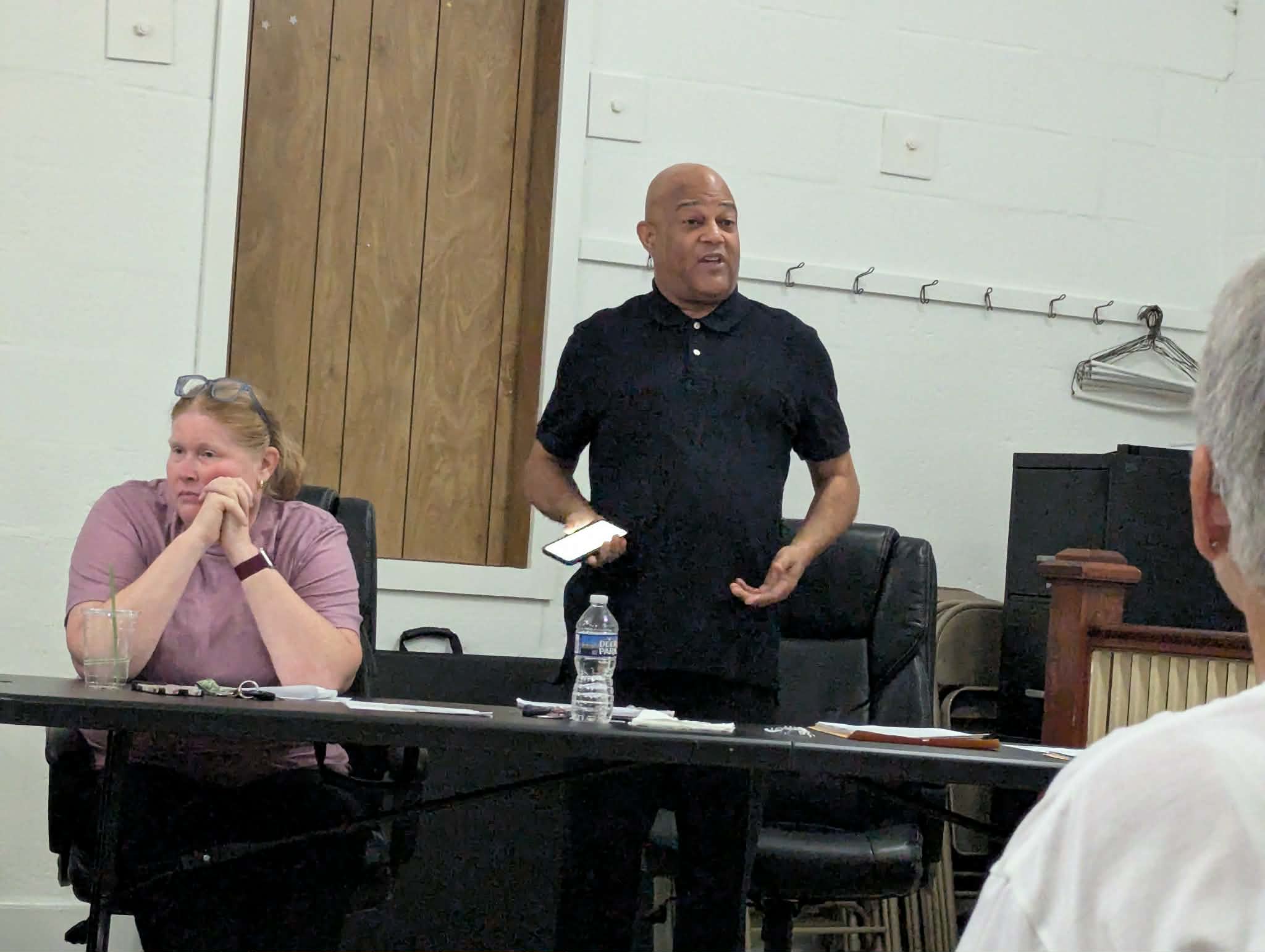
Later in the meeting, Cynthia “Sissy” Steelman, the former employee Branch was referring to, spoke to address his claims of a vendetta.
While she said she was upset when the town eliminated her position, she said that she had “moved on and not looked back,” until Mary Reynolds, one of the members of the Concerned Residents group, reached out to her with concerns about what was happening in the town. She said that she did not have a vendetta against Town Council or town manager and only got involved to help her friend.
Susan Wood, the one citizen who spoke before Branch’s comments, questioned the town purchasing the town’s old post office building and the Presbyterian Church where it now holds Town Council meetings.
“You’re a government,” she said. “Your job is to ensure our safety and ensure we have clean water. It’s not to take our money to invest in things like buying this church. Your job is to go out and find companies and get them to come into Glasgow, but your job is not to start the businesses. That’s not your role as a government.”
Vice Mayor Tom Camden responded to Wood’s comment by noting that the post office building was derelict “for years” before the town purchased it with ARPA (American Rescue Plan Act) funds.
“Did anyone come here to buy it?” he asked. “The town bought it because we were tired of looking at it. It’s a historic building. It looks good now. You can live up on that hill and look down on this town, but this community needs to be proud of its town.”
Mayor Paul Williams also responded to Wood’s comments, noting that Wood had said to him that when the church building was first put up for sale that the town “needed to do something before they put immigrants in there.”
Both Williams and Branch noted that most of the money used to purchase the church building had come from the money the town received from selling land to Dollar General, with only $1,000 coming from the town’s reserves for the purchase. -Beyond the town buying the buildings, concerns have also been raised about what they are being used for.
The church’s fellowship hall is currently used for Town Council meetings, but no other purpose has been set for the rest of the building. The old post office building, meanwhile, has been rented to a pair of tenants – the Masons and an antique store run by Deb Farina, the chair of the town’s planning committee.
Farina’s store, which opened in April, is approaching the end of its initial six-month lease and she has made an offer of continuing to rent the space on a month-to-month basis which can be terminated by either her or the town at any time with 30-days notice.
Farina was at the meeting to give a report from the planning committee and addressed some of the criticisms that have been raised about the business. She noted that in the six months she’s been open, she’s had more than 700 people come to the store, many of them visitors from outside of the county who found the store simply by doing an online search for things to do in the area.
“I think that’s exciting,” she said. “These people probably wouldn’t have come to Glasgow otherwise.
“I am under no illusions that everyone in town supports the store,” she added. “I know it’s not for everyone. I know about 90 percent of this town will never set foot in the store. … If the town has a better offer [for the space], I just ask for 30 days notice.”
Councilwoman Natalie Harris noted that she had suggested that both buildings be used for the residents of Glasgow in some way, such as a thrift store that could meet residents’ needs or some sort of gaming center to give the town’s younger residents something to do.
Town Council will make a decision on Farina’s proposal for the new lease at its Oct. 13 meeting. At last week’s meeting, Council voted to hold a work session on Nov. 17 to get input from citizens regarding the use of town-owned buildings and to discuss how to best utilize commercial space and areas in town. -During the Council comment period, Harris followed Branch’s lead and stood to deliver her comments, during which she noted that she is running for reelection and that her “main principle is transparency.”
“I’ve heard from many people that don’t like these changes, and they are citizens of this town and they’re upset about these changes,” she said. “I’m always going to stand up for the citizens of this town and what I think is right. I know they don’t like these changes and I guess they’ll just have to make changes of their own and replace the Council.”
Toward the end of the public comment period, Charles Gibbs expressed frustration with the growing rift between Council and the citizens.
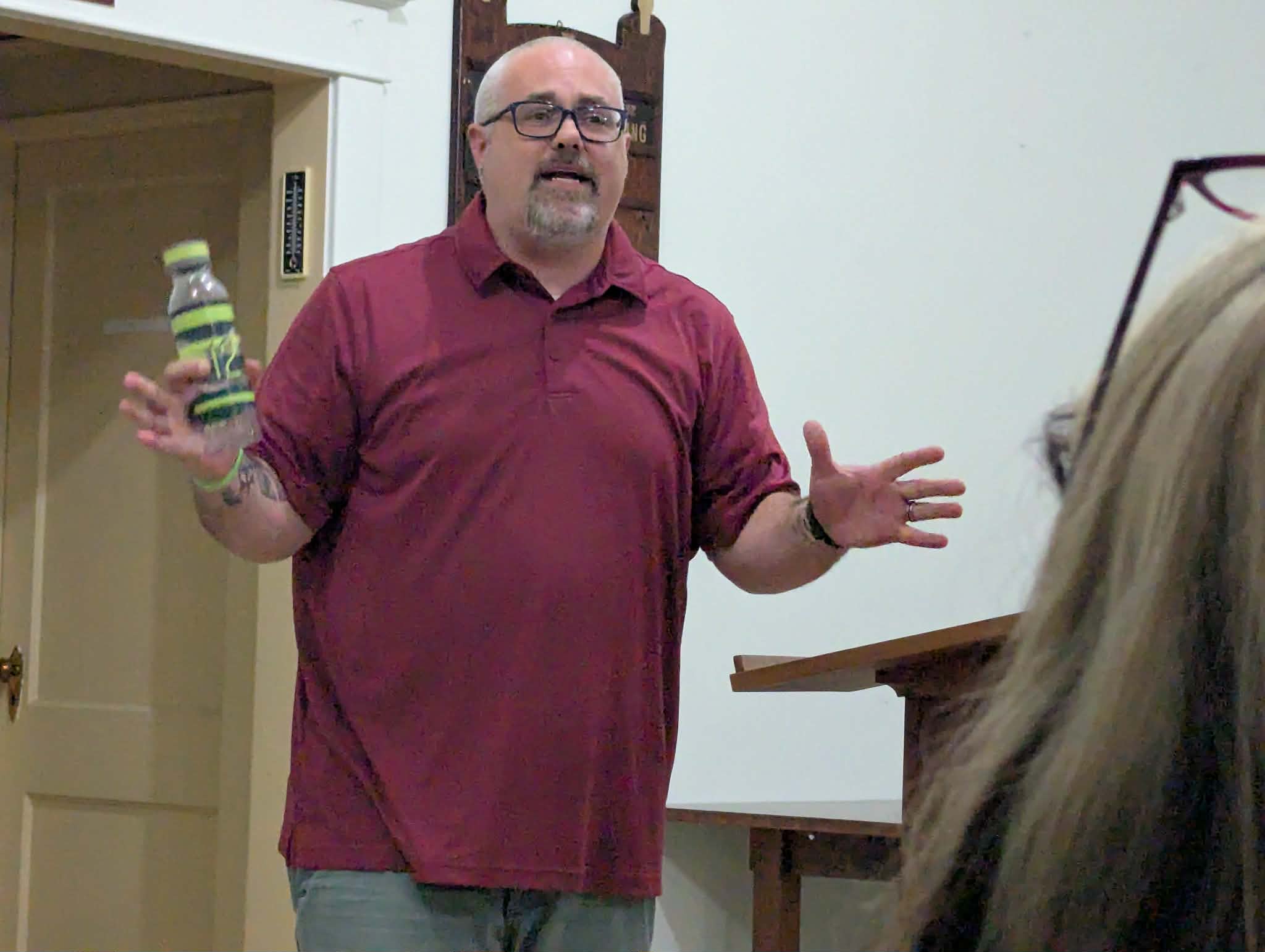
“We’re watching our town implode in real time,” he said. “We’re watching the citizens go after the Council, the Council go after the citizens, and [Council members] go after each other. We’re a small town. There is no reason why we cannot be showing the rest of the country how it’s done. We should be working together. There should be a partnership between us (the citizens) and them (the council). We shouldn’t be pointing fingers. We should be helping each other.
“I just want this town to succeed,” he continued. “I’m trying to raise my daughter here, and it is sad to me that an autistic 6-year-old can act more like an adult than half the people in this room sometimes.” -Finchum, during her report to Council, addressed and answered several questions that had been raised by citizens over the last several meetings.
She noted that the town currently has about $1 million in reserve funds and investments and has recently spent $400,000 on repairs at the wastewater treatment plant in answer to a question from Wood, and noted that she has invested some funds in certificate of deposit (CD) investments to help generate interest on that money that can be reinvested in the town.
She also addressed some questions about the town’s employment practices, specifically switching from fulltime to part-time employees.
That was done to save money for the town in not having to pay for benefits such as insurance and vacation days, she said. She acknowledged that the limited hours per week for employees did result in some things not getting addressed in as timely a manner, but said that the town had had no trouble in finding a new administrative assistant for the office during its last two rounds of searching.
Finchum also addressed concerns regarding her husband Mike’s employment by the town, clarifying that his title was assistant to Council and the town manager, and that he had been hired by the town and not by her.
She did acknowledge that he had briefly served as interim town manager earlier this year while she “took a leave of absence to focus on other projects.”
She also briefly addressed the questions about whether she was using a town truck for personal use by saying that the use of the truck was “part of the contract with the town manager.” She declined to comment further on the matter in the public meeting, noting that contracts are typically discussed in closed meeting.
Finchum also brought up the issue of unincorporating the town, which was not asked about in either of the last two Town Council meetings but has been raised several times in recent years. She noted that doing so could result in an increase in water and sewer rates for town residents and could result in the loss of some services the town provides, like trash pickup and grass cutting, if the county is unable or unwilling to take over those services.
Camden made a motion to authorize Finchum to look into what would happen if the town were to give up its charter.
“We’re not doing it,” he clarified. “We just want to know what the pros and cons are.”
Branch provided the second and the motion passed 5-1, with Harris voting against.