Editor’s note: We’re pleased to present another foreign travel piece by Lynn Lowry Leech of Rockbridge County this week. As usual, it is filled with lots of interesting history of the places she and her husband saw.
In May, my husband Rick and I arrived in Dublin for an 18-day driving tour of Ireland. This was our third visit to the Emerald Isle and, since we’ve previously visited many tourist highlights there, our plan for this trip was to focus on scenery and out-of-the way places.
Doagh Famine Village
We visited the Doagh Famine Village in County Donegal on a cool, breezy day. Founded in 1997 by Pat Doherty, who grew up in one of the thatched cottages on site, this living museum offers an engaging and unusual look at the hardships, daily life, and traditions of Ireland’s rural poor from the Great Famine of 1845–1852 to modern times. According to a guide, local people made the best of their rocky outpost here at the edge of the sea. They would harvest carrageenan seaweed, which they boiled with milk, then strained to make the milk set up in a custard. (Carrageenan is used today as a thickener in many food products.) A ropy variety of seaweed was given to teething babies to chew on. It was pliable and yielded a flavor, which kept the babies happy. Another type of seaweed was boiled with water to make a bitter, earthy tea that was believed to cleanse the body of impurities. Seaweed was also harvested and spread on the land to improve the poor soil.
Poitín (pronounced pot-cheen) is the Irish equivalent of moonshine, and we were offered a nip of this strong liquor. Easy to make and with a ready market among the local population, many enterprising locals set up simple stills in their homes and outbuildings. The British government began taxing alcohol to increase revenues in 1661. This drove Irish distillers to hide their stills and resulted in the British outlawing poitín production. According to the Doagh Famine Village interpreter, when poitin became illegal people began to set up stills on the boundary between their land and their neighbor’s. Since boundaries were viewed as neutral territory, if they were caught, they could disavow the still as being theirs.
The Night of the Big Wind
On the night of Jan. 6, 1839, six years before the advent of the great famine, one of the most powerful storms ever recorded swept across Ireland. Known as “The Night of the Big Wind,” the storm destroyed tens of thousands of homes, killed hundreds of people, uprooted trees, and destroyed crops and livestock.
Along the east coast, almost nothing at sea survived. Fishing boats were wrecked and tossed onto land or blown out t o sea. F ish were discovered miles inland.
At Doagh, the storm drove the towering sand dunes that once protected Pollen Bay in
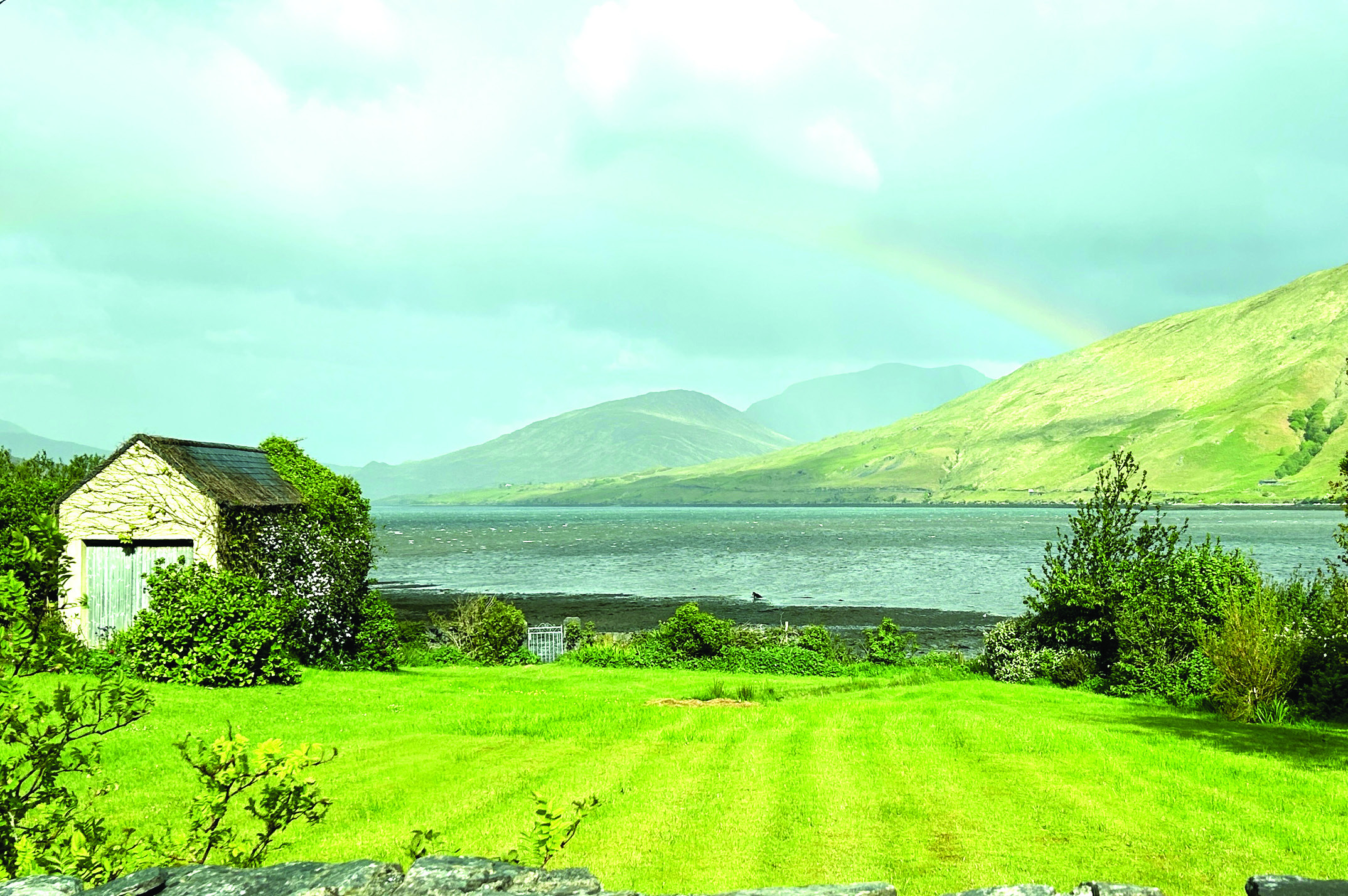
THE BEAUTIFUL lakes and rocky coastline of Ireland, including his lake near Leenaun, County Galway, are renown for their beauty.
Emerald Isle
Bay inland, covering thousands of acres of farmland and burying a small village and 14 houses. In the years that followed, smaller storms continued to blow sand further inland, rendering increasing amounts of farmland useless and forcing families to abandon their land. This devastated land was later sold in 50-acre plots for as little as a penny an acre. There was little demand for this land, but eventually rabbits populated the dunes and, during the war years, rabbits were trapped and exported to England for food. They provided a lucrative cash crop until the rabbits contracted a disease, causing the English market for rabbits to crash.
The Choctaw Nation’s Gift to Ireland
The potato blight destroyed the main food source for millions of Irish people. More than one million people died from starvation and disease during the famine, and another two million are believed to have emigrated. This sudden depopulation devastated towns and villages and severely damaged the country’s social and economic fabric. Aid trickled in from overseas, and one donation was especially poignant.
In the United States, the Choctaw Nation had recently endured the Trail of Tears, a forced removal from their homeland. Still recovering from that displacement, the Choctaw sympathized with Ireland’s suffering. A lthough they had limited resources, in 1847 they raised $170 — more than $5,000 in today’s money — and sent it to help relieve famine hardship.
The Irish Workhouse Centre, Portumna
At the Irish Workhouse Centre in Portumna, County Galway, which was designed to house 600 people and opened in 1852, we learned more about how the potato famine affected Ireland’s poor. From the 1830s to the 1920s, 163 workhouses operated across the country. Conditions were so harsh that only the most desperate sought refuge there. Each workhouse was managed by a Board of Guardians, consisting of elected and ex officio members.
Upon entry, families were separated by sex – men, women, boys, girls -- and placed in segregated dormitories. Children over 2 years were taken from their mothers; families couldn’t be together unless they received special permission, and often families never saw each other again once they entered the workhouse.
Accommodations were spartan. The dormitories had no insulation, and ventilation holes beneath the raised pallet platforms and high in the walls made them bitterly cold in winter. Inmates slept on crude pallets, and two or three people might share a single sheet or thin blanket.
Officials didn’t want the food in the workhouse to be better than what people on the outside were eating to discourage people from trying to enter unless they were in dire straits. Until the age of 14, children had three meals a day: watery porridge in the morning, two slices of dry bread at midday, and potatoes cooked to a paste in the evening. After age 14, people received only morning and evening meals. Among the many arbitrary rules were that people had to eat in silence.
Everyone was required to work, whether breaking rocks to a specified size, doing laundry, splitting rope, or other menial tasks. The rope work often caused hand infections, that sometimes became severe enough to require amputation. Scarred or damaged hands marked a person as having lived in the poor house, leaving them vulnerable to social ostracism from people on the outside.
Grey Abbey
Ancient abbey ruins dot the Irish countryside. Long abandoned and often set in rural fields where only cows or sheep roam nearby, their remaining walls and vacant windows still hint at their former grandeur.
One of my favorite monastic ruins was Grey Abbey in Greyabbey, County Down, Northern Ireland. On the day we arrived, the changeable weather created a moody atmosphere, with sun and drizzling rain lending a rich light to the wall ruins and jumbled tombstones surrounding the abbey.
Founded in 1193 by Affreca, wife of Anglo-Norman invader John DeCourcy, Grey Abbey was a Cistercian monastery. Like other Cistercian abbeys, it was inhabited by two groups of monks who lived separately and followed different routines. Lay brothers were often illiterate and handled the monastery’s manual and agricultural labor. This allowed the choir monks —usually educated seminarians or priests — to focus on study, prayer, and contemplation.
Within the church, a tall wooden screen separated the choir (the area around the altar, presided over by the choir monks) from the nave (the space where lay monks and visitors sat). The screen served as a barrier to preserve the sacredness of the altar and limit lay access to it.
Gordon’s Café and Guesthouse, Tynagh
During our trip, we stayed primarily at B&Bs and guesthouses, with a country hotel or two thrown in for good measure. One of the most memorable overnight accommodations was Gordon’s Café and Guesthouse in Tynagh, County Galway. Housed in a rowhouse built in the 1800s, the rooms and cozy threeroom café were furnished with comfortable thrift-store finds. Shelves of books lined the walls and a play area filled with stuffed animals and toys provided welcome distraction for patrons’ children.
The Irish National Stud Farm and Japanese Gardens Horse racing has long been a popular pastime in Ireland, and our visit to the Irish National Stud Farm and Japanese Gardens in County Kildare offered an informative look into horse breeding followed by a pleasant wander through a Japanese garden in spring bloom.
As our guide led us through the stud facilities, she explained the basics of the stud business. Fees for a single “cover” range from 6,000 pounds to 14,500 pounds, with the older stallions with proven success commanding the higher fees. A typical stud “covers” four times a day. Careful records are kept of the sire and mare of each foal to ensure horses are not interbred.
If a mare does not conceive and no foal is born, no payment is owed. However, if she conceives and the pregnancy later ends, the fee is due. The gestation period is 11 months, and every filly or colt is assigned a January 1 birthday, regardless of the actual birth date. Foals born earlier in the year have an advantage because they are more developed than others born in later months and tend to perform better in competition. In the southern hemisphere -- Australia, for example -- all foals are assigned an August 1 birth date. Once a mare returns to estrus, she is bred again, and many mares have a foal at their side and another in utero. I was interested to learn that one of the Irish National Stud’s stallions is flown in luxury to Australia to “cover” mares after the Irish breeding season ends.
Malahide Castle and Gardens
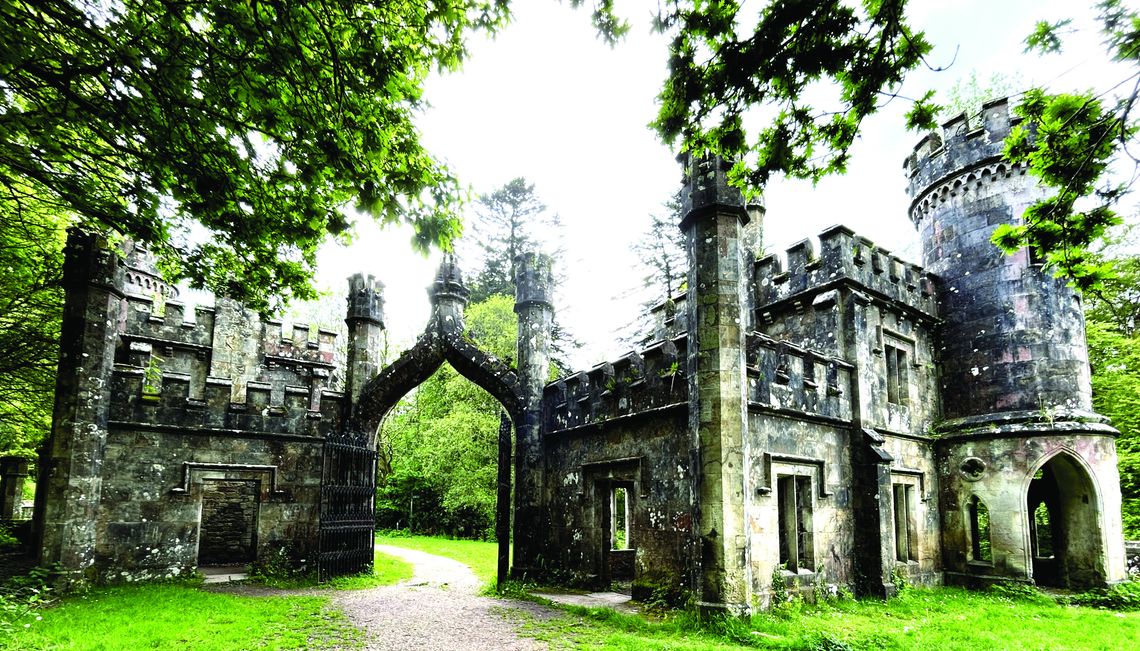
Ireland has many castles and estates with beautiful gardens, some of which pay tribute to the fairies who may (or may not) frequent their tranquil grounds. My favorite fairy garden on this trip was at Malahide Castle and Gardens in County Dublin.
An Anglo-Norman tower house was the early stronghold at Malahide, and it was awarded to Sir Richard Talbot in 1185 for services to the crown. His family occupied the castle, making additions and enhancements over the years, until siblings Milo and Rose Talbot sold it to the government in 1976 to pay inheritance taxes.
The interior of the tower house, with its hand-carved oak paneling, pretty turret rooms with gingerbread-enhanced trim, and large dining room with a high, timbered ceiling was impressive, but the whimsical fairy trail captivated my attention. Carved life-size statues of leprechauns, mythical fairy creatures and animals lined the pathway, and visitors were offered a peek at the miniature buildings of a fairy town, complete with a sweet shop, library, dairy, church and more. Paintings of fairies adorned the wall of an outbuilding, and an outdoor classroom offered young children an opportunity to sit and spell their names in the fairy “elphabet.” -One of Ireland’s greatest natural resources is its friendly people. Wherever we went, we were welcomed and made to feel at home. Many people we met have visited the U.S. or have family who live here. Of course, the Scotch-Irish began settling here in Rockbridge County in the early 18th century and many of their traditions – like music and moonshine – are familiar to us today. And the gently rolling hills and verdant fields of the Irish countryside reminded us of Rockbridge County. Perhaps that’s why we felt so much at ease in the Emerald Isle as we enjoyed our deeper dive into the history and culture of this island nation.
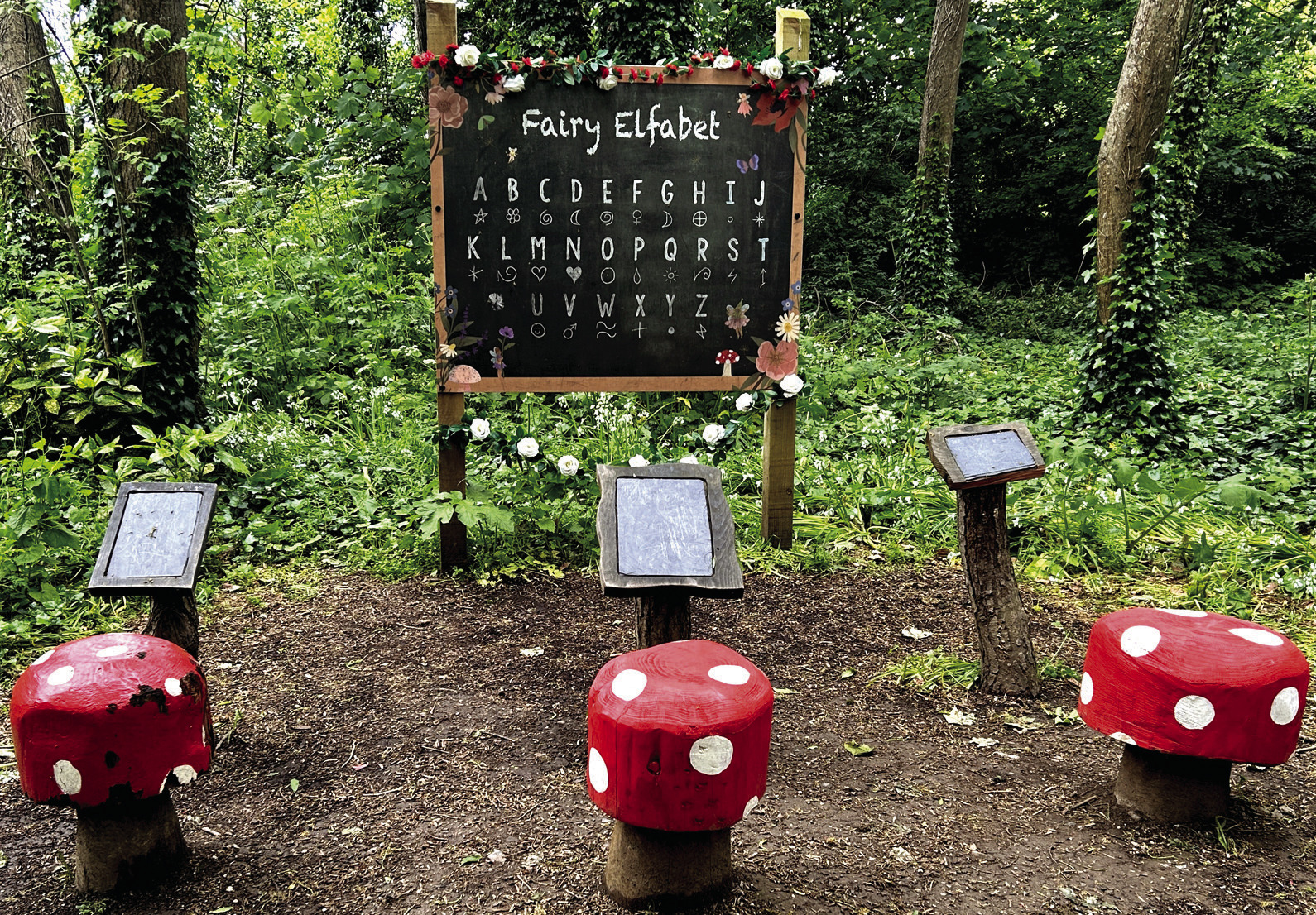
THIS FAIRY “Efabet” at the Malahide Castle Fairy Trail offers a letter-by-letter translation of the English alphabet into the fairy language.
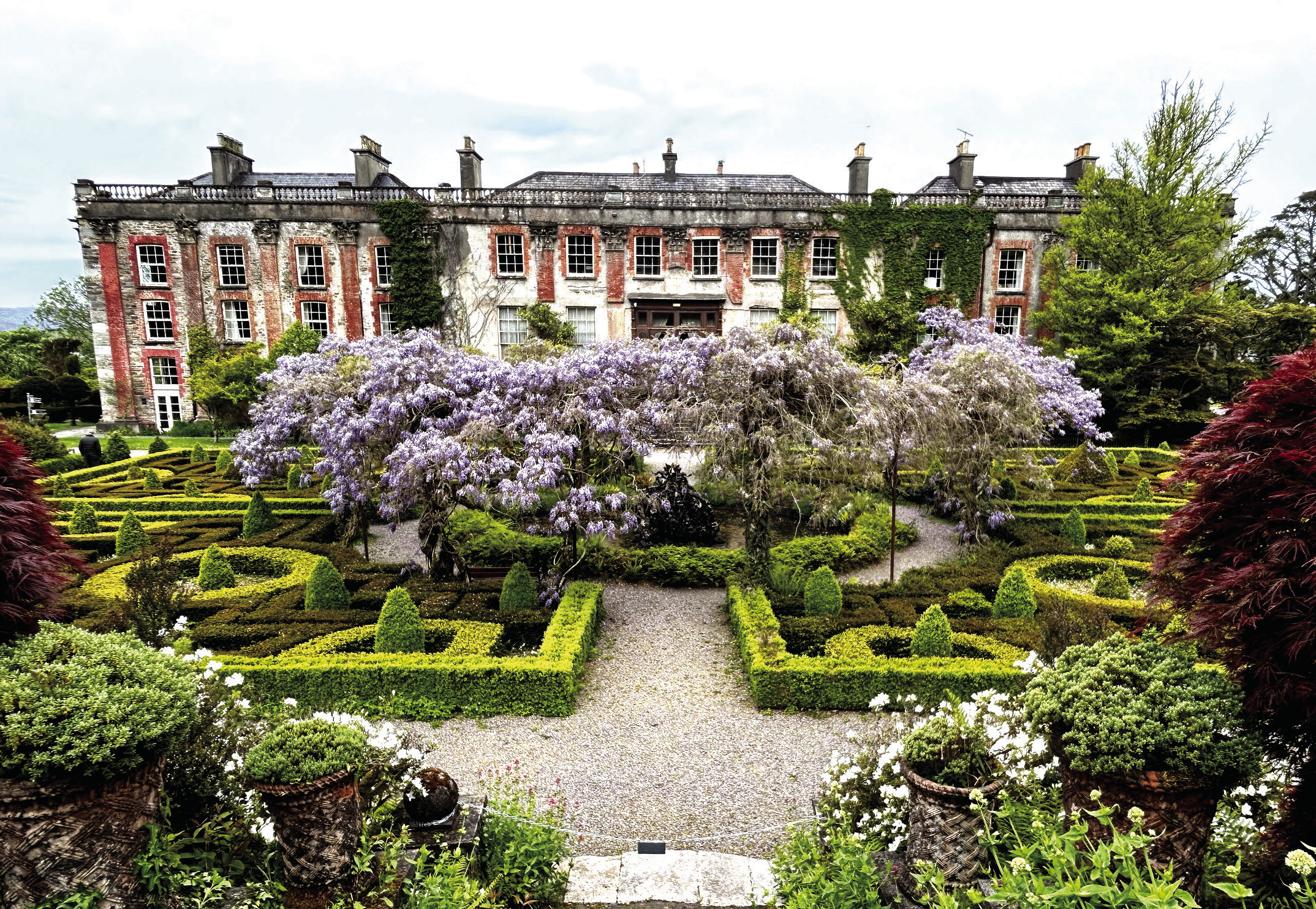
OVERLOOKING Bantry Bay in the southwest of Ireland, the Bantry House was built in the early 18th century by the Hutchinson family and has been owned by the White family since 1739. The gardens were designed Richard White, 2nd Earl of Bantry (1860-1865). After falling into neglect, restoration of the gardens began in 1997.
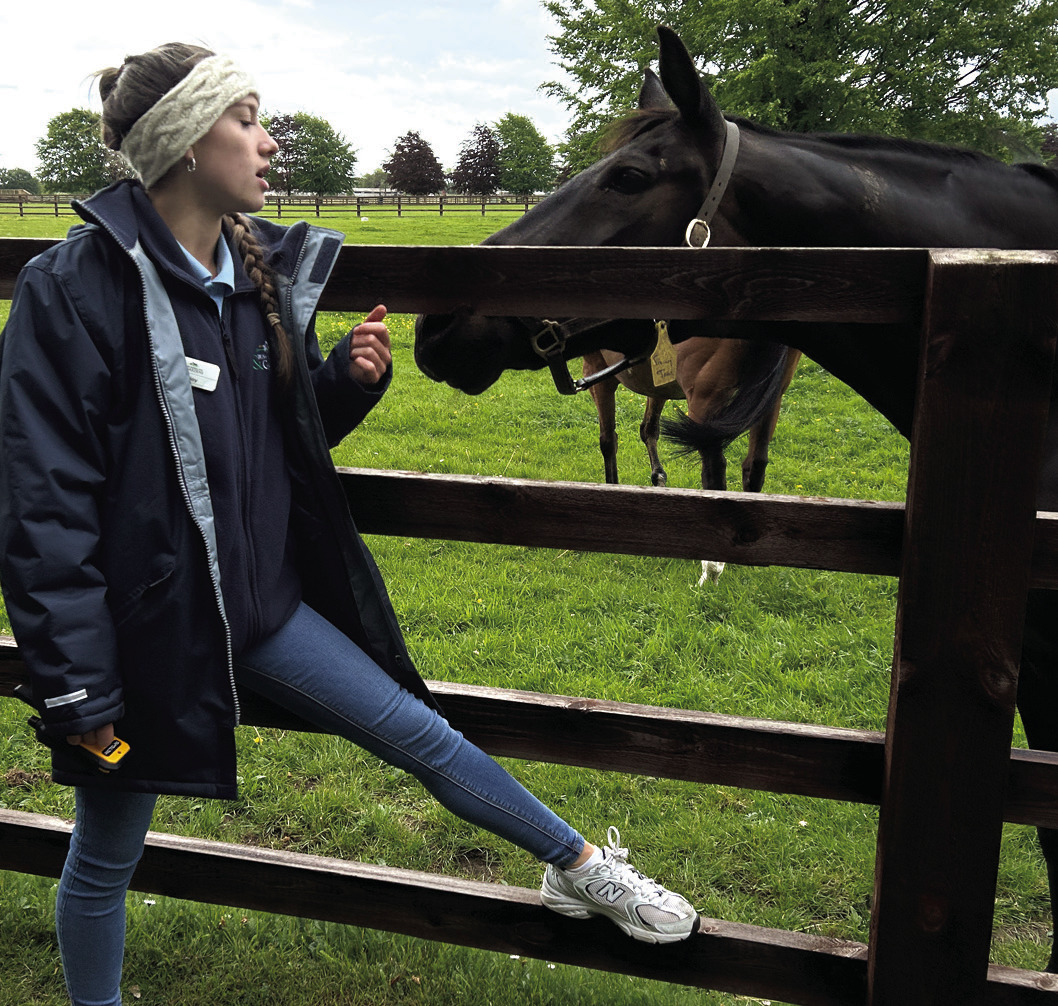
A GUIDE at the Irish National Stud Farm and Japanese Gardens shows off Shouldvebeenaring, who currently commands a 6,000 pound “cover” fee.
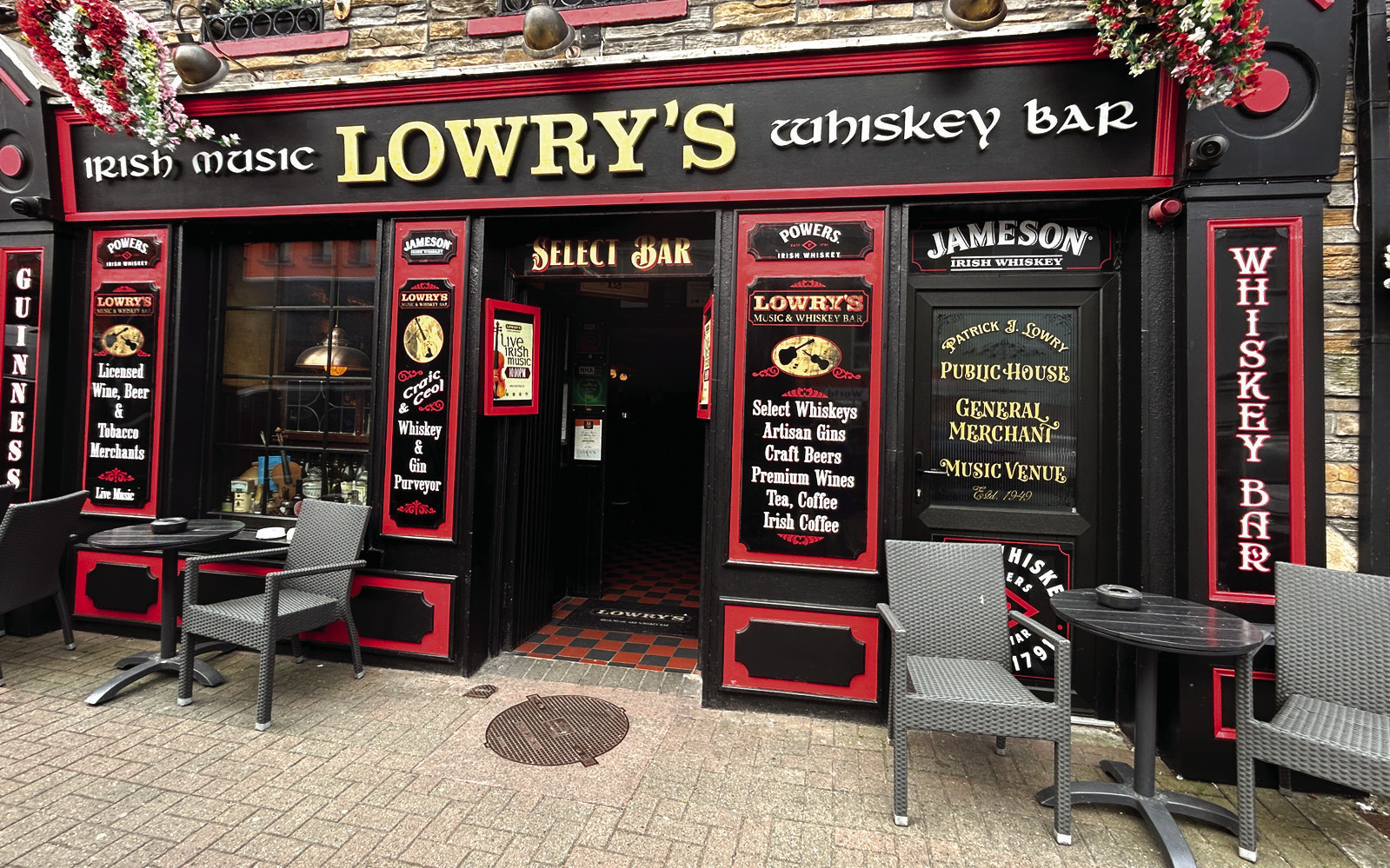
ONE of the Leeches’ favorite attractions in Ireland are its pubs, including Lowry’s pub, Clifden, County Galway.
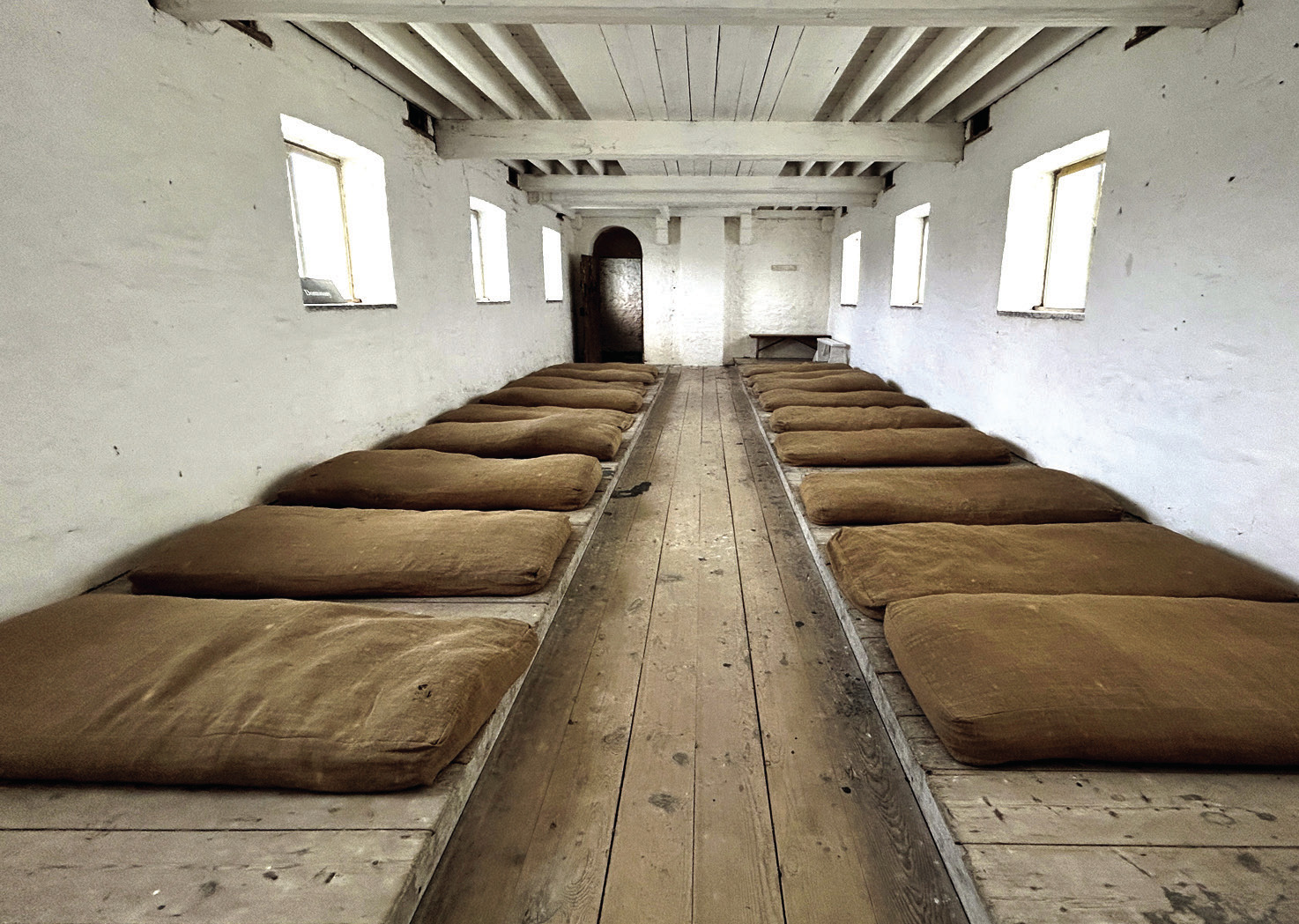
AS SEEN at the Irish Workhouse Centre, Portumna, County Galway, people slept in sex-segregated dormitories with about 60 people to a room.