This area is fortunate to have a number of local farmers, artisans and farmers markets. Lets have a conversation with one farmers market vendor a week and get to know them, learn about their lives, their struggles and why they're market vendors.
Our goal here is to help folks see that there ought to be a place in their lives for the farmers market. It’s not that people should buy all of their food from the market, of course, but to recognize there is merit in knowing that you shook the hand of the farmers who grew the tomatoes in your salad, that you had a good conversation with the person you bought eggs from and all the ingredients in the bread and pastries are familiar and easy to pronounce.
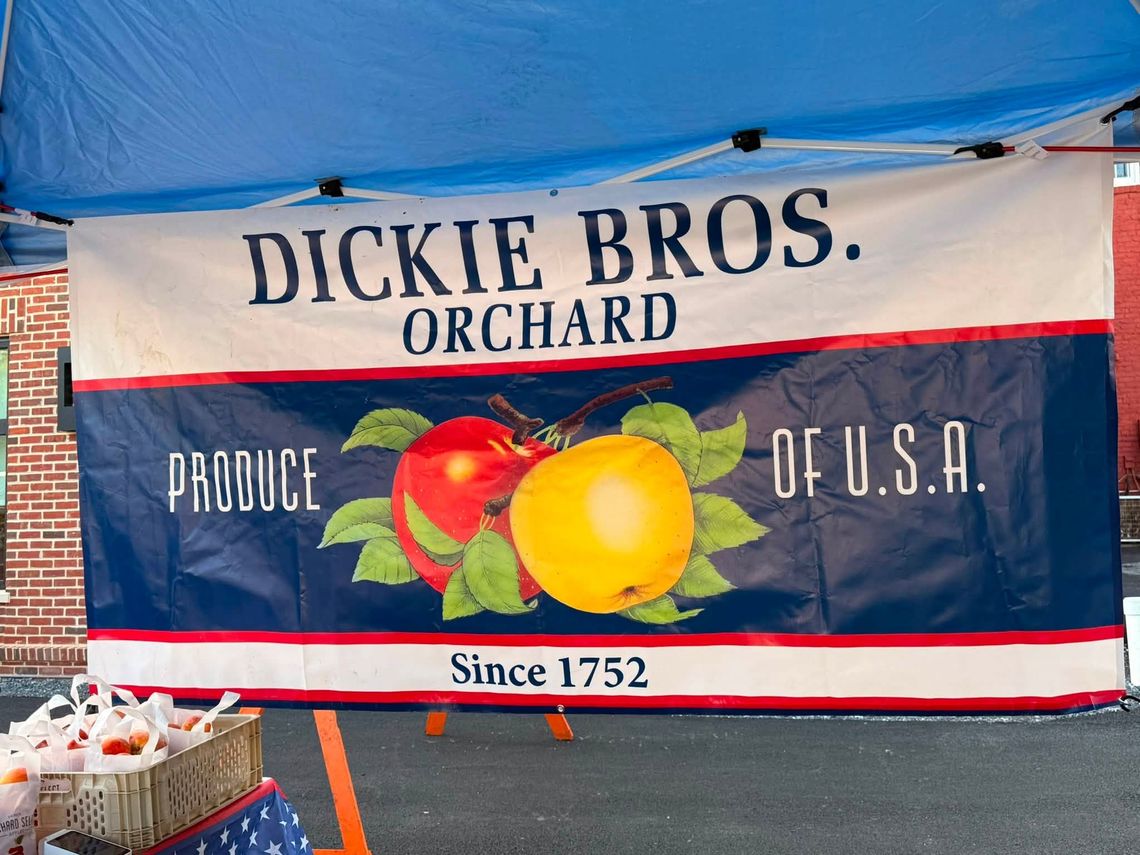
Meet John Bruguiere of Dickie Bros. Orchard. John and Shelby Bruguiere own and operate the orchard with their family. He's been doing markets for over 20 years and the Lexington Market since the early 2000s.
Farmers markets he participates in are in Lexington and Staunton. Percentage of livelihood from sales is 10 percent.
Did you always know you wanted to do this?
Actually I was born into farming. My family has been farming for 270 years on the same piece of land. However, when I left the farm as a teenager going to college, the furthest thing from my mind was returning to the farm. Having growing up here, I spent about, actually it's exactly 13 years away from the farm before returning from working in the private sector in the business world. I have a bachelor's degree from James Madison University in management, business management.
What made it happen?
Maybe fate? I had been out there and worked out of state for a while and worked back in the state and been in areas that I didn't really care for but you had to do what you had to do. I came back to Virginia in 1990 and worked for one company for seven years. Left that company after 7 years, after being a banker for a couple years, and I actually met a young lady. Got married and had a family and they were from the area and that's what brought me back. Then I realized, you know, my father who owned the business with my mom, he was getting older and I had children to raise and just like my parents before me - the farming life is a great environment for children, away from the urban areas and all the problems that they offer. I decided to, you know, marry local and stay local, raise my kids in the same area that I grew up in and it just turns out that I got bit again by the farming bug. I basically helped my father transition to retirement and here we are.
Can you tell me some of the process of your job – what you make/grow and what your market tasks entail?
So to be clear, my wife and I are joint owners of Dickey Brothers Orchard and that entails currently about 40 acres of tree fruit as well as a hundred head of beef cattle. We will raise other produce each year, you know, for our two retail stores. So we basically try to provide our own stuff and that's where the farmers markets come in. They're very handy because they are only producer markets. You can only sell at the markets what you grow. Because where I live is a high supply, low demand area and very sparsely populated, we go to the markets. We don't mind driving an hour for a midweek market or an hour to Stanton for a Saturday market simply because there's way more customers than where we live.
We'll load up the vehicle the night before, simply because we have to get up so early to come to market. We have about an hour travel time, logistically we can't do that. So we have already harvested the day or days before the market. Obviously we use a large cold storage cooler here to keep our produce fresh and then we load up trucks. I'll come and set up my tents and tables for the farmers market and we begin doing transactions. We've been doing it for so long, a lot of people have come to realize that, you know, we're the fruit people. I'm sometimes referred to as the 'Apple Guy' or the 'Peach Guy' in Lexington.
Keep this in mind - our season for growing goes from, say, the first week of July and we don't stop harvesting till the second week of November. So we have a long harvest season of tree fruit. We're seven days a week for most of that time. We really can't harvest when it's raining but majority of the time it's non-stop. Because of the perishable nature of peaches, we have to be at the markets, we have to move stuff very quickly and the markets have always been a great way for us to get fresh fruit out quickly to the public. Unfortunately, I grow more than I can sell that way.
What are some of the struggles you face with a year-round outdoor market?
Well obviously it's more the human factor, that it's cold, right? Then, if it's ice on the parking lot, we can't come. But we still need to sell produce and they've closed the market, so we don't have a way to move it. The heat can be a factor. We obviously have our own tents but you know, being out on the concrete or asphalt under the heat of summer is not the best for produce sales but luckily we're only there for four or five hours. Other than the extreme temperatures of heat and/or cold, that's really the only deterrent for the farmer's market. A covered market would be a great idea.
The selections of the market is limited simply because the parking - there's just not enough space for people that want to come to the market to get to that market and being a midweek market while people are at work. The Staunton market is a little different in that regard but that's why I do both because I have plenty of produce to move and Lexington has always been a wonderful way to help keep stuff moving and keep the cash flow of the business going.
What are the rewards?
It's great because from a farmer's standpoint, I guess it's the final stage in your production process. You get to nurture whatever you're growing and watch it grow and help with it the entire season but when it comes to the market, that's your reward. When you get compliments from folks and people just keep continuing to come back because the quality of the taste, or whatever it is they're coming for, and if they keep coming back, you know you're doing a pretty good job. Mother Nature is totally in control but we tried to, you know, have the fruit to the ripeness direct to the consumer and it makes a big difference.
As a farmer, or any business person, doesn't know how good a job they're doing until they actually get to the end stage, which is the sale. When people can see the product and the work that you've done to get it to be a certain quality and then they turn into returning customers - that's kind of a reward, helps you keep going. Not only do you get a little higher return, a direct sale versus wholesale, but you also have that satisfaction of people actually wanting and desiring what you have, whether it's a tomato, a summer squash or you know whatever it might be, a peach or an apple.
What do you wish people knew about going to the farmers market?
You know there's a lot of folks that still don't realize that it's a producer market. I have a lot of questions, they'll look at my fruit and go, 'where are these from?' and I say, 'right here, I'm in Nelson County, we're an hour's drive from here.' A lot of folks still think that a lot of the produce at that market is from other areas. I try to tell every one of them, I said, 'no, this is a producer market. One of the rules is that it has to be within I think it's 50 miles, has to be grown within 50 miles of this area, Lexington market and it's producer only. So people aren't really educated on the fact that yeah, it's not just me buying produce from South Carolina and bringing it here to resell. It's me actually growing it here within a 50 mile radius and all the other growers as well. So that's one of the important things that's I think that more people knew that it probably would help.
I was talking with someone and they were talking about how that's what people want but they just don't know that they can get it here. You know, necessity is the mother of invention so you have growers like Mitch at Paradox Farm who has especially crops that you just don't see every day from ginger to turmeric and garlic and things. It's not your standard fare for most folks and there's other folks, you know bakers and different types of food. I mean you have a sourdough baker and you have an Iranian baker there, so something from all over if you think about it. Something for everyone.