According to a survey by SafeWise published this year, our area is one of the safest places to live in the state of Virginia, with Buena Vista and Lexington ranking in the top ten. The Lexington and Buena Vista police departments and the Rockbridge County sheriff’s office keep our communities safe. These men and women, committed to serving and protecting, put their physical, mental and emotional well-being on the line for us all, but they are more than just their uniforms. These are people, with their own lives and stories. Why did they choose this line of work? What motivates them to keep going? How do they cope with the stress?
And what can we, as citizens, do to help with some of the common issues our local law enforcement officers grapple with to keep our localities the safest places to live in Virginia? In this interview series, we'll look behind the badge to see people, just like you and me, who choose to serve our communities in ways that make us safer and improve our quality of life.
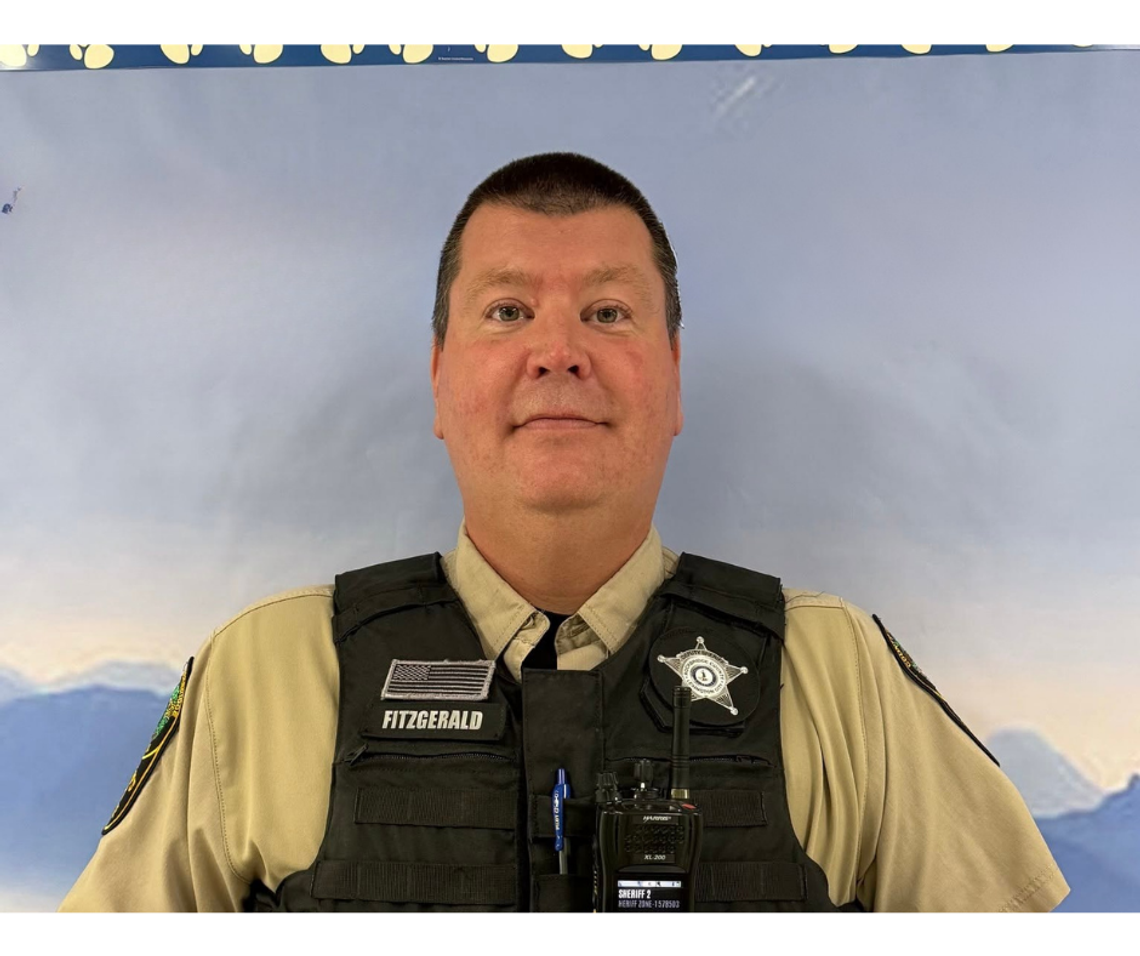
This week's interview is with Deputy Michael Fitzgerald, a School Resource Deputy for Rockbridge County schools. He's been in law enforcement for 23 years, first with the Lexington Police Department for 19 years and this is his fourth year with the Rockbridge County Sheriff's Office. His favorite food is egg roll in a bowl on a black stone.
Did you always want to be in law enforcement? If not, what was your original career path?
Well, yes and no. From as long as I can remember, I always wanted to either be in law enforcement or in kind of the biology field, whether that was teaching biology or doing marine biology research. So I actually went to James Madison University and I have a bachelor's degree in biology. But I always wanted to be a police officer too so I kind of had those two paths and decided to go into law enforcement. Have been here ever since.
What motivated you to become a police officer?
I've always had an interest in helping people and obviously you can do that through biology, you know whether it's teaching and educating or it's actually being out in the field and helping that way, but in law enforcement it's really up close personal day-to-day. You get to help people. So that kind of was what pushed me to the right instead of the left.
Describe your journey from academy to where you are now.
I graduated high school and [asked myself, 'Do I want to go into law enforcement?' because it's a tough field. It's not for everybody. There are definitely challenges with law enforcement. So I went to JMU and got my degree in biology, graduated from there in 2002. Still kind of was undecided, kind of figuring out what I wanted to do because you know, I like to be dedicated to it and you know I wanted to go full force in the law enforcement area, go full force into the biology field.
So I took a couple years and kind of worked odd jobs and did everything and then in 2004 I decided that 'Yep, I'm going to do law enforcement.' So I applied to several places: State Police, Waynesboro, Harrisonburg and Lexington – they had two openings at the time. I was going through the process with Lexington and Lynchburg kind of, they were the two that kind of got it started soonest. Went through the hiring process with Lexington, they agreed to hire me, went to the academy (at that time Lexington goes to Cardinal Criminal Justice Academy which is in Salem). It's 20-some weeks of the Academy, where they do kind of everything: criminal laws, all traffic stops, defensive tactics, driver training. Graduated from the academy, came back to Lexington and did 12 weeks of field training – it’s where you ride with an experienced officer and they do daily observations of you and kind of make sure, 'Hey, you know the basics,' and then teach you some of the stuff that you don't learn in the academy. Graduated from field training and served with Lexington, like I said, 19 years there.
I worked my way up through patrol, corporal, sergeant, first sergeant, lieutenant and deputy chief. And then there was an opening at the sheriff's office for the school resource deputy position and I just couldn't pass it up. So I came over here in March of 2023 and I've been here ever since. From day one, kind of, I always wanted to be chief because, you know, you kind of get [to know] how the department is going and make sure it's headed in the right direction. But the more I climbed up the ladder, it became more kind of budgeting and equipment management and personnel management. Obviously chiefs and sheriffs, they make a huge impact, they can control the way the department goes but for me, I really wanted that personal kind of making a difference in the everyday life. Being a school resource deputy, all our school resource officer whichever, kind of really always interested me because, you know, the youth is our most important resource. Being able to actually get in day-to-day and make sure that they're safe and they have a safe place to come and get an education, but also kind of helping mentor and just being that person there that, you know, on a day-to-day basis no matter what's going on they know they have somebody they can come to.
What has been your favorite position, role or location?
You know, I can honestly say right now the role I'm in – being a school resource deputy. It was a big choice. I went from deputy chief to school resource. You know, I try to bring a ton to it and really try to make those personal connections with the kids, I mean, it's simple as telling 'good morning' or give them a high five and wishing them well on the weekend or you know stuff like that.
When I started here, I was the first school resource deputy here, they never had one before and you could see certain kids that kind of would shy away from you, you know? They would see the police officer and they would kind of, you know, duck their head or whatever. And now you know it's like I'm a part of their community. I know some of them have come up and told me things that, you know, and it's a big family - there's Miss Camden and Miss Bailey. Obviously they'll tell their teachers stuff but sometimes having that other person, I know some of the kids are kind of more comfortable talking to me. You know, there's things that I can help them with that obviously the school can't. So I personally have gotten more out of this position than any of the other ones.
In your position, what is the hardest part of your job?
The biggest part of it, and I think what really kind of wears on a lot of law enforcement, is we serve so many roles. You know, even your patrol officer – one minute they may be going to a call where it's a really bad abuse case (whether that's physical, emotional, sexual), and then the next minute they're going out and they're having to make a traffic stop and having somebody that doesn't like police and having to deal with that, and then the next call could be a DOA where they're dealing with that and dealing with a family and the loss, and then right after that they may be dealing with an 80 year old grandma [that] got scammed out of money. So, it's kind of, you never know what call you're gonna get and sometimes you get those calls back-to-back and you really have to be able to manage your emotions and deal with a lot. Law enforcement, kind of in the past, has always been that kind of tough guy thing and you know 'we handle anything' but sometimes being able to regulate all those different emotions you can go through in a very short amount of time.
What is the best part? What motivates you to keep doing your job?
The best part of the job is obviously helping people. I was lucky when I first started. I had a sergeant way back in the day in 2004. He sat me down as I joined his shift and he told me, 'No matter what you do, in everything you do, your job is when you encounter somebody, put them in a place better than you found them.' Now sometimes that may be you know somebody has lost control or is doing something, so maybe the best place for him is jail. That can be the best place for people. But he said, 'you can always hold your head up high at the end of the day if every time you encounter somebody, you put them in a place better than you found them.' And so for me, you know, that's the best part of it. When you can meet people at their worst and you know we can't fix all the problems, we can't solve everything for them, but we can give them the resources, we can do everything we can and at the end of the day if you've put them in a better place then that's a pretty good feeling.
What do you do to unwind? Do you have any hobbies/unique skills or talents?
I love the outdoors. I love going camping, fishing, stuff like that. I've recently got into gardening, which I wouldn't say I'm really good at yet but I'm kind of figuring my way through it. I don't know of any unique talents but as far as hobbies, yeah, camping, fishing.
Based on your professional experience, what is a common call type or complaint you handle in your position? What actions are taken in response and what programs are in place?
I can't really say a certain call type but I will say what I have seen drug addiction, you know, which that can lead to domestics and larcenies and even here to school when you have kids that have to deal with that. So I would say anything that's involving, you know drug addiction and what all that can entail, whether that's kids seeing things or being exposed to things that they shouldn't be. Obviously if somebody's under the influence it can lead to physical assaults and domestics, and then sometimes when people get [become addicted], it's hard to financially feed it, which can lead to larcenies and breaking-and-entering.
I'll say one thing that I've been truly impressed with is Sheriff McFadden, [he] has really [at] the forefront and two of his … overarching goals that he's focused on is the drug abuse problem, addressing that, and then also the scams. That would be another common one that we have. So he's created programs like the senior Triad and then the Lunch In with a Sheriff. So they get that education part out there and kind of tell people these are the kind of scams we're seeing, this is what to look out for. The sheriff's office has also been more active on Facebook with posting things like that so definitely the readers should follow the Sheriff's Office Facebook because there's always good tips on there.
Then on the drug thing, the sheriff has started back into the schools the DARE program. So we're teaching DARE in all the elementary schools to help with that education because it's much easier to keep somebody from using drugs than it is to kind of deal with the after math. We're trying to prevent people from using drugs. Then in the middle school and high school, they're also doing programs: Virginia rules and safe surfing in the high school. … There's been a big focus on actually apprehending the people that are ruining other people's lives. So the sheriff, those have been two of his major initiatives where 'Let's combat the drugs and try to get it where people aren't dealing with that on a day-to-day basis' and 'let's help educate so we can prevent people from going down that path,' and then also the scan aspect of it because, I mean, that's everywhere.
How can we educate the public on their role in crime prevention in our community?
Just being aware. We see it so much now with technology, I'm amazed at the people that are walking around out in public and they're locked into whatever their technology device is. I think we need, as a society, to be more aware of our surroundings, be more aware of the people that are around us and what's happening, and, you know, report [it] when you see something. It's a whole lot easier for us in law enforcement to gather evidence to, you know, solve a crime if it's reported as opposed to 'oh, well yeah I saw something but, you know, I didn't think about it' and here it is a week later, 'I'm letting you know.' So, just being more aware of what's going on around you and not locked into what's going on on Facebook or TikTok or Instagram, and then making sure that we report things when we see them and give as much detail as you can.