According to a survey by SafeWise published this year, our area has some of the safest places to live in the state of Virginia, with Buena Vista and Lexington ranking in the top ten. The police departments in Lexington, Buena Vista and the Rockbridge County Sheriff's Office keep our communities safe. Men and women, committed to serving and protecting, put their physical, mental, and emotional well-being on the line for us all, but they are more than just their uniform. These are people, with their own lives and stories. Why did they choose this line of work? What motivates them to keep going? How do you cope with the stress? And what can we, as citizens, do to help with some of the common issues our local law enforcement grapples with to keep our localities the safest places to live in Virginia? In this interview series, we'll look behind the badge to see people, just like you and me, who choose to serve our communities in ways that make them safer and improve our quality of life.
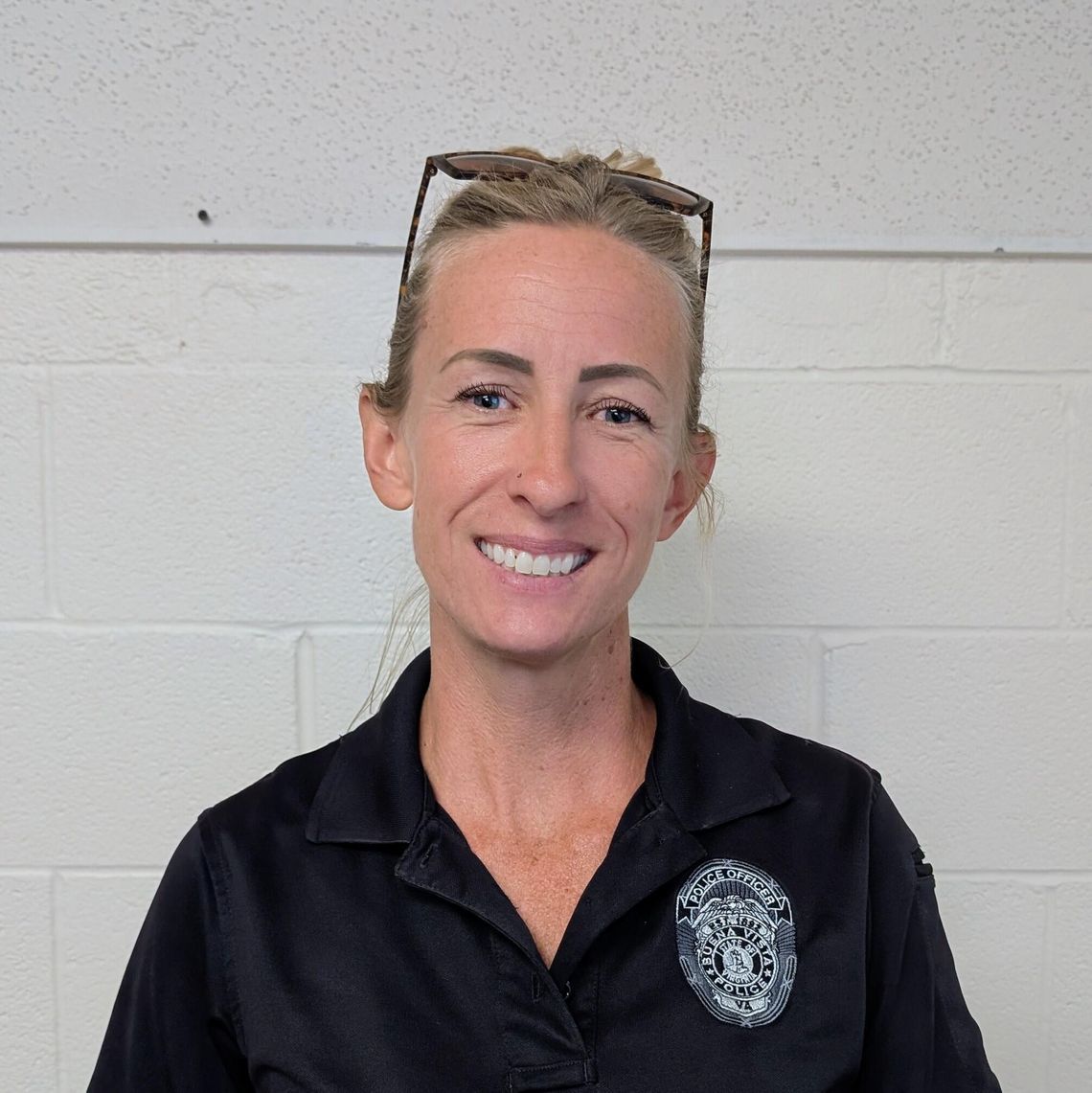
We spoke with Jennifer Smith, who is the violence against women and internet crimes against children investigator the Buena Vista Police Department. She's been in law enforcement for 15 years and her favorite foods are steak (rare) and mac and cheese.
Did you always want to be in law enforcement? If not, what was your original career path?
No. Actually I wanted to go more of the licensed clinician route, like the mental health route because I got my bachelor's in psychology, then I got my master's in forensic psychology. Then it went from being like a licensed clinician to [wanting to] be in the behavioral analysis unit with the FBI, like the show Criminal Minds.
Honestly there's nothing more fascinating to me than the human mind. Decision making, why people are the way that they are, why they do what they do, the diagnoses that are sometimes behind why they do what they do, I just think it's fascinating.
What motivated you to become a police officer?
Oddly enough, I met a guy, he was in one of my classes, and we were just talking and he was an Arlington police officer and he said, 'you should look into going into law enforcement because it's a hiring freeze right now, a federal hiring freeze. You'll already have the degree but then you can get your real world experience.' So I did my internship with the U.S Marshals service in Norfolk and that's how I ended up meeting some of the Norfolk gang squad guys. I did a ride along with them and I loved it, and then I applied and the rest is history I guess.
Describe your journey from the academy to where you are now?
One of our classes in the academy was responding to sexual assaults and when I took that class I was like, 'I really want to go to what they called Special Crimes' which was sex crimes and then also felony domestic assaults, felony child abuse, internet crimes against children, elder abuse. You know, all of those awful things. In my mind, I don't mean for this to sound bad, but I was like, 'those are some true victims right there.' Obviously if there's a homicide, the person that is killed, you've got their family that is left behind that has to deal with that for the rest of their lives. Then you've got like these sexual assaults and these women that are beaten by the people that are supposed to protect them the most; they have to live with that their whole lives. So I mean, it's like continual victimization almost, living through that trauma over and over again.
So I knew I wanted to go over there but I made a quick pit stop after I did my two years on the street. I went to vice and narcotics. I did some undercover work there, prostitution stings and things like that. Then I went to special crimes and I was there for about six and a half years.
But, it’s true what they say when you do that kind of work: there's going to come a time where you're going to need to take a break. It hit me like a ton of bricks one day. I went to my sergeant and was like, 'I need to go back to the street. I need to go back to patrol, I need a break.' And he was so kind about it. He was like, 'yep, absolutely. I'll do my best to get you to wherever you want to go, whatever precinct.' So that's what I did. I was in patrol for a little bit and then I went to the criminal intelligence unit, which was interesting.
And then Wayne Handley, who actually taught me in the police academy 15 years ago. I was at one of my good buddies', it was his retirement party, and Wayne was there. At that time he had already been essentially given the job [of Buena Vista Police Chief] and accepted it but he hadn't started yet. He said, 'do you want to come work for me and basically do what you did in special crimes but do it for me? I know you want to get back to the mountains.' I'm from West Virginia I was tired of the big city. I was kind of miserable and I said, 'yes, please save me. Let's go.' So that's how I got up here.
What has been your favorite position, role, or location?
Kind of tough. I think I would say I like doing the violence against women. I do. Also the internet crimes against children is the toughest thing that I've ever had to work obviously because you see and hear things that you don't ever want to, that you wish you could forget but you can't, some horrible horrible things that people do to children.
The only reason I'll say my I enjoy working them is because going through and making the arrest after the fact. I might not be saving the poor children that are in the videos or the pictures, because who knows where those came from probably another country and maybe however many years ago I don't know, but at least I still feel like I'm doing my part in a way. You know what I mean? So anything involving children, even though sexual assault cases and the abuse cases, I think those are all my favorite to work, which sounds terrible but I think you know what I'm saying.
Name a few of your daily tasks?
Well obviously you know in the morning I get here, check my email, think in my mind what all I need to do, paperwork wise and what I need to do follow-up wise. So usually I'll take a look at each open case that I have, what do I need to do with this case today and then kind of do a to-do list. I'll do the same thing with every other case so I know what I need to get done and essentially from there, prioritize like, 'okay, well I know this has to be done by Friday, so this is I'm going to be working on now.' Then I make sure that there are no new ICAC (internet crimes against children) cases. I just want to make sure that all my cases and stuff are taken care of.
If the guys are busy out there going from call to call, then I'll assist them whenever I can. And there are still some days when I cover patrol shifts as well. I'm also the evidence tech, so the evidence that needs to go to the state lab, I transport that down. Whenever they're finished with a lab, I bring it back. All that stuff and I make sure that our evidence room is in order and all that. Yeah, that's pretty much my daily activities.
In your position, what is the hardest part about the job?
Seeing and hearing a lot of horrible horrible things. People are... They're kind of gross.
What is the best part? What motivates you to keep doing your job?
The very best part is when I hear from a victim that even though they went through something absolutely horrendous and traumatic, that I was a help to them. That's the biggest thing to me, just knowing that I can. Cuz going to court and testifying and doing all of that is a process, and I can't imagine getting up there and talking about the things that they need to in a court case for that. But you know, survivors are so brave to do that. They get up there and they do it and I just try to help through the process, essentially.
And not just me, I work closely with Project Horizon. I adore everyone over there and Michelle Clark down here at the commonwealth attorney's office. You know, we all just try to do what we can do to make their lives a little bit easier when they're going through it.
What do you do to unwind? Do you have any hobbies or unique skills/talents?
Well, I have a little farm. I have, you know, my chickens and I have a duck and I have two horses and two mini mules and a dog. I've had horses and ridden horses my whole life.
I've known for a while that I wanted to get into equine assistant learning which is similar to equine therapy, just without the therapist. Essentially the horse is a therapist I'm just there to observe. So I'm starting a non-profit. It's called Steadfast Equine and it's a certified biblically based equine assisted learning. So I will be starting that in very soon. I'm waiting to get my non-profit status. My plan is to work with First Responders because there are so many, as there should be, there are so many different programs out there for like veterans but there aren't many for First Responders.
There's something about horses that's really magical. I think they're healing because they will mirror you and they will bring to the forefront things that you didn't realize you were feeling, you know? So I want to be able to help first responders. I want to help them with resiliency. I want to help them with recognizing those negative emotions and thoughts before, as we say sometimes, before the house actually catches fire. If you can get to it before and help them carry the load that they're carrying, really teach them how not carry it all on their own, that's my main goal. I just want to make their lives better, that including their families as well.
Based on your professional experience, what is common call type or complaint you handle in your position? What kinds of actions are taken in response? What kind of programs are in place?
Two big ones for me. Domestic assault, that's a big one and the other one would be mental health calls, people that are going through a mental health crisis. If they're a danger to themselves or others, we'll have to do an emergency custody order and take them into custody so they don't hurt themselves or anyone else, and take them to the hospital. Then CSB has to come in and find them a bed and go the temporary detention order route. There's a lot of that up here.
I think another thing that is really sad is that a lot of these cases are really exacerbated by methamphetamine use. If you're already paranoid or if you already have some sort of diagnosis and then you're using meth, those two things don't go well together. That's really sad to me.
Another one that I guess I deal with is internet safety. I will be getting with Corporal [Joshua] Guttmann about maybe putting on some sort of little, I don't even want to call it a class but, like where we meet somewhere downtown and whoever wants to come the community can come and just talk about how to keep yourself safe on the internet, especially the elderly because there are a lot of scams out there and they're getting smart.
How can we educate the public on their role in crime prevention in our community?
Like okay, what can you do keep your child safe? Obviously I know you can't watch them 24/7 and some of these kids know how to get past the parental controls. They can do things with phones that I cannot. Especially teaching kids about, 'hey, I understand that you are 15 and you're dating this other 15 year old and he wanted sexually explicit photo of you. Well don't send it. Don't take it. Don't send it because you don't know where it's going to end up.' I've worked many cases where said photo is airdropped during lunch.
I still believe that there are plenty of people that are probably experiencing domestic assault/intimate partner violence and they don't want to come forward either because they don't want to get their partner in trouble or they don't want people to know what's going on because they're embarrassed or it might be for financial reasons too. What I do want people to know is here, at the Buena Vista Police Department, whenever we respond to a domestic violence call and it's intimate partner, if we respond to that then you're gonna always fill out a form that's called a lethality assessment protocol, a LAP. It's basically a list of questions. Jacquelyn [Campbell], because of research that she's done, it's this evidence-based intervention that's obviously used by us and it's a bunch of questions. Things like 'has this person ever strangled you? Have they ever threatened to kill you or kill your children? Are they unemployed?' Research has shown that all of these can be precursors to, essentially, intimate partner homicide.
I've asked the victim these questions and then if they're considered high danger, then we make sure that they get into contact with Project Horizon right then and there. Even if it's 3 o'clock in the morning because that way we get them services immediately, before they have time to I think more about it like, 'oh, well I'm sure he won't do it again.' Or before the apology texts or calls or whatever start coming, or the flowers or anything. We've already put them in touch with services and got that ball rolling. I just want everyone out there to know that their safety is paramount and that we'll do all that we can to ensure their safety and to get them, whether it be counseling or shelter or whatever the case may be, we'll work with Project Horizon and get them whatever they need to make it through that.
Contact information for Investigator Jennifer Smith:
540-817-3975