Alpha-Gal
Editor’s note: This is the first installment in a multipart series on alpha-gal syndrome (AGS), a tick-borne allergy to red meat, and its impact on people in Rockbridge County. The next installment will focus on prevention, current medical advice, and emerging alternative treatments that patients say show promise.
By Allie Goolrick Chad Coffey knew there was a problem when his 17-year-old son, who usually had a voracious appetite, stopped wanting to eat at the dinner table.
Do You Have Alpha-Gal?
If you have been diagnosed with alpha-gal and want to share your experiences, please send The News-Gazette an email to editor@thenewsgazette. com. You’re also welcome to add your thoughts to last week’s post on alpha-gal on The News-Gazette’s Facebook page.
Dalton, a three-sport athlete at Buffalo Gap High School in Augusta County, was in the middle of baseball season in 2025 and was suddenly struggling both on and off the field.
“I mean here’s a 17-year-old teenager, who should be devouring food, and he’s pushing his plate away from him,” Coffey said.
After a few months, the pattern became clear: Any time Dalton ate red meat, he felt sick.
Coffey, who is the executive director of the Rockbridge Area Recreation Organization and teaches hunting safety classes, had a hunch: alpha-gal syndrome (AGS), an allergy to mammal products caused by a bite from a lone star tick.
After his pediatrician ordered bloodwork, Dalton was formally diagnosed with AGS, which causes an array of troubling symptoms including nausea, vomiting and diarrhea. It can also cause severe breathing issues, itching, hives and even anaphylactic shock, which can be fatal.
Most doctors recommend patients with AGS don’t eat beef, pork, lamb, venison or rabbit, but dairy foods, products containing gelatin, and some medications and lotions can also trigger a reaction. For Dalton and other AGS sufferers, the diagnosis can lead to a severely restricted diet and other profound lifestyle changes.
Lexington nurse-practitioner Elizabeth Berry said she had one AGS patient, an avid hunter, who had to quit his favorite hobby.
“Even being close to a deer, he would have a severe reaction,” Berry said. “And that wasn’t even ingesting the meat, it was just being around an animal.”
News-Gazette reader Thomas Petitt, 48, reported that it’s difficult finding things to eat and skincare products to use that won’t make him sick. Pettit said eating out is now off the table because of potential cross-contamination.
“It’s so hard to live life like this. You can’t go out to any restaurants,” Petitt said. “It’s scary. And it’s a full-time job.”
How widespread Is AGS?
According to the Centers for Disease Control, AGS cases have risen steadily across the country since 2010, and today an estimated 450,000 Americans are thought to have the syndrome.
But it’s unclear just how many people in Virginia have AGS, or if cases here are on the rise, because the Virginia Department of Health only officially started tracking AGS numbers in September 2025. So far, according to a VDH spokesperson, no official state data has been released.
A Facebook query to News-Gazette readers last week got more than 60 comments from people who have AGS, and several other local residents sent in emailed comments about their experiences with the life-altering allergy.
Dr. Thomas Kerkering, chief of infectious disease at the Carilion Clinic healthcare system in Roanoke, said he believes Virginia is currently a hotbed of AGS. “Virginia probably has the highest number of cases in the United States, and most of those cases are in your reporting area,” Kerkering told The News-Gazette. “So yes, it is here, and there is a lot of it.”
One thing that is clear is that Virginia is a fertile breeding ground for ticks, which are known to carry a myriad of diseases including Lyme, Rocky Mountain spotted fever and a flu-like sickness called ehrlichiosis. ASG, also carried by lone star ticks, is technically an allergy, not an infectious disease.
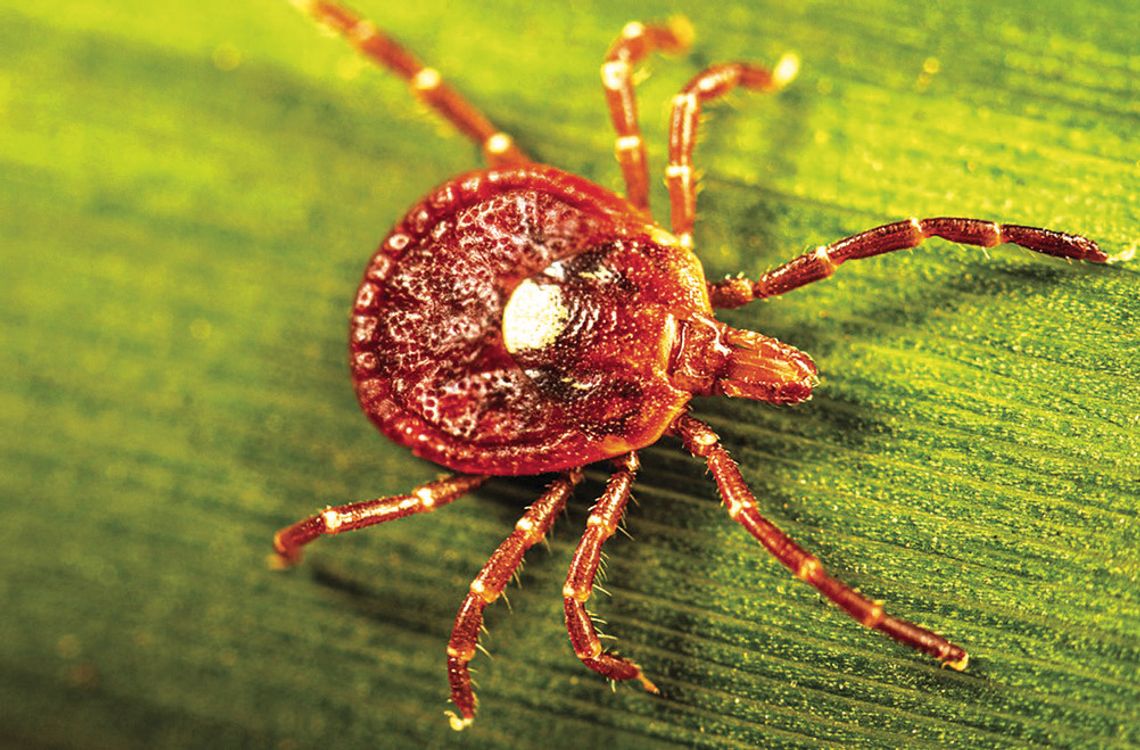
The female lone star tick is recognizable by a distinct white dot on its back. According to Dr. Julia Murphy, the state public health veterinarian with VDH, lone star ticks are common in Virginia, especially in areas below 1,500 feet. Annual environmental factors like temperature, humidity and changes to the landscape can increase or decrease lone star populations. But to Murphy, bites from a lone star tick are a big risk every year.
“They’re very aggressive ticks and commonly bite people,” Murphy said. “I always say it’s a bad year for ticks, because I always want people to take the kind of precautions that’ll help keep them from getting bitten.”
What is AGS?
AGS was first discovered at the University of Virginia in 2007 by Dr. Thomas Platts-Mills, the former chief of UVA Health’s Division of Asthma, Allergy and Clinical Immunology.
Platts-Mills was studying allergic reactions to cancer drugs and realized that patients from certain areas were having adverse reactions to meat after taking a drug that contained a sugar molecule called alphagalactose.
The alpha-gal molecule is found in the saliva of the lone star tick, as well as in mammals. Platts-Mills and his team eventually made the connection between the meat allergy and patients who were bitten by a lone-star tick.
Here’s how it works: When a tick bites its host, the body’s immune system reacts to the alpha-gal molecule as a threat and creates specific antibodies. Since mammal products also contain alpha-gal, the body then creates the same reaction when a person eats red meat. For reasons scientists don’t quite understand, eating and digesting meat does not trigger the same reaction before the molecule is introduced via a tick bite into the skin, according to Murphy.
Poultry, fish and seafood and eggs don’t contain alpha-gal and won’t trigger a reaction.
The length and severity that a person may suffer from AGS varies from patient to patient. For some, it is a lifelong condition. For others, antibody levels will lower over time, and people can eventually reintroduce red meat.
Either way, people with AGS need to work closely with their doctor before attempting to reintroduce any foods.
A complicated diagnosis Mary Hamby, 74, who lives near Brownsburg, had enjoyed a day walking in the woods with her grandson when she noticed several itchy bites and a small tick. A few days later, she stopped for a hamburger. About six hours after the meal, she suddenly developed hives, tongue swelling, and severe GI symptoms.
Recognizing she could be in anaphylaxis, she rushed to the emergency room, where doctors immediately administered epinephrine. But said none of her health care team mentioned the possibility of AGS until she told them she’d been bitten by a tick and suggested the condition herself. Lab tests confirmed the problem: alpha-gal syndrome.
Kerkering said Hamby’s experience is common, because a lot of doctors are relatively unfamiliar with AGS.
“I think there was a couple of surveys that showed that only about 35% of primary care physicians were even aware of the diagnosis or that there was such a thing called alpha-gal,” Kerkering said.
One of the big obstacles to getting diagnosed is that the signs and symptoms of AGS are nonspecific and can mimic other conditions. Many people who actually have AGS are initially diagnosed with irritable bowel syndrome.
To complicate things, unlike allergies to common triggers like peanuts or bee stings, the reaction to alpha-gal can set in hours after a person eats meat, making it harder to identify AGS.
And the late onset of the reaction only makes it more dangerous: Many people end up having a reaction after dinner, in the middle of the night.
In worst-case scenarios like anaphylaxis, patients often end up in the emergency room. But patients with milder symptoms often only consult with their primary care physician if they experience symptoms repeatedly, which means it can take years to get a proper diagnosis.
Kerkering said that in the age of shorter doctor’s visits, sometimes a patient’s full history – and the clues that would lead to an AGS diagnosis – get missed. He says patients who suspect the syndrome need to advocate for themselves.
“That’s when they should ask their physician, ‘Hey, can you test me for alpha gal?’” Kerkering said. “Hopefully, we can use the patients to also then educate the physicians about the disorder, particularly since it’s of such high prevalence in this area.”