Another Colony Rescue Highlights Spay/Neuter Demand
Buena Vista’s Furever Friends Lodge cat shelter is helping to spay and neuter an increased number of cats more than two years after starting its low-cost spay and neuter program.
Last year, the shelter’s program, which relies on the help of local vetinarians, saw just over 700 cats spayed or neutered. By the end of June this year, it had already been responsible for “fixing” about 550 cats.
“Just think, if we had the money, we could be over 1,100 in a year,” said Mary Huffman, one of the directors of Furever Friends. “And that’s a big difference.”
Some of the 550 cats came from a rescue in Lexington last winter when Furever Friends trapped about three dozen cats. Like the Rockbridge County cat rescue The News-Gazette reported on recently, the Lexington case dealt with an instance of animal hoarding.
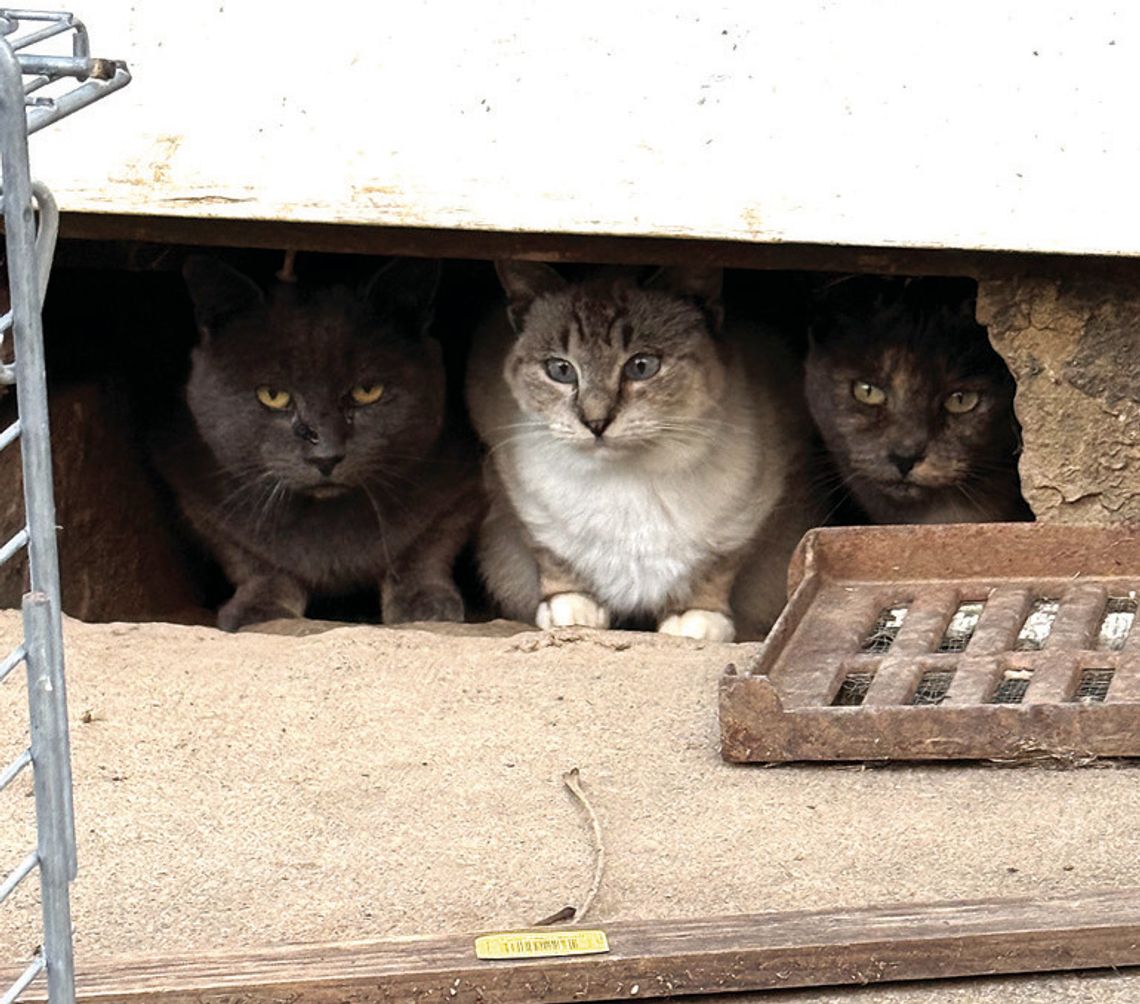
Nancy Sullivan, another Furever Friends director, said she first got involved in December, after somebody sent her a photo of 21 stray cats along a fenceline at a Hook Lane property.
Sullivan said she had already done some trap and release work to spay and neuter about 25 cats from the Hook Lane property. But she hadn’t been able to finish the job because the people living there had continued to feed the feral cats, making it harder to trap them.
Now, the residents had moved out, and the property’s owner was planning to have the house torn down.
Lexington City Manager Tom Carroll said the presence of stray cats represents a public health issue and a threat to residents’ “quality of life.” One family neighboring the Hook Lane house asked the city to step in.
“They said they couldn’t even open their windows in the spring and the fall because of the odor from the cats,” Caroll said. “And they wanted us to do something about it.”
The city was preparing to start capturing the cats and sending them to shelters. Many of them would likely have been euthanized, Carroll said.
But Sullivan offered on behalf of Furever Friends to trap the cats and have them fixed. It took almost four months, but she rescued about 35 cats.
“It was quite the challenge as far as getting them out,” she said. “Some were in good shape, some were not in good shape.”
Angels of Assisi, a Roanoke shelter that has more space than Furever Friends, agreed to temporarily house and spay or neuter the first 14 cats that the volunteers trapped – though one of those cats was in poor health and had to be euthanized.
Lexington’s WellPet Group performed spayings and neuterings for the remaining animals, as well as providing any other medical attention the cats needed. Sullivan said the veterinarian was willing to free up space in its schedule for the strays.
“They knew what I was doing, and they supported what we were doing,” she said.
Lexington’s city government contributed a little under $5,000 to help cover the vet bills.
After the first 14 trappings, the remaining cats stayed with foster homes or kennels approved by Furever Friends. Huffman said she had a running list of potential homes for the cats and was able to pass them along as soon as they were fixed and healthy. Many went to other cat rescues or farms.
“During that whole period from December on, I was already working the phone lines and the rescue lines and the farm lines,” Huffman said.
Of the roughly 35 rescued cats, about four died. The property owner has decided not to tear down the house, Sullivan said.
Sullivan said the hoarding case “was not a normal situation,” but she said that people who care for stray cats are generally well-meaning. Still, feeding stray cats without spaying or neutering them allows feral populations to build up.
“We’re working with people who generally just want to take care of a cat.” she said. “And then another cat shows up, and then the next thing you know … but they don’t have the money to fix them.”
Huffman said Furever Friends is seeing more spay and neuter requests this year because people – espeically older adults – are financially strained.
“The economy is hurting a lot. It’s hurting a lot of people,” she said. “They cannot financially afford their cats – to feed, and then also they can’t afford to have them spayed and neutered.”
Carroll said the city of Lexington has about $5,000 in additional funding set aside for more of Sullivan’s trapping efforts. But Huffman emphasized that she doesn’t want people calling Furever Friends to fix animal hoarding problems.
Furever Friends can offer advice and suggestions, and people can call animal control, but the situation is ultimately their responsiblity, she said.
“They need to take care of the problems themselves,” she said.
Under Virginia law, a feral cat that is “under the care” of a person is considered their companion animal, and they are legally responsible for making sure it has food, water, shelter and medical care.
“If you’re feeding them, legally, they’re yours,” Huffman said. “So if you’re going to feed them, fix them.”
Huffman said Furever Friends needs more funding to help sustain its low-cost spay and neuter program. Those interested in contributing can find the shelter’s GoFundMe at https://www.gofundme. com/f/furever-friendslifeline.
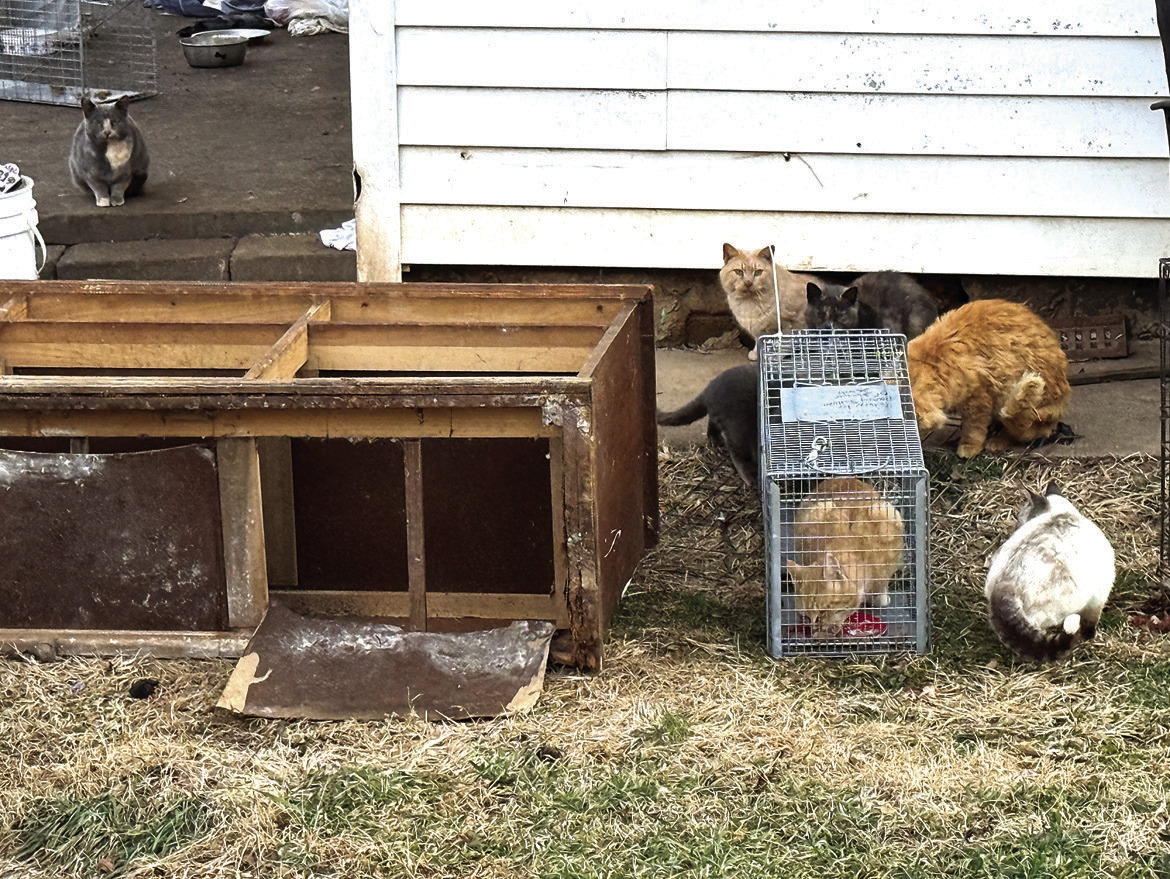
ONE OF SULLIVAN’S traps successfully catches a cat. The trapped cats went to either Angels of Assisi in Roanoke or foster locations chosen by Furever Friends.