Local Police Offer Project Lifesaver Program
In the early morning hours of Jan. 25, while snow was falling, Mike Ryan was awoken by a knock on his door. Outside was a deputy with the Rockbridge County Sheriff’s Office who told him that his wife, Roselyn, had been found wandering on the side of the road by a snow plow driver.
He had no idea she’d even left the house. “I felt pretty helpless, to be honest,” he told The News-Gazette. “I’m a pretty sound sleeper and didn’t realize any of this. I was shocked when the deputy told me.”
Roselyn Ryan was diagnosed with Parkinson’s about a decade ago, but had more recently began developing symptoms and habits common in people with dementia. She had some frostbite from walking through the snow and cold, but was otherwise okay. Following the incident in January, she was formally diagnosed with Parkinson’s-related dementia.
Mike Ryan said that he had caught her starting to wander off the previous evening, which was the first time that had happened.
“Had someone not found her, had she been in a ditch somewhere, or something along those lines, it could have been more terrible than it was,” he said.
Ryan’s story is likely one familiar to people with family members with cognitive disabilities. What has given him and his wife peace of mind in the months since is learning that there is a program designed to help locate people quickly in that exact scenario.
Project Lifesaver was founded in 1999 in Chesapeake with the goal of using radio frequency tracking to help locate these individuals when they “elope” or wander off.
In the nearly three decades since then, it has spread to nearly every state in the country, including Alaska and Hawaii, and even internationally with dozens of cities in Canada having at least one program and one in Tasmania.
According to the Project Lifesaver website, more than 4,600 rescues have been made using the program’s technology.
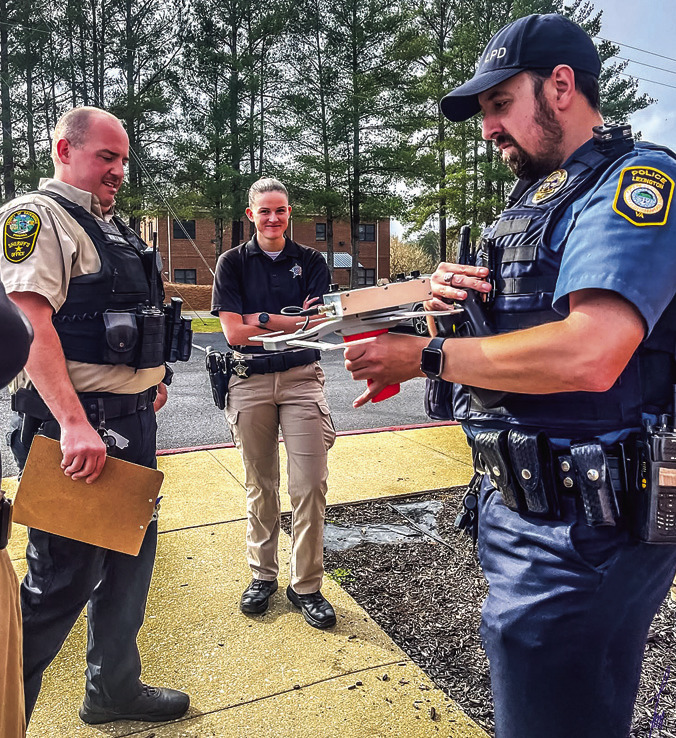
Locally, the Rockbridge County Sheriff’s Office, Lexington Police Department and Buena Vista Police Department all participate in the program. There are currently five individuals registered through the county program – including Roselyn Ryan – and four are registered through the Lexington program. At this time, Buena Vista does not have any participants.
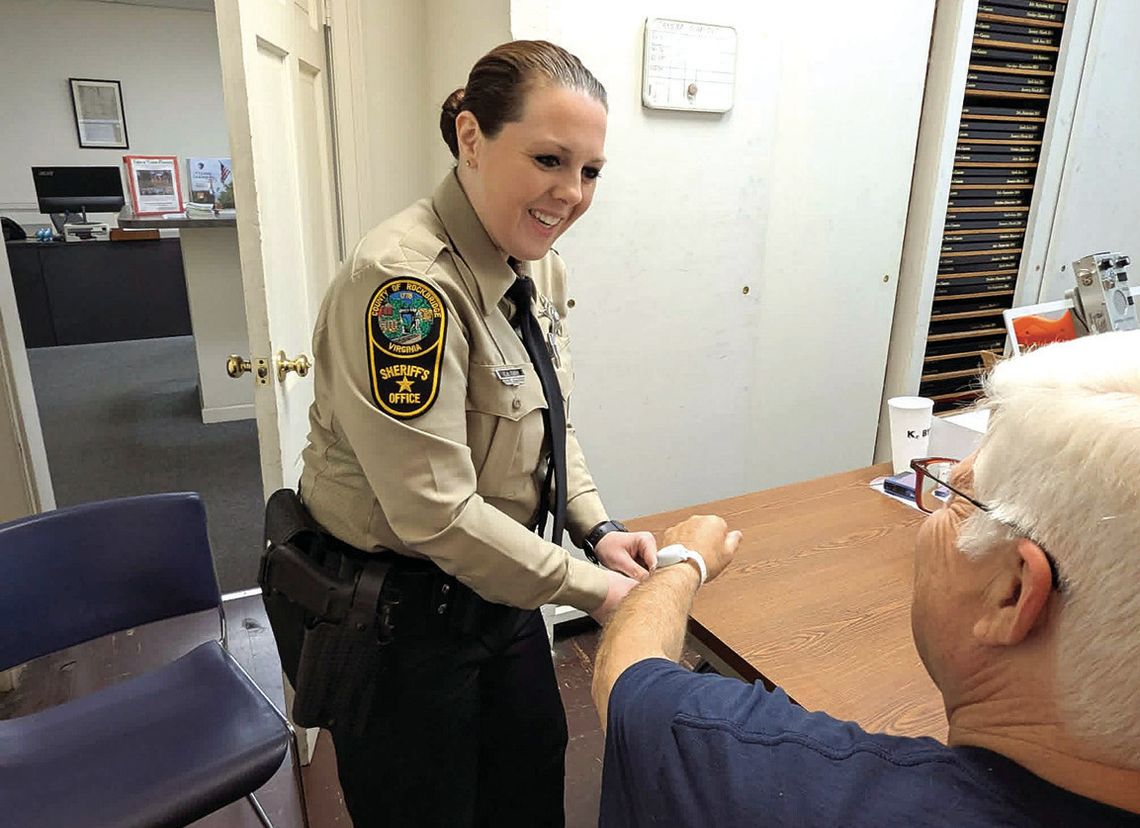
Through the program, individuals with cognitive disabilities who have a full-time caregiver are given a tracker that they can wear on their wrist or ankle which emits a frequency that can be tracked with a special radio frequency tracker.
Each device has its own frequency, and that frequency can be shared with other law enforcement agencies in the program to assist with searches, or even to allow for the individual to travel to other places.
Roselyn Ryan recently traveled to Florida to visit family, and local law enforcement there was able to coordinate with the Rockbridge County Sheriff’s Office to obtain the frequency to her device. There weren’t any incidents during her trip, but if there had been, the local police would have been able to utilize their tracking equipment to locate her.
Deputy Emily Fary, who oversees the program for the sheriff’s office, has been involved with the program for many years, first in Fairfax County and now here in Rockbridge. She told The News-Gazette that Project Lifesaver is “definitely a program I wholeheartedly believe in.”
“My grandmother has dementia and I know what it’s like to have that worry,” she said. “Anything we can do to give caregivers peace of mind and bring loved ones home, that’s what it’s all about.”
Cpl. Wesley Baker, who oversees the Lexington Police Department’s Project Lifesaver program, told The News-Gazette that he has also had personal experience with a loved one who had cognitive disabilities and a tendency to elope. Unlike Fary, he didn’t seek out involvement with the program but instead “kind of got thrown into it.” He’s been involved with the program in the city for a little over a year and a half and said he finds the program “very refreshing and very rewarding.”
“It’s one of those situations where, if I was going to be thrown into a program, I’m glad I was thrown into this one,” he said.
The Rockbridge County program has a $400 registration fee to cover the cost of the band and the tracker and the department requests a monthly payment of $25 to help cover the cost of batteries for the tracker, which are checked monthly and replaced regularly.
Fary emphasized that the department would work with individuals regarding payments so that the fees wouldn’t be a barrier to families with loved ones who could benefit from it. Baker said that Lexington’s program does not have a registration fee.
Lt. Chris Plogger, who oversees the Buena Vista Project Lifesaver program, told The News-Gazette that there is no registration fee for the BVPD program, but there is a $10 monthly charge to cover the cost of replacing bands and the batteries.
Both Baker and Fary highlighted that the program goes beyond just providing a peace of mind for the caregivers. It also helps build relationships between the departments and the communities that they serve.
“I have one family that, when I come out for my visit, I always bring them lunch and we sit down and just break bread together,” Fary said. “I think that’s a big piece of the community puzzle too, having that rapport between the caregivers and law enforcement so that, when something does happen, we know the person. We know what they might wander to, what their likes are, what triggers them, and we can respond accordingly.”
Those community connections, Fary said, are the most rewarding part of the program.
“I like to say sometimes that I’m the granddaughter they didn’t know they needed,” she said.
There have been a couple of incidents where individuals in the local programs have eloped and needed to be found with the tracking devices, but for the most part, Fary and Baker haven’t needed to use them in their time with the programs in the area.
Ryan told The News-Gazette that Roselyn hasn’t had in incident since joining the program, and that he has put additional security measures in place such as home alarms so if she were to wander in the middle of the night again, he would be woken up.
“It works and it helps,” Baker said. “If you have someone who is prone to wandering off and you’ve had scares like this in the past, or if you fear you might have scares in the future, this is definitely something I would recommend.”
Rockbridge County residents who would like to learn more about Project Lifesaver can contact Deputy Fary at [email protected]. Lexington residents can contact Cpl. Baker at wbaker@lexingtonva. gov. Buena Vista residents can contact Plogger at [email protected].