For those of us who work year-round and no longer have the entire summer to goof off or spend at camp, this interview series is here to hopefully brighten up your day and bring some beauty into your inbox. Lexington is fortunate to have multiple art galleries full of beautiful and diverse art pieces. This interview series will feature one local artist a week, where we'll talk about their inspiration, their drive, and even their advice for anyone looking to let their artistic passion take form.
This week we get to talk to Philip Clayton. He was born in Birmingham, AL but came here when he was four years old. He sold his art through the same agent for 31 years, while he served in the Air Force.
What kind of art do you create?
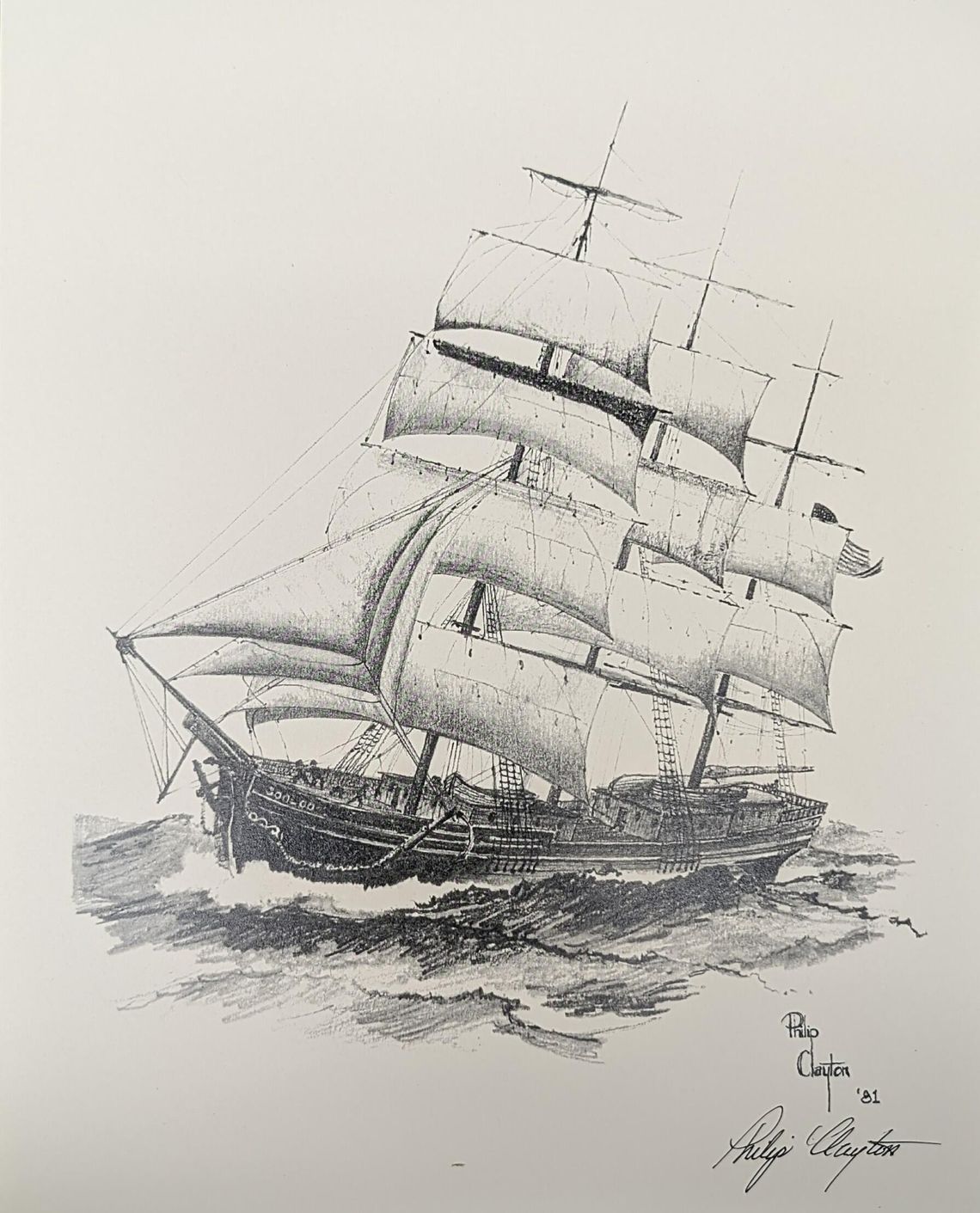
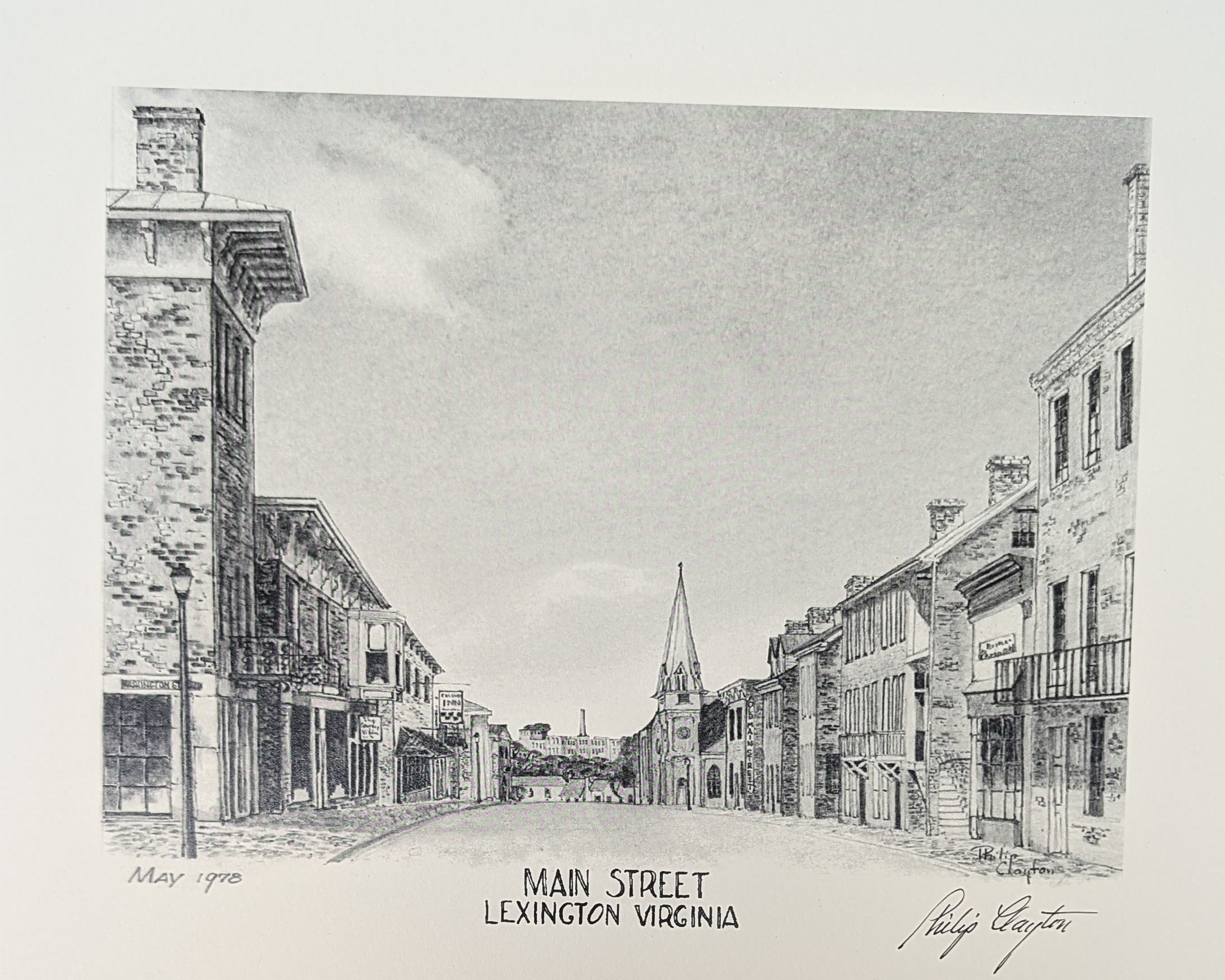
I do pencil sketches … mostly of architectural renderings like Lexington buildings and things like that. I love ships as well. I've done that and you can probably tell my forte is detail
What inspired you to start creating?
My father had an architectural degree from Clemson but he went from there right into World War II. My mother was English and she was in the British army. They met in England; he was a fighter pilot and she was working with radar. The guy who invented radar, Sir Watson-Watts, she was his right-hand person. She was very bright and did some really neat stuff with that program.
She always dabbled with painting and my dad was a really good architect, but he never used it because he went right into aviation and stayed in aviation, but their influence had a lot to do with me starting artwork. They gave me a few tips like, Dad showed me how to do perspective and that's one of my fortes – [focusing on] very good perspective. Then my mother was able to teach me a little bit about color combination and the color wheel and stuff like that. So that sort of got me interested in it and when I got my agent, it kind of freed me up to create art. She sold it, so it worked out very well and it all took place when I was in the reserve Air Force, which is a wee bit different than active duty.
What motivates you to keep making your art?
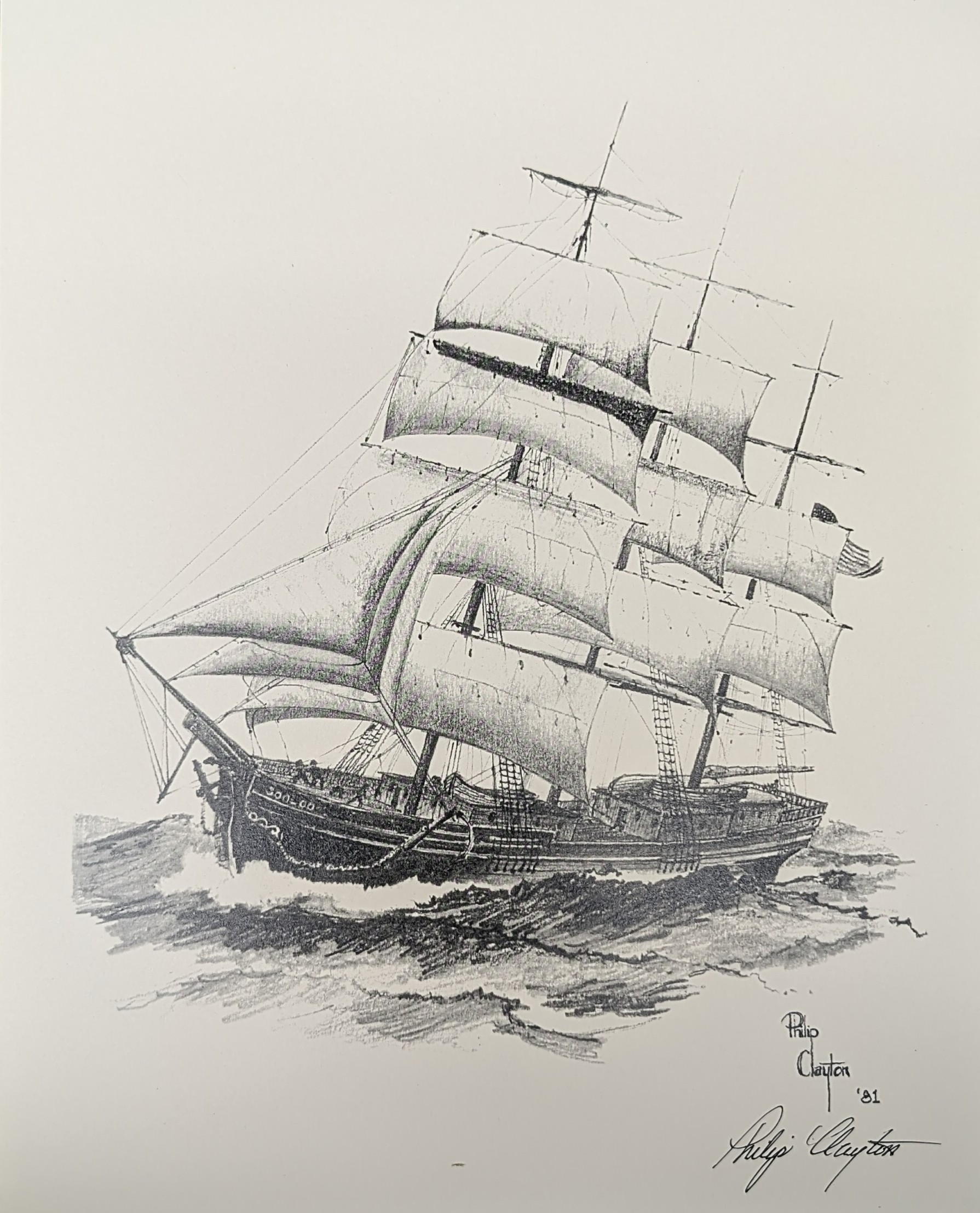
Oh, I love the challenge of it, to try to capture the essence of a drawing, like that ship. I've had people tell me that that elevates our spirits. The reason it does is they picture themselves standing on that deck, where the ship [is] a tilt with full sails and the waves, the wind. That drawing has had the same effect on me.
So, it's exciting for me to produce a drawing that evokes emotion, like the old trail railroad station: that mist and the magic of time, you know? I don't know, but it seems like every time you see a horror movie or just a movie of old buildings and there's mist and that I've captured that with that train station. It kind of takes you back to an earlier time. I really love that, seeing if I can produce a work that creates emotion in people. A lot of people have told me if they're feeling down or bad, they look at that ship and it really elevates their spirits.
Are there any artists you take inspiration from?
My father was a really good pencil artist but he didn't do much of it. He would buy an old building or an old farmhouse, or something in Rockbridge County or a building in Lexington, fix it up and sell it. That's what he did for a living when he got out of the Air Force and I got to help him, so that enabled me to learn more about architecture – being able to work with it and then draw it as well.
I'm trying to think [of what artists influenced me]. There is one that I'll think about: Ernest Watson. The three artists that influence my work are Andrew Wyeth, Norman Rockwell and Ernest Watson.
What sorts of feelings or ideas do you express in your art?
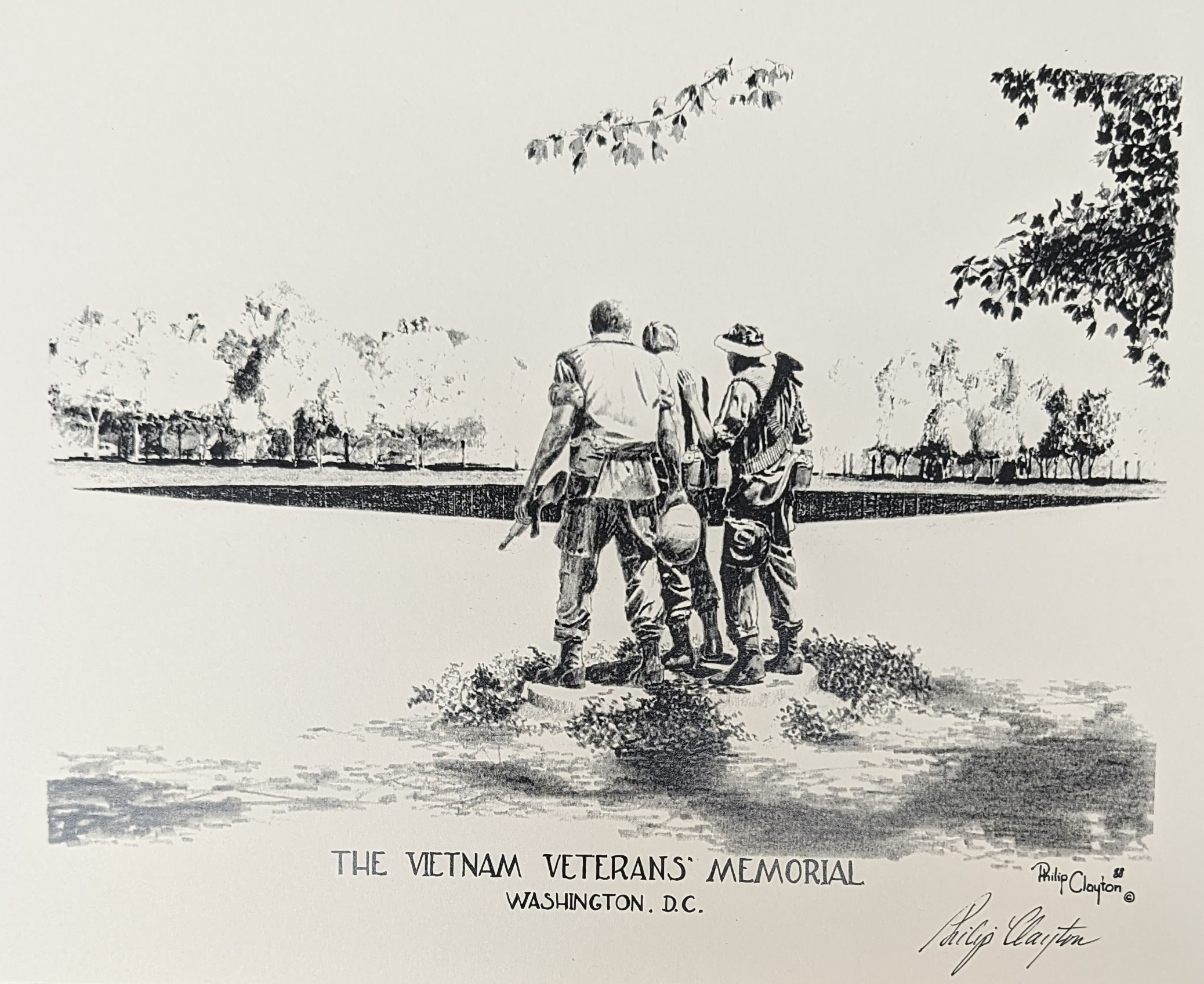
I think the drawing that most answers that question is the Vietnam Memorial. I'll tell you a quick story that will define what I mean by that. First of all, I'm in that generation where a lot of us went to Vietnam. By the time I got there, the war was pretty much over but I did bring a lot of my fallen comrades back on my airplane. It was a great big airlifter and I can still remember flying back from Vietnam with a whole load of coffins with our fallen, with the American flag over them and I found that very powerful.
The Vietnam drawing is in honor of those men and women. A sense of honor for our [fallen comrades] like when we were coming back from Vietnam. In those days we [received] no respect from the American people; it was awful. But that drawing really does. I've designed that drawing to evoke sadness and evoke “let's don't ever do this again,” which we've done it again and again and again, [which] blows my mind. But that's essentially the reason – that's why I draw.
How does it feel when someone buys your art?
A sense of “mission accomplished.” They've seen something in the artwork that appeals to them that perhaps I was trying to get them to feel, and as a result, they bought that piece of artwork. In other words, they are feeling what I wanted them to feel and the fact that they bought it, that's a success. So that's the answer to that.
Do you have any advice for aspiring artists, at any stage of their lives?
That's a good question. There's a book that I used to look at and read and study. That's one of the artists: Ernest Watson. I looked at it when I was 10 years old and it's still out there because it's a remarkable teaching guide to be a good pencil sketcher. It teaches you little tricks; for example you can take, like, an ice pick and make little lines on the paper and then when you go over like the window panes you draw a window and you take an ice pick and draw the little window panes in and then when you shade it with a pencil it hops right out – there’s your window panes. Those little lines become the sunlight reflecting on that side, on the sun side of it's so cool. Ernest Watson taught me all those little tricks. Perspective, for example: a brick wall. You don't have to draw every brick. You just draw a few here and there and then shade the rest of it and it pops out.
Find us a good source of instruction whether it be a book, like [by] Ernest Watson, or some artist like myself teaching my grandchildren, and do take lessons because I think it gives you the basics. And then go through a period where you don't take lessons, so that you can develop your own style. If you don't, there's a good chance that [you] imitate this style.
So my advice is to, jump outside the corral, and race away on your own, [on the way] you know and that way you're going to develop your own style.