Area Residents Take A Trip Through Southern Italy
Editor’s note: We welcome local resident Lynn Lowry Leech back to our Lifestyle section this week, bringing us another feature on her and her husband’s international travels. Enjoy.
Last September, my husband Rick and I visited Italy and chose to explore the area south of Rome, taking winding path through the regions of Abruzzo, Campagna and Basilicata to Calabria, at the bottom of the “boot.” We focused on picturesque villages and traveled through wild, rugged mountain areas, allowing time to visit places of special interest. What follows are a few highlights of the trip.
Near Rome, we spent an afternoon at Villa d’Este, a magnificent 16th century villa in Tivoli, known for its terraced hillside Italian Renaissance garden. Now a UNESCO World Heritage Site, the villa was commissioned by Cardinal Ippolito Il d’Este and was built in the mid-1500s on the site of a 9th century Benedictine convent. The villa is grand and imposing, but the spectacular gardens were most captivating to me, especially the system of fountains built into the terraced hillside: “fifty-one fountains and nymphaeums, 398 spouts, 364 water jets, 645 waterfalls, and 220 basins, fed by 875 meters of canals, channels and cascades, and all working entirely by the force of gravity, without pumps,” according to Wikipedia.
Traveling east, we visited Sulmona in Abruzzo. Its old town is a mix of medieval, Renaissance and Baroque architecture and it is the home of confetti, sugar-coated almonds that can be eaten out of hand or are crafted into brightly colored flowers and other ornate creations. We bought several small bags of chocolate-covered almonds to sustain us during the trip and chose some colorful almond daisies to bring home as gifts.
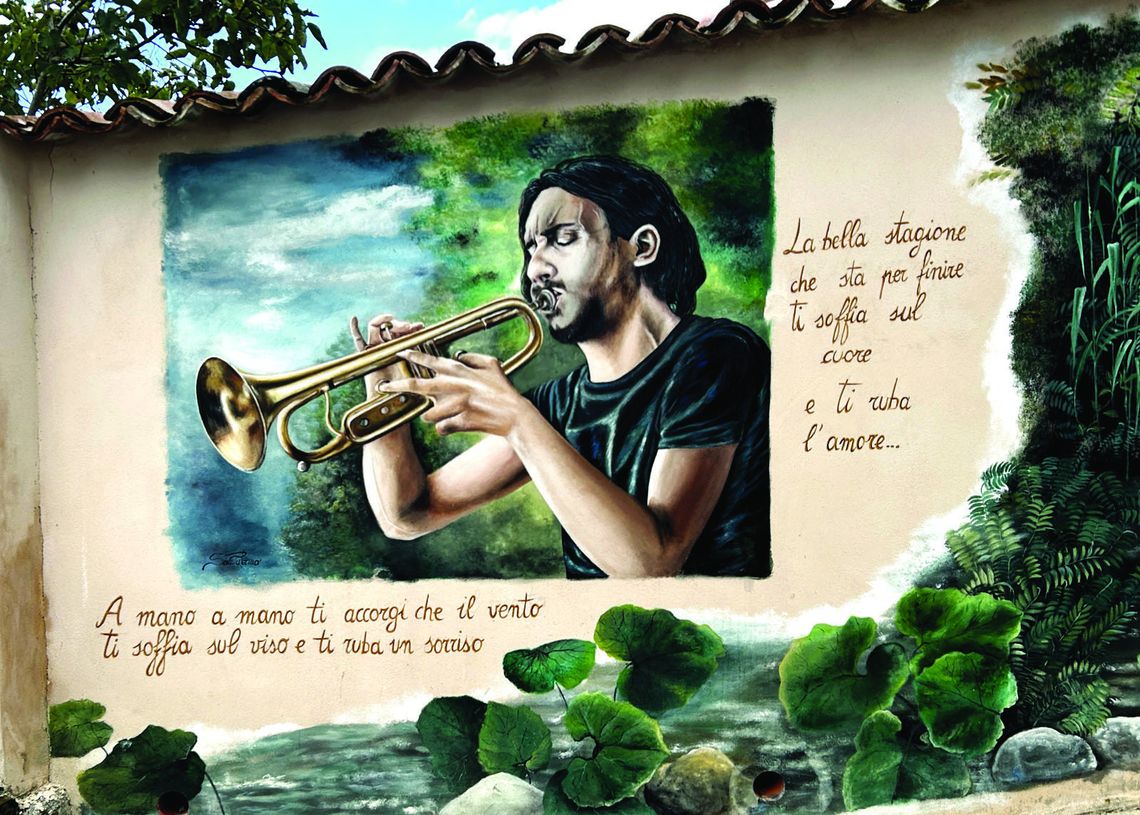
One of the things I most enjoyed about visiting this region was how many villages chose a unique way to decorate public spaces or plain doors. In Pacentro, residents had painted utilitarian metal electrical boxes on the sides of buildings with local scenes, like a woman in traditional dress braiding garlic or an owl gazing somberly at passersby. The hill town of Prezza featured murals showing scenes of local life on walls throughout the village, and wall murals depicting musicians were a highlight in Laino Borgo. A ceramic orange forearm and pointing finger with the words “Portoni Dipinti” (painted doors) guided visitors through the route in Zungri, where we also saw Italian sayings, with the letters pressed into slabs of clay or painted onto metal or clay, mounted to walls. Each of these unique décor styles were beautiful evidence of the civic pride of the village residents.
In Zungri, we walked down steep narrow stairs cut into stone to visit the città di pietra or stone city, the best preserved of the cave settlements in Calabria. The village was likely founded in the 9th or 10th century and consists of about 100 cave houses carved into the rock. Most are oneor two-room dwellings and feature windows, arches and air vents. Water channels, cisterns and a network of narrow streets and steps connect the homes.
I’m a sucker for Greek and Roman ruins, so a visit to Paestum, near the coast in Campania, was a must. A highlight of the outdoor museum is three well-preserved roofless Greek temples dating from 550-450 BCE. Stonepaved roads lead past a small amphitheater and the ruins of foundation walls that indicate where many buildings once stood. Restoration has revealed portions of several decorative frescoes, and I couldn’t resist buying a print of a fresco from the ceiling of the Tomb of the Diver showing a young man diving into water. An indoor museum houses painted terracotta vessels, bas relief remnants of decorative stone carvings, Roman statues, and more.
The small village of Civita in Calabria was among our favorites, in large part because of the warm hospitality we received there. We stayed at Il Belvedere B&B near the main square. Sleeping quarters for guests are in one house – the owners and their children live on the ground floor; guest bedrooms are on the top floor – and breakfast was served at another house a couple of doors up the street. According to our host, the “breakfast house” was where his mother was born. She’d later restored the house, as well as the other family house down the street and the son and his wife eventually opened both as a B&B.
We learned that the host’s grandfather had spent some time in New York City, and when he returned to Civita, he insisted that some of the streets be widened, to be more like what he’d seen in New York. (The Civita streets weren’t NYC-wide, but they were much wider than the typical narrow Italian village street.) Our host is a scientist and works for the nearby national park; his wife is Polish and teaches French in the local school.
Four other couples joined us the next morning for breakfast. Several tables were set with three kinds of fresh pastry, sliced bread, wedges of apple, and yogurt. Our very affable host was serving, and he offered us juice, coffee and tea and took our egg orders, which he texted to his wife, who was preparing food in their kitchen a few doors down. First, she sent up parchment paper-covered plates of sliced tomatoes, fresh mozzarella and salami slices on a bed of arugula, drizzled with olive oil. The over-easy eggs, also delivered on parchment-covered plates, were perfectly cooked and were presented on a bed of capers and arugula ‒ an interesting, but tasty way to enjoy them.
A tourist placard near the main square in Civita described things of interest in the area, which piqued our interest in visiting the Abbey of Santa Maria del Patire. It was quite a distance away up a deserted and winding mountain road, but the drive was very scenic, and the abbey was lovely in its serene, eerily quiet setting. We shared leftover cold pizza for lunch at an empty picnic area in a pine grove adjacent to the abbey. The only sound was birdsong and our voices.
Continuing our travels to the bottom of the arch of the “boot,” we visited Rocca Imperiale, the City of Lemons, in Calabria and enjoyed a stroll along a beautiful, deserted walkway that parallelled a wide pebbly beach on
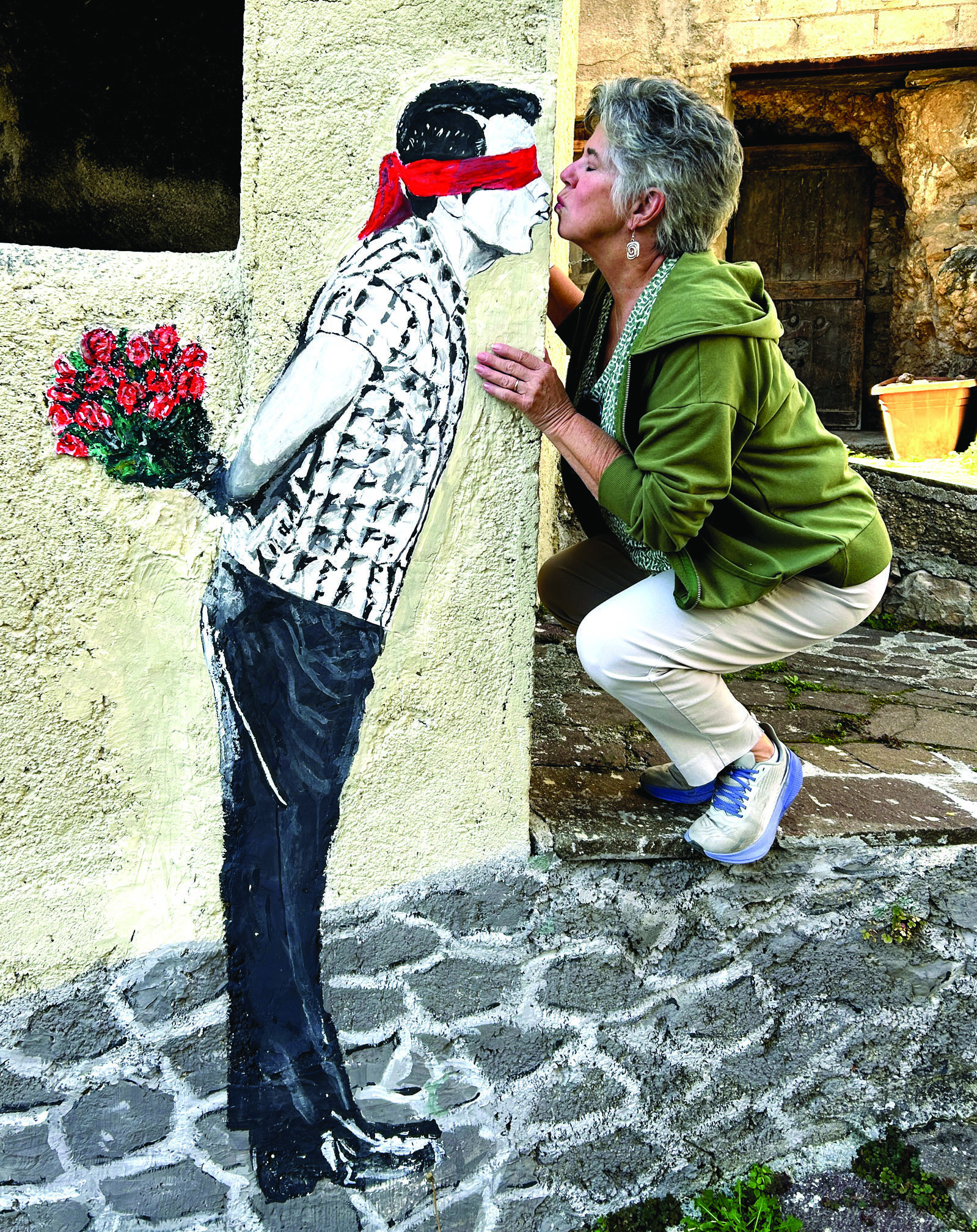
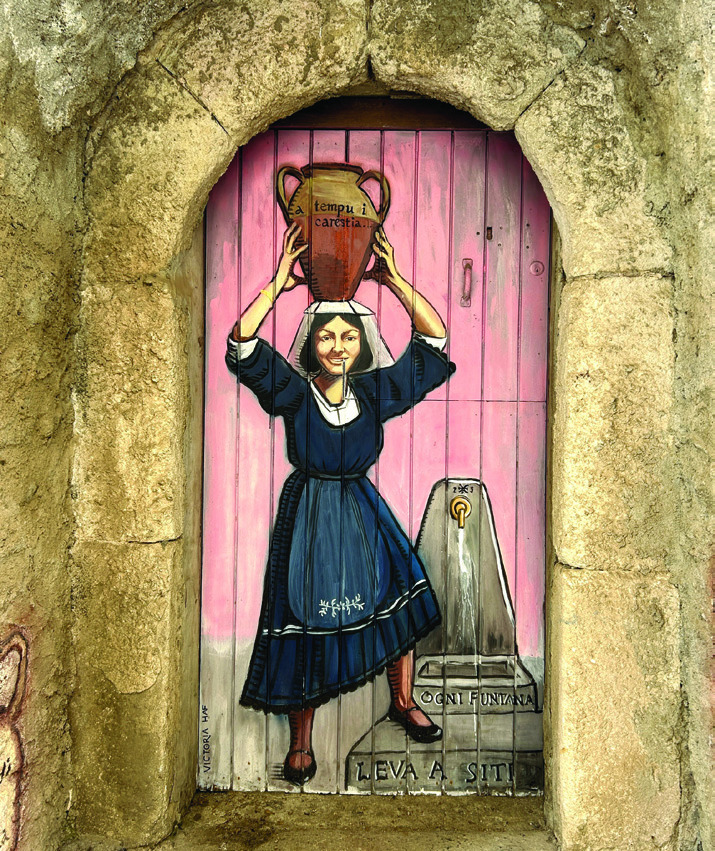
WHEN LYNN and Rick Leech visited southern Italy last year, they came across a large number of murals that decorated public spaces and doors. AT FAR LEFT, Lynn Leech “gets frisky” with a mystery man in Prezza. ABOVE, the writing on this wall mural in Laino Borgo says (below mural) “Hand in hand, you notice that the wind blows on your face and steals your smile” and (at right of painting) “The beautiful season that is about to end blows on your heart and steals your love.” AT LEFT is one of many painted doors in Zungri.
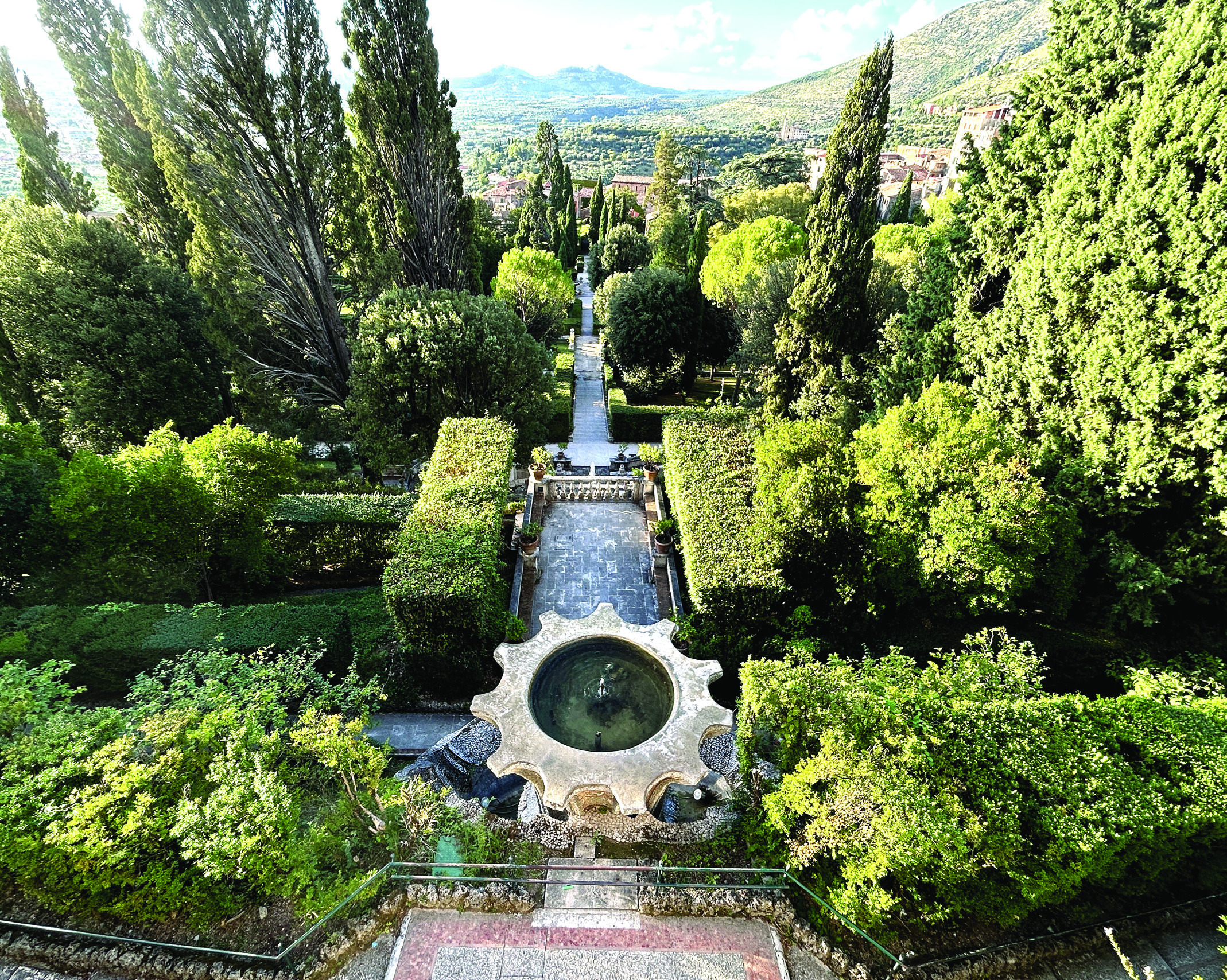
A TERRACED hillside Italian Renaissance garden is part of Villa d-Este, a 16th century villa in Tivoli, now a UNESCO World Heritage Site.
the Ionian coast. The beach was composed of unusual gray, rounded stones with veins of white running through them.
Driving north toward Rome, our last stop was Herculaneum, on the outskirts of Naples. Like Pompeii, Herculaneum was destroyed by the eruption of Vesuvius in 79 AD. However, while accumulation of thick ash and falling debris from the volcano caused buildings in Pompeii to collapse, trapping and suffocating people, at first only a little ash fell on Herculaneum, giving many residents a chance to flee. It is now believed that intense, atomicbomb- like heat following the eruption (not suffocation from ash) caused the quick death of people remaining in Herculaneum. Several thick layers of mud then washed over the city, entombing and preserving homes, bodies and other organic material. Many people huddled for protection in arched boat houses at the water’s edge, only to die from the heat blast, and their exposed skeletons are still there. There is still ample evidence of a lively culture that thrived in Herculaneum. In two homes of wealthy Herculaneans, we saw beautiful mosaics made partly or entirely of tiny glass squares. The blackened remains of a bed, with remnants of a green silk covering and a small sachet bag containing lavender, were also discovered during the excavation.
Along one street, our guide pointed out stone counters with round openings that looked like they could contain large, recessed bowls. He told us these were early “wine bars” and that amphoras of wine were fitted into the holes. On the wall beside the entrance to the building were drawings of various kinds of drink – red and white wine, and even a black concoction made from fermented anchovies that was apparently very popular – that advertised the shop’s wares and allowed a traveler who couldn’t speak the language to point to the image of what they wanted to order, not unlike the touchscreen ordering process at McDonald’s today. A flat, shallow circle about 3 inches in diameter was carved into the end of the stone counter. Customers laid their coins in these circles to pay. Early on, shopkeepers could tell whether the money was real by the way the sun shone on it in the circle. Later, they learned to line the circle with brass, and the sound the coin made when it landed on the brass indicated if it was counterfeit.
These are only a few highlights of our two-week tour of southern Italy. The trip was all the more pleasant because we avoided crowds by visiting small villages and traveling during the fall. And in even the smallest towns, Italian kindness and hospitality was evident at every turn. We’re already dreaming of our next trip to this beautiful and romantic country.
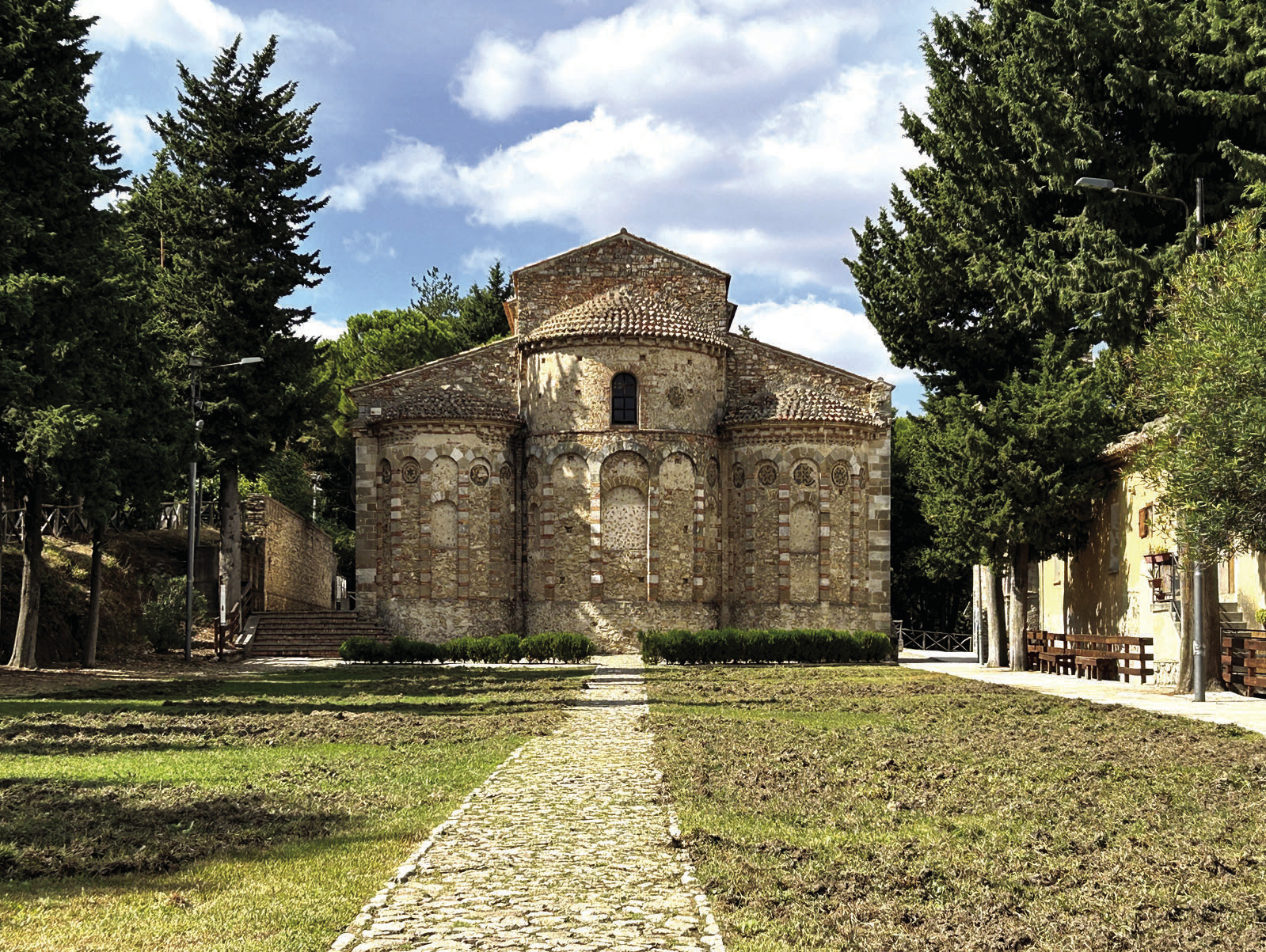
THE ABBEY of Santa Maria del Patir in Calabria was founded in 1095. It was renowned in Norman times for its library and scriptorium.
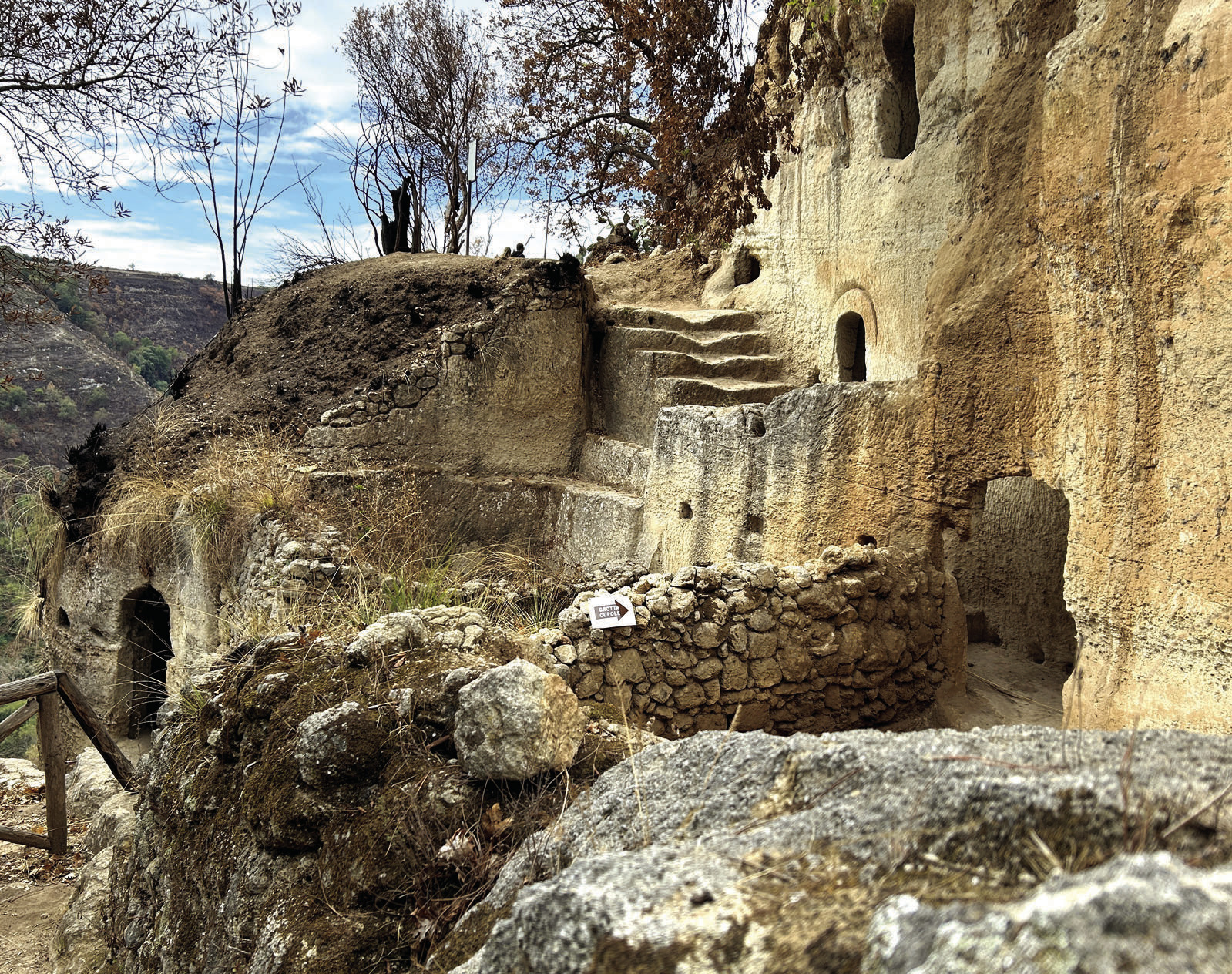
ZUNGRI’S grottoes or “citta di pietra” (stone city) is the most impressive of the cave colonies in Calabria. The site, believed to have been inhabited from prehistoric times, included a space for winemaking, shelters for animals, and even grain silos.