RHS Exhibit, Program, Activities Through May
Editor’s note: The following article has been jointly written by former RHS President Larry Spurgeon, former Monticello historian Cinder Stanton, and RHS Executive Director Eric Wilson. They will co-present a slideshow program on the topic on May 3, to immediately precede the closing reception for the related exhibit at the RHS Museum. These projects and related activities continue to extend the thematic and chronological reach of local and statewide commemorations of 250 years of “American Evolution.”
As national commemorations of its 250-year anniversary have recently echoed, the political crescendo that led to the “American Revolution” in the late 18th century brought the terms “Liberty” and “Freedom” to the forefront in ways that rang loudly not only across the Atlantic colonies, but across the globe.
The range of early political experiments in the decades that followed then faced the opportunities and challenges of figuring out how freedom might function, and for whom, in the Early Republic. Those decisions had to adjudicate practical terms beyond the mere if meaningful declaration of principled rights of “Life, Liberty, and the Pursuit of Happiness,” whether for explicitly named and contracted individuals, or implicitly occluded classes and cohorts, who also lived and spoke within those orbits.
The gradual and often grinding creation of national and state governments in an emerging and expanding United States established and articulated different notions of “citizenship.” That foundational break from being “subject” to some monarch, emperor, or cleric both revived and revised classical ideals from ancient Republics.
Different states, communities and institutions inherited and adapted the visionary if still vexed sense of what a “democratic” social contract might look like, in worlds still and variously governed by the cultural prejudices and legal limits long inflected by race, religion, gender, economic status, and enslavement.
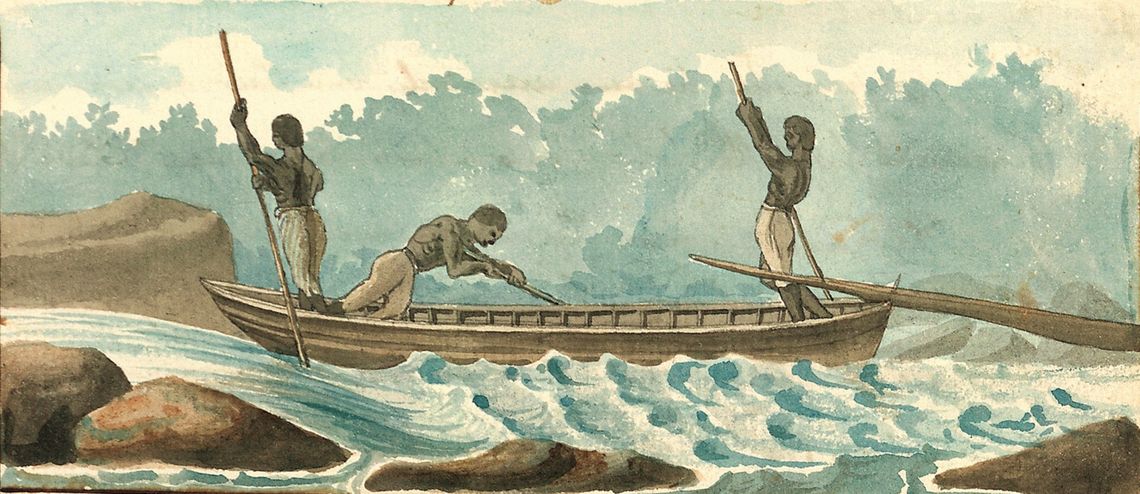
THIS PAINTING entitled “A batteau on the James River, 1798-1799,” by Benjamin H. Latrobe is part of the Library of Virginia’s collection. It was mainly African Americans, and especially free Blacks, who manned the batteaux that carried crops down Virginia rivers to Richmond markets. A number of Rockbridge free Blacks were boatmen on the North (Maury) and James rivers.
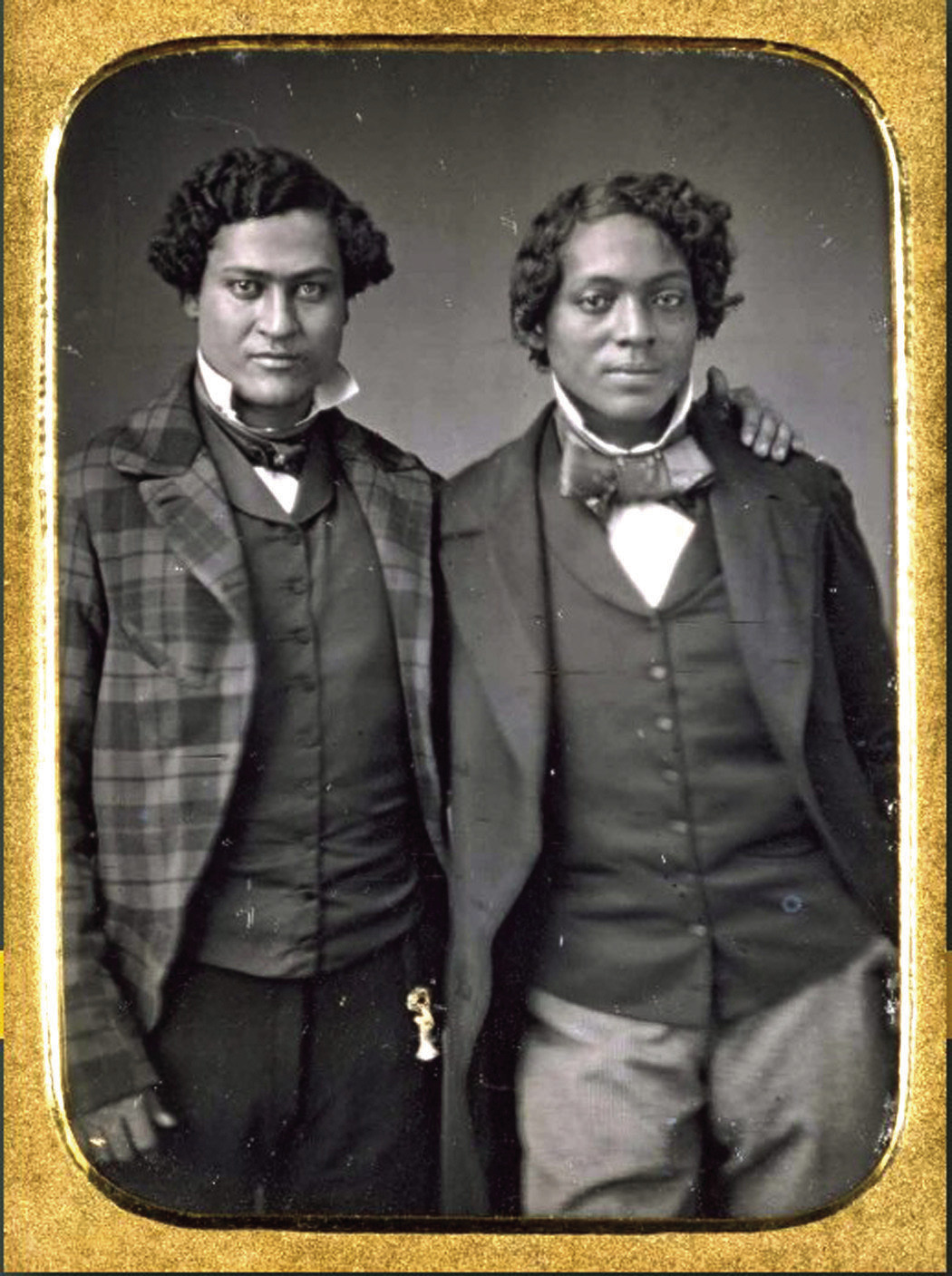
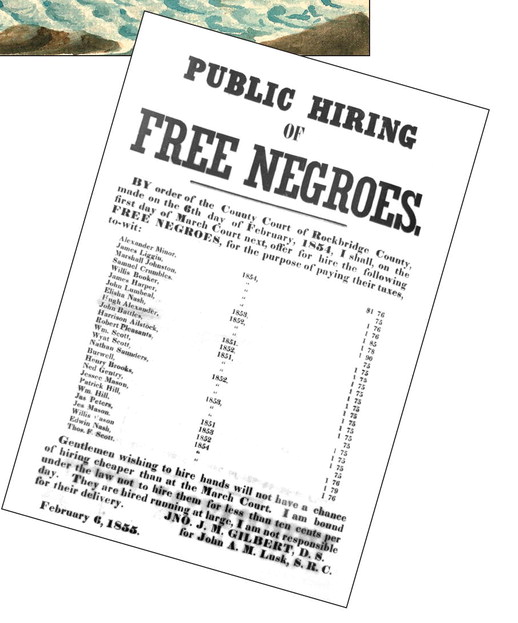
On Sunday, May 3, a special “doubleheader” invites the community to explore a particular temporal window, and some of the more local demographic dimensions of one chapter in that still-evolving history. The histories of free Black people who lived in Rockbridge will be anchored in a county strategically created in 1778, during that War for Independence itself. Sometimes, those experiences edged toward more democratic conditions for free people of color. Those formal and informal arrangements that cyclically grew and retracted through a full century before a second civil war that would be contested not across the Atlantic, but across the Mason Dixon line.
That afternoon, the Rockbridge Historical Society Museum will host a closing reception for the pioneering exhibit developed by the Virginia Museum of History and Culture. “UN/BOUND: Free Black Virginians, 16191865” is the third of four traveling exhibitions they’ve partnered to share locally in 2026-2027, newly amplified by VMHC’s selection of RHS, last month, as one of two dozen inaugural “Virginia History Affiliates.” For two more weekends, those displays can also be viewed Fridays-Sundays, 1 to 4 p.m. (101 E. Washington St.), along with RHS’ other exhibits on “Rockbridge at Play” and “The Virginia Bikecentennial of 1976.”
That 4 p.m. reception on May 3 at the RHS Museum will immediately follow a 2 p.m. slideshow presentation at Manly Memorial Baptist Church, introduced and moderated by Eric Wilson, and collaboratively prepared and delivered by noted community historians Cinder Stanton and Larry Spurgeon. The conversational program and reception are both free. A more detailed forecast of their original research, and the new questions and prospects their findings now bring, follows here, with more details available on RHS’ Facebook and Instagram pages.
Living In ‘Slavery’s Shadow’
Historians have described free Black people in the South before 1865 as “slaves without masters,” living in quasi-freedom in “slavery’s shadow.”
Virginia’s free Blacks lived on the shifting border between slavery and freedom, subject to ever-changing and increasingly restrictive laws. The conditions of their lives were in some ways better than that of enslaved people - they could legally marry, own property, and retain the profits o f t heir l abor. B ut they could not vote, hold office, testify against whites in court, attend schools, or carry weapons. And during the Civil War, they, like enslaved men, were conscripted to labor for the Confederate cause.
Until the end of the 18th century, Virginia’s free people of color were mainly the mixed-race children or grandchildren of free white women (by law, a child’s status followed that of the mother). After an act of 1782 permitting private manumissions, the free Black population began to increase, reaching almost 60,000 on the eve of the Civil W ar. T he fi rst f ederal census for Rockbridge in 1810 lists 149 free Black people, 1.4% of the overall population; 387 were listed in 1860, a number almost certainly understated.
The so-called expulsion law of 1806 put a brake on emancipations. It stipulated that people manumitted after that date had to leave Virginia within one year, or risk re-enslavement. In a few cases, they were granted official permission to remain. Some Rockbridge citizens who wished to liberate their enslaved people had to devise complex strategies to mitigate the harsh effects of this law. From 1789 to 1865 Rockbridge slaveowners emancipated 229 people.
Virginia law also required free Blacks to register with local authorities every five years. It was a two-step process – the court clerk recorded information about the free person, including detailed physical characteristics and the grounds for freedom. A judge then reviewed the application for registration, and if denied, the applicant was required to leave the state. If approved, a certificate was provided to the free person – known as “free papers” - and a failure to produce free papers when demanded was punished with a fine. A second offense could result in “stripes,” lashes with a whip.
Historian Ellen Eslinger wrote about free people in Augusta and Rockbridge counties, and observed that the registration law was rarely enforced. It was the threat of punishment that loomed over free people. Only about one-third of free Black people in Rockbridge ever registered. -One of many compelling stories involves a couple named Scipio and Peggy Lucas. In 1833, the Rev. John Ewing, long-time minister at Falling Springs Presbyterian Church, and his wife Druscilla, manumitted the couple by a deed of emancipation. More than 100 white citizens signed a petition to the Virginia Assembly in support of a law that would allow Scipio and Peggy Lucas to remain in Virginia, until they had the means to relocate out of state.
A few years later the couple moved to Ross County, Ohio, a vibrant community of free Black people - many from Virginia, including Williamson Henry, who had earlier moved there from Rockbridge County.
In 1839, Scipio Lucas was appointed administrator of an estate, and the bond was signed by Eston Hemings, the youngest son of Thomas Jefferson and Sally Hemings. Scipio Lucas died in Chillicothe in 1877, claiming to be 104, known for telling people that he could recall troop movements during the Revolutionary War.
In 2020 Larry Spurgeon began recording the names of free Black people in Rockbridge from 1778 to 1865 – using a combination of public sources. The result was a spreadsheet that currently totals more than 1,400 people. That spreadsheet, along with others documenting free and enslaved people in Rockbridge, has been digitized by Mackenzie Brooks, professor and Digital Humanities Librarian at Washington and Lee University. T he fi les a re searchable, sortable, and printable, intended to facilitate research, especially by descendants. The website is “https://wludh.github.io/ black-history-rockbridge/.”
Spurgeon and Stanton will highlight the stories of a variety of free Black individuals and families in Rockbridge County in the May 3 program.
Their lives help to show that, in spite of legal restrictions and the intolerance of white society, a number of free Black people in Rockbridge were able to earn respect and achieve economic independence. They purchased houses and land, pursued a wide variety of trades - from brick making to house building - and a few of them found work at the two colleges. Some fought for the Patriot case during the Revolutionary War; three generations later, dozens volunteered to serve in the Union army in the Civil War. And several were able to purchase freedom for themselves and for their family members.
Related Events
Through the past six months, RHS has focused its programming around certain month-long thematic clusters.
Here, a focus on the lessfamiliar histories of free Black individuals and families who lived in Rockbridge before national Emancipation follows a broad chronological sweep of programs integrating diverse American experiences and cultural themes. Last fall, those through-lines first trafficked the “Roads to Revolution in 18th Century Virginia.” From November through January, community round tables and history hikes reflected on the 50th anniversaries of local engagements with the Vietnam War, and the 100th anniversary of the Appalachian Trail.
Already in 2026, Black History Month brought a spotlight to local wartime and workforce mobilization during World War II, bringing new clarity and credit to the commitments of Black servicemen and women.
Partnering with four universities on April 29, RHS will wrap this month’s focus on histories of “Revolutionary Women” at Gillis Theater at VMI.
Interrelated events on May 3, 12 and 27 will now extend the exhibit that the Virginia Museum of History and Culture has loaned to the RHS Museum through April, enabling us to complement those groundbreaking histories and profiles with our own unique artifacts, archival resources, and the expertise of a vital team of local researchers who’ve been navigating this terrain for many years now. Another of RHS’ “History Hikes” will conclude the series on May 16, with interpretive guides leading those who join to a former Freedmen’s Village on the A.T (more details in a future issue).
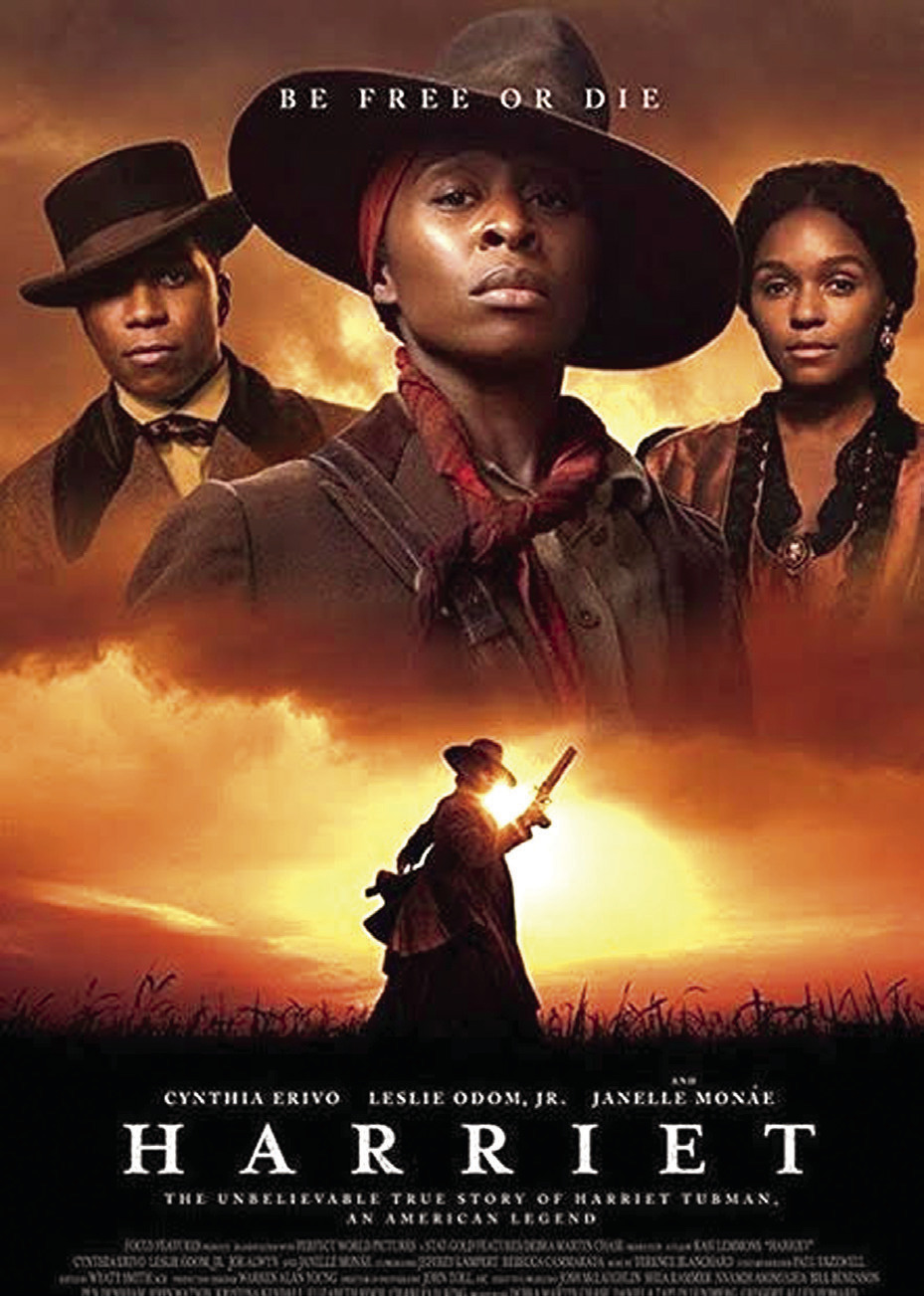
On Tuesday, May 12, at 6 p.m. in the Piovano Room of the Rockbridge Regional Library, the Oscar-nominated “Harriet” extends RHS’ “Revolutionary Films” series. Its focus on Harriet Tubman - and on the broader networks she courageously cultivated signal one iconic personal and systematic “Pathway to Freedom,” through what came to be known as “The Underground Railroad.”
Less familiarly, historians and school curricula have come to foreground Tubman’s groundbreaking service as a riflebearing leader of troops, during the Civil War itself. Having already served as a spy, scout and nurse, Harriet Tubman became the first American women to lead an armed assault, in the 1863 Combahee River Raid: guiding Union gunboats, destroying Confederate supplies, and liberating over 750 enslaved people in coastal South Carolina.
May 27 stages the next community reading discussion in RHS’ “Revolutionary Books” series, starting at 6 p.m., also in the Piovano Room. Students and lifelong learners are invited to look to Prince Edward County, and to discuss Melvin Patrick Ely’s Bancroft-award winning “Israel on the Appomattox.” The town of Israel Hill was situated on a bluff overlooking the Appomattox River, and founded in 1810 by 90 formerly enslaved people freed through the wills of the Randolph family.
For more information on all these programs, write to Director@RockbridgeHistory. org.