RC’s Impact Influential, Varied
Editor’s note: The following story was written by Bob Biersack and Shannon Spencer with Rockbridge Conservation.
In the early 1970s, which brought the completion of Interstate 81 to Lexington and a large manufacturing plant in the county, a group of local residents became concerned about the impacts of traffic and industry on the rural character of the county.
Prior to this time, land use in Rockbridge was described as about one-third agricultural and about two-thirds forest, with the two cities representing a very small portion. The inevitable changes that the interstate would bring encouraged local residents to focus on protecting key characteristics of this unique region while taking advantage of new economic opportunities.
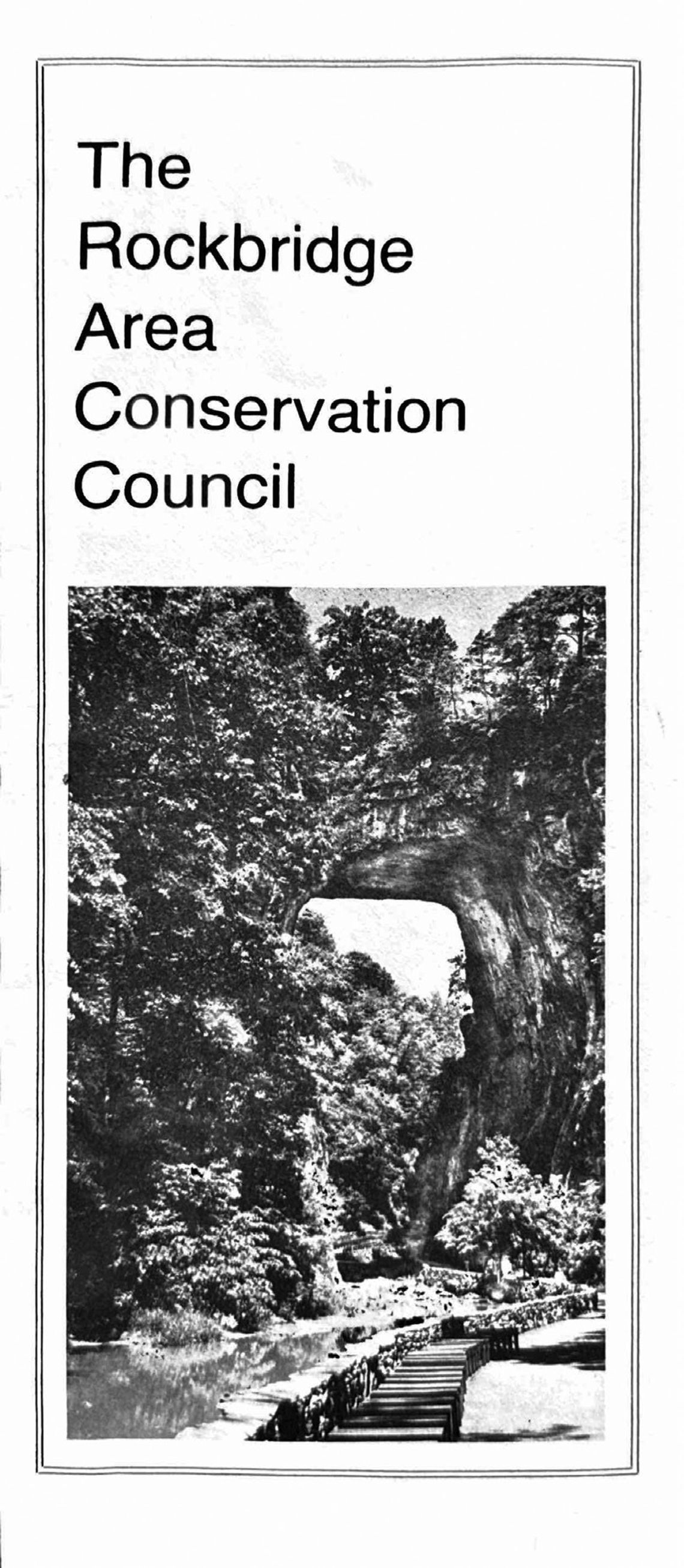
This group of residents was awarded a grant to introduce the people of Rockbridge County to land use planning. The following year, 1976, these residents created a volunteer-driven, non-profit organization – the Rockbridge Area Conservation Council (RACC – renamed Rockbridge Conservation (RC) in 2022).
RACC/RC quickly became a grassroots organization, composed of concerned residents, landowners, farmers, merchants, teachers, trades people, students and others who wanted to protect and preserve the unique and healthy rural/town character of the area.
The original mission of RC was “to promote the wise stewardship of natural resources and cultural heritage through education, advocacy, and action in order to protect and enhance the quality of life for present and future inhabitants of Rockbridge.”
Throughout the last 50 years, the volunteers who shaped Rockbridge Conservation have taken up issues and questions related to local conservation. They have researched and analyzed potential threats to air and water quality, land development patterns, energy use, and waste. Volunteers also provide information and ideas to the Rockbridge community and, where appropriate, advocate for thoughtful and effective approaches to environmental challenges.

Protecting Area’s Natural Beauty
The work of protecting the natural beauty and health of our environment began with an understanding of the critical features of the community that should be preserved and protected as changes inevitably take place.
Because RC’s members are local residents, they have a good sense of what those critical features are. Over time, RC has worked on protecting resources at the local, state and national levels. Protecting land that has high conservation value has always been an important issue since once developed, it is often impossible to reclaim what is lost.
Any discussion of the most distinctive and important physical characteristics of the Rockbridge area begins with House Mountain. The dominant feature of the western horizon from Lexington, the two peaks of House Mountain and the saddle between them have been an integral part of almost everyone’s description of the county. Our sense of place is tied to the unchanging vision of this one physical characteristic. No wonder that one of the defining events in the history of RC was the effort in 1987 to purchase and protect 800 acres now known as the House Mountain Preserve. The tireless work of many RC members raised more than $200,000 (almost half the sale price) from over 1,000 donors that helped secured the purchase of this iconic land by the Virginia Outdoors Foundation.
Other early RC efforts included working with the Virginia Wilderness Committee and others to identify areas within the National Forests to be designated as Wilderness and Roadless areas. RC and its founding members supported congressional action that designated the James River Face, Thunder Ridge, Saint Mary’s, Rich Hole, Rough Mountain, Barbours Creek, Ramsay’s Draft, Shawver’s Run as Wilderness Areas in Rockbridge and the surrounding area. We also advocated for inclusion of the Belfast Trail area in the Old Growth Forest Network.
These important public lands help form a strong base for outdoor recreation and tourism that have become a significant part of our local economy.
RC also worked hard through the years to encourage local private landowners to protect open spaces and forest areas that define the beauty and unique ecological richness of this area using conservation easements. Easements help to channel development into areas that already have some infrastructure and preserve the character of more rural areas.
Developing Community
Rockbridge Conservation has been publishing its newsletter, the Ridge & River News, since 1977 as a way to reach out to the public and elected officials about conservation issues. It has produced several print publications, including the Chessie Trail Guide and the Homeowners Guide. And it sends out a twice-monthly eco-calendar via email.
In its earlier days, RC worked with the Virginia Wildlife and Fisheries Commission to reclaim the Goshen quarry, brought in a landscape architect to undertake a corridor study of U.S. 11, urged the county to adopt an Ag-Forestal district designation, worked with the League of Women Voters to institute and run the first recycling center in the county, repaired the abutment to the old covered bridge that was damaged by the Flood of 1985, and began monitoring the water quality of local rivers.
Over the years, RC has helped a number of other local conservationminded organizations get started via seed funding (Boxerwood Education Association, Valley Conservation Council, Imagine Rockbridge, Lexington Tree Committee), advisory or other services (the Chessie Trail protection effort and Friends of Brushy Hills), and advocacy (Natural Bridge State Park).
RC participated in state governmental actions like Virginia scenic byway designations for parts of Va. 39, Va. 252, and Va. 56. RC also supported state designation of the Maury as a Virginia Scenic River. Recently, RC became the home of the Maury River Alliance, which is focused on improved infrastructure and safety at the Lake Merriweather dam (owned by Scouts BSA) and protection of water quality in the river. RC also managed a Septic and Water Assistance Program (SWAP) grant to help lower income families make updates to their homes.
In 1989 Rockbridge Conservation organized the first Rockbridge community clean-up, a mobilization of residents and resources to remove trash and other debris from roadsides throughout the county. With help from local governments, civic associations, churches and VDOT, among others, this annual spring tradition continues to bring together hundreds of local citizens to eliminate roadside waste and clean illegal dump sites.
Raising awareness of the challenge of global climate change and actions to take has also been a consistent focus for RC in the past decade. In 2016 RC created the first local rooftop solar cooperative which enabled 40-plus Rockbridge property owners to add solar electricity generation to their homes and farms and helped a fledgling industry develop.
Advocating For Environmental Protection
While Rockbridge Conservation has always provided accurate information and taken positive actions to achieve conservation goals, opposition to dangerous and unnecessary development has also been a part of its history.
In the late 1980’s when a coal-fired cogeneration power plant was proposed in the county, RC was a leading force in informing the public of the damage to air quality that would result. The proposal was ultimately rejected.
Similarly, when a large corporation began exploring building a water bottling plant at Big Spring, RC raised public awareness about the impact on water quality and the effect of hundreds of tractor-trailers each day on air quality and transportation infrastructure. The corporation withdrew in the face of public concern.
Moving Ahead Land Use: The political and economic landscapes are constantly shifting, and RC has been shifting its focus as well. The threat of logging on protected lands has led RC members to explore options to identify the most valuable land to protect. The committee is also investigating how to address the potential threats posed by data centers that have been expanding in this region of the state.
Trails: As the value of outdoor recreation has become more important to the local economy, RC has been an active participant in the development of a regional network of hiking trails attracting visitors and locals alike. RC holds an easement on the Uncas Trail, a short trail to the Maury in east Lexington offering hiking opportunities in an oft-neglected area of the city. RC was gifted, and now stewards the publicly accessible Sunnyside Preserve, 11 acres adjoining Kendal along Ross Road where the city and county lines meet. Preserve trails cross an evolving meadow along with wooded hillsides and a small stream offering a microcosm of the natural resources we all cherish.
Watershed: There are increasing pressures on our waterways, and RC members continue to provide data on water quality in our local rivers. Additionally, RC sends out alerts (seasonally) about the quality of the Maury for swimming. RC’s Friends of Woods Creek has been involved in stream and streambank restoration for years. A group of RC members is monitoring the installation of the new golf course and its impact on local water supply and quality. PFAS have also gained the attention of this group as they work to educate landowners about threats of water quality and the possibility of contaminated soil. The watershed committee also houses the Maury River Alliance.
Waste: In recent years we’ve expanded community-wide waste prevention efforts. These have ranged from neighborhood composting to education and advocacy for reduced plastic usage and greater recycling and food waste reduction at large community events. RC members have worked with organizers from large local events including the Bull and Oyster Festival, the Freedom Food Festival, the Palmer Ice Cream Supper and with Lime Kiln Theater to make waste reduction a positive and expected element at many local events.
Energy: Recognizing that the upfront capital costs are a barrier to lower income homeowners, RC works with Rockbridge Habitat for Humanity to fund roof-top solar for seven (so far) local Habitat homeowners. Members have also worked with a citizens committee and county leaders to draft a commercial scale solar ordinance that will guide siting and development of facilities while minimizing their impact on the feel of our communities and natural beauty of our landscape.
Throughout these five decades, Rockbridge Conservation has been guided by the insight and commitment of hundreds of local residents who have joined together to learn about new challenges and opportunities, help inform their communities, and do the work of responsible stewardship that comes with the privilege of living in this remarkable place. As we look ahead, the current board and members of RC are grateful for the dedication of our predecessors as we strive to build on the extraordinary foundation they have given us.
We will be celebrating 50 years of Rockbridge Conservation throughout the year with hikes, talks, happy hours, and more. Please join us as we look forward to our next 50 years in Rockbridge!