Ink Spots Matt Paxton
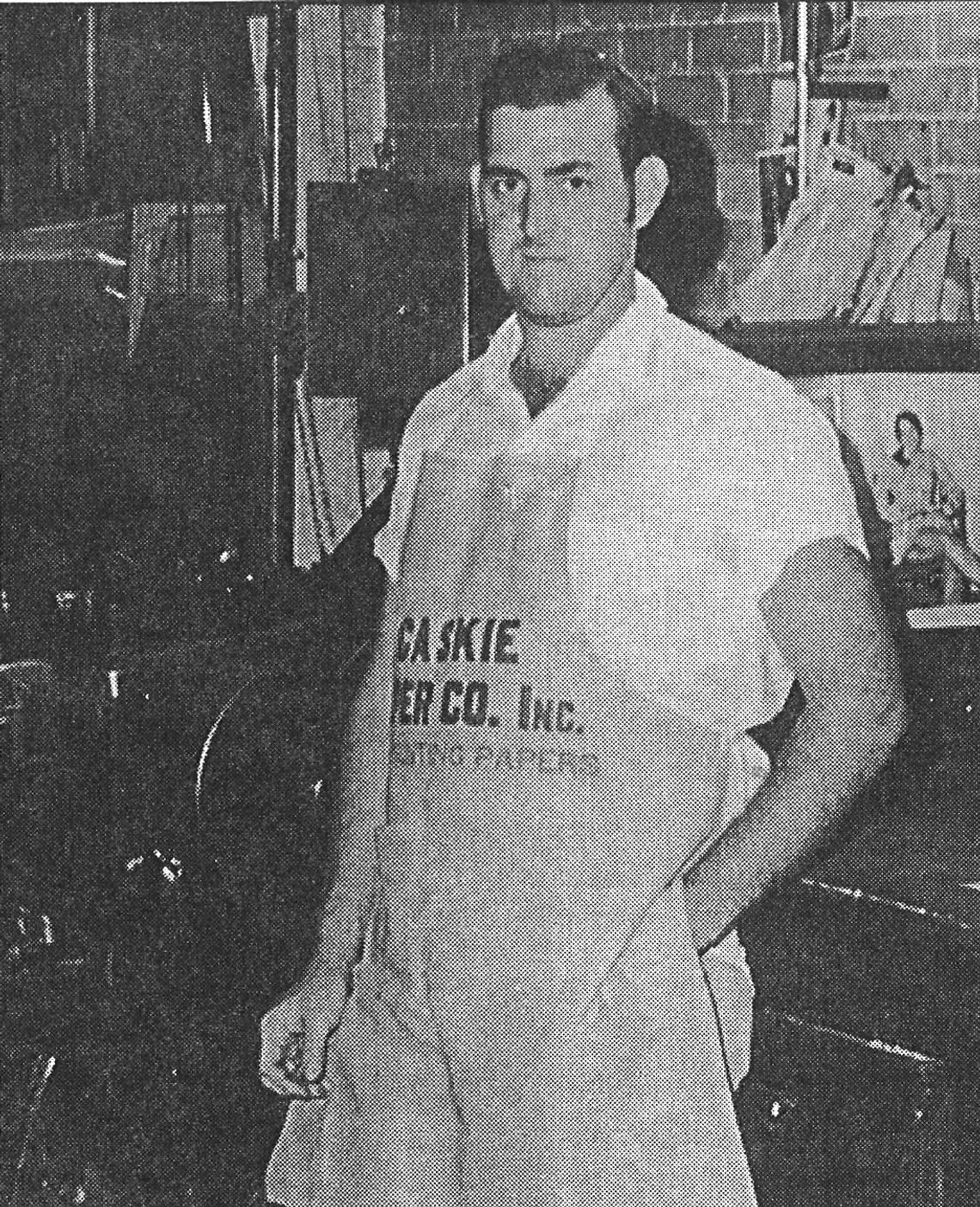
Jim Dedrick died last week. Jim was a teacher, co-worker and partner to me for the 22 years we worked together until his retirement in 2002.
I actually got to know Jim when I was in high school and occasionally taking pictures for the paper. He taught me how to use the big Speed Graphic cameras. The camera has a cartridge with two sheets of film in it. I would typically carry four or five additional cartridges with me in a satchel. That gave me 10 or 12 shots total. Jim taught me to set the exposure and aperture, and the basics of framing an image, because you couldn’t afford to waste any shots. But that knowledge paid off with great pictures because the 4-by-5-inch film sheet generated a large negative, which captured great detail in the photograph.
For Jim, working at The News-Gazette wasn’t just a job – to him it was a responsibility he took very seriously. I remember my first day working at the paper in March 1980. We had a typesetting system with a scanner that read the typewritten stories our reporters wrote and created digital files. If that scanner went down, we couldn’t get the paper out. We had to get a technician in to fix it, and he didn’t arrive until midnight. We finally got it running about 3 a.m. Jim wasn’t leaving until that scanner was back up.
His first love at the paper was photography, but as his talents were recognized, he was given greater responsibilities. He became production manager, which put him in charge of actually producing the printed newspaper. Initially, that involved using Linotype machines to produce lead type, which was then put into forms and loaded into our eight-page press. One of his bigger challenges came in 1971, when the paper converted to offset printing and computerized typesetting. He managed several major changes in the production system as the technology evolved over the years.
Besides being responsible for the newspaper’s production, he was also in charge of the paper’s small commercial printing operation. Initially, this functioned as an additional source of revenue for the paper, and also was a way to provide a full week of work to some of the newspaper production people whose jobs were mainly Monday through Wednesday.
Under Jim’s leadership, the print shop developed from a small sideline business into something that generated as much revenue as the newspaper, with increasing capabilities for larger sheets, color and binding options. In 1998, he oversaw the move of the print shop across Jefferson Street to the new building we built to house the expanding operation.
For my first four years at the paper, Jim and I sat a few feet from each other, and I got to know him pretty well. I became impressed with his technical skill, his way with customers, and his basic decency. As he had taught me the ins and outs of photography as a teenager, he taught me about newspaper production, and about commercial printing. But, like the old farmer said, “He taught me all I knowed, but not all he knowed.” His depth of knowledge was that deep.
After Jim retired, he was able to devote himself fully to his cattle farm, which he’d run in whatever spare time he had while working at the paper. I would try to get by to see him and he would come by the paper and we would have lunch at The Palms. Lately, those were fewer as his health declined.
I’ll miss those lunches. I’ll miss Jim Dedrick.