UVA Football Player Learns About His Legacy During Museum Visit
Paving the way for the next generation is not just a way of life for many families, but a purpose. And nowhere is that purpose more recognized than among the descendants of the Haliburton family, whose ancestors are featured in the Brownsburg Museum’s current exhibit, “Interwoven: Unearthed Stories of Slavery.”
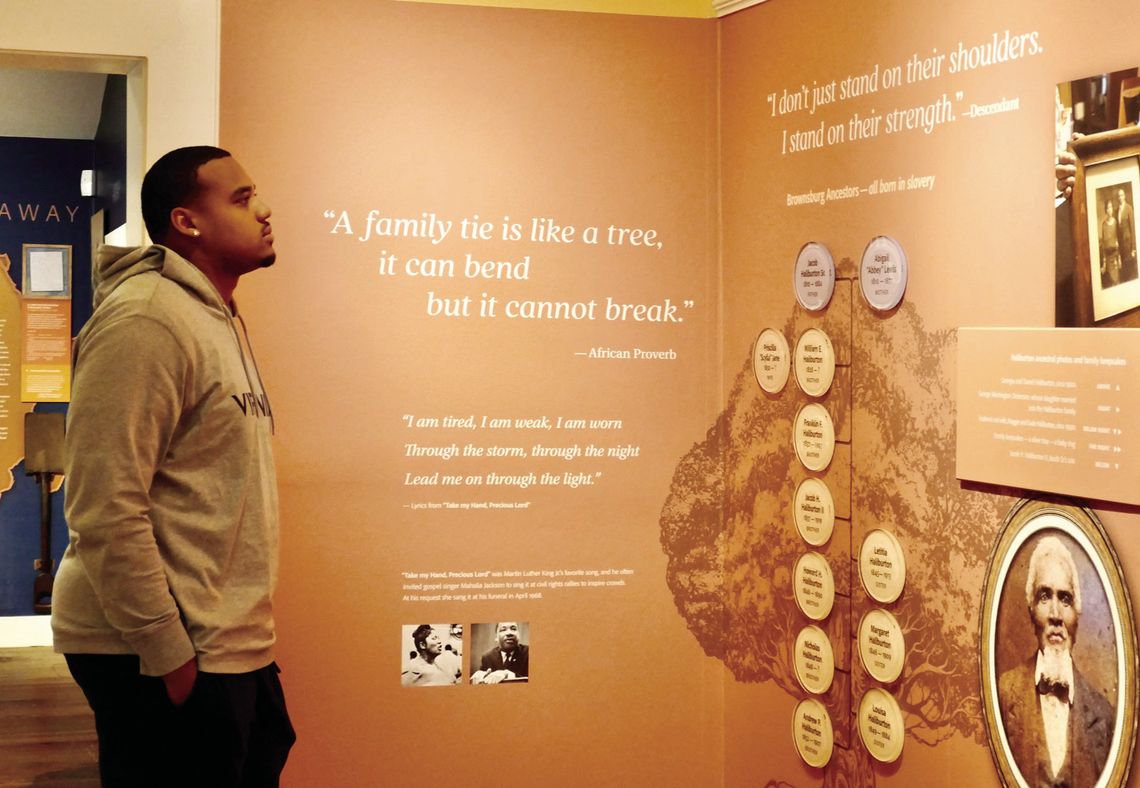
It’s that sense of family history and purpose that recently brought Jason Hammond, standout defensive tackle with the University of Virginia football team, to Brownsburg - to learn about his family’s story - and the obstacles they overcame as they forged paths for themselves and future family members.
Hammond, a fifth-generation descendant of the Haliburtons and their extended family, visited the museum with his cousin, UVA Associate Professor of Chemical Engineering, David Green, who contributed to the exhibit during its development.
What makes this visit unique among the scores of visitors to the museum is not just the ties to the family genealogy, but to UVA, especially UVA football.
In addition to Hammond and Green, several Haliburton descendants have attended UVA, most notably Stan Land, a groundbreaking football player from Rockbridge County who was the first African American to integrate the UVA football team in 1969.
Following in Stan’s successful footsteps on the playing field, Hammond is also regarded by his teammates as a leader, a source of inspiration, especially for new members, and an enthusiastic recruiter for the team.
“Being at UVA feels like I am following a path but also forging my own path,” said Hammond. “I’m big on my faith and big on my family.”
The exhibit gave Hammond a deeply personal look at some of the most difficult times in his family’s history. “A lot of this is heavy,” he reflected.
While contemplating the exhibit, Hammond, and an American History major shared, “Standing here gives me a sense that my decision to attend UVA was destined to be.”
Forging a path would fit well within this family’s long legacy. The enslaved patriarch of the family, Jacob Haliburton, could read and write, despite it being illegal at the time to teach slaves to read. In turn, Jacob taught his children to read and write, establishing a tradition of embracing education within the family.
Jacob’s eldest son, William Haliburton, and his family made the long and arduous journey from slavery in Brownsburg to freedom in Liberia, Africa. Prior to emancipation, Liberia was established by the American Colonization Society as a place to relocate freed enslaved persons from America to the African colony. William was able to send a letter - a rare window into their new life - back home to his family after their arrival.
“When I read the letter sent by William to Jacob, I hear powerful words from a person who is strong, who is not complaining or presenting himself as a victim. But a man who is working hard, against the odds, to create the best life he can for his family. That inspires me,” said Hammond.
“I feel like I owe Stan, and I feel like I owe my family to live up to their legacy. To leave something better for the next person in our bloodline, to do better, whether at UVA or in life,” Hammond continued. “It’s an honor to carry on the legacy and contribute to my community.”
Paving the way means taking action now to create easier paths and better conditions for those who come after. Jacob Haliburton did this for his family over 160 years ago through education, strong family ties, and a sense of purpose, despite being enslaved. Stan Land followed in those footsteps, becoming the first African American to play football at UVA and overcoming racial obstacles at the time through strength and determination.
“Like them, I’ve worked hard to get here,” said Hammond. “I worked hard for my place at UVA.”
Pausing at the Haliburton ancestral family tree displayed in the exhibit, Hammond’s visit allowed him to come face-to-face with his kin, the weight of legacy, and the promise of a future where, with hard work, family, and faith, anything is possible, even if it’s earned one yard at a time.