Go to main contentsGo to main menu
Monday, March 16, 2026 at 3:39 PM

Community Parade Turns 10

Community Parade Turns 10

Organizers Look Back At Start

When in October 2016, the Community Anti-Racism Effort of Rockbridge (CARE Rockbridge) announced that it was organizing Lexington’s first Martin Luther King Jr. Community Parade for January 2017, not everyone expressed support.

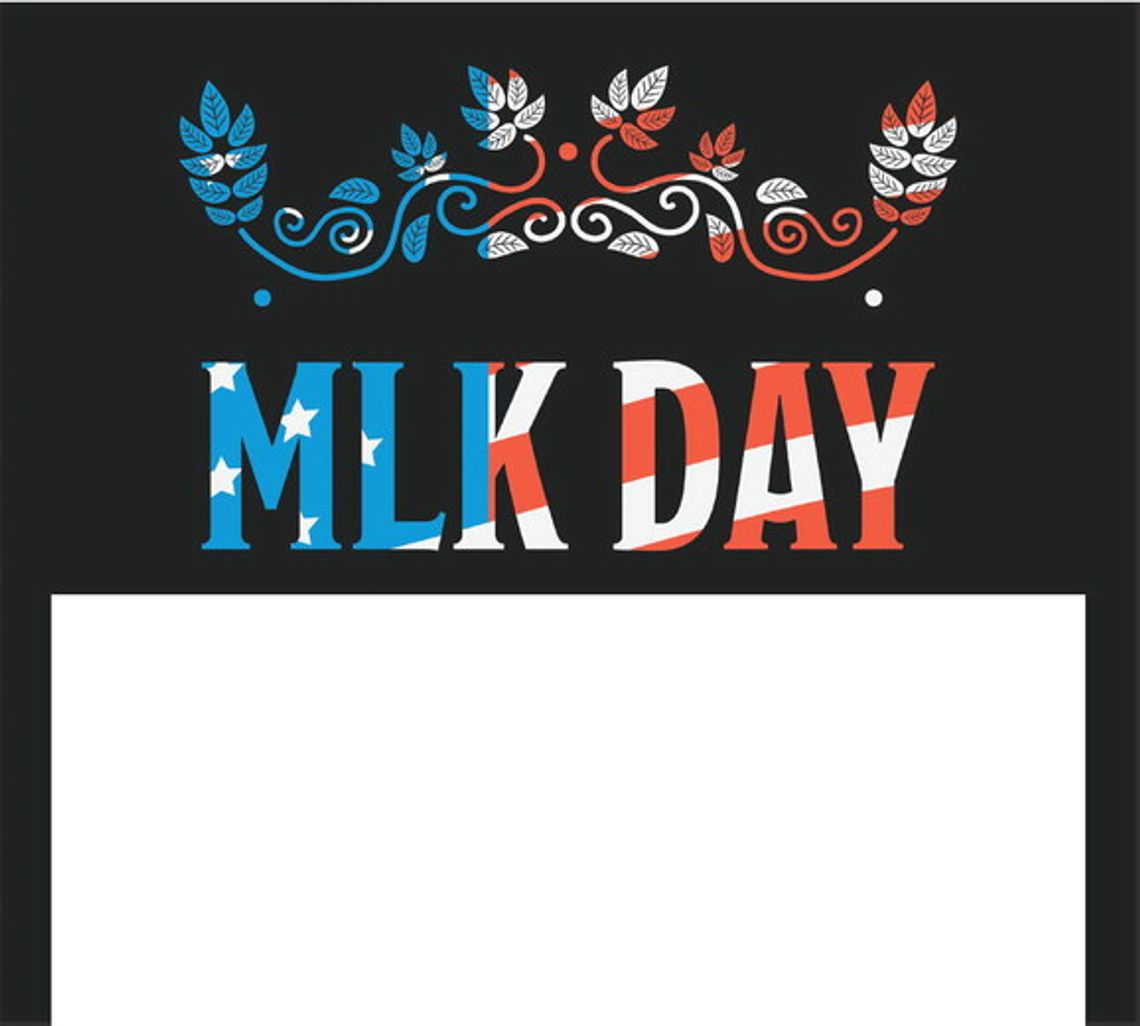
But now, just days from the 10th anniversary MLK parade on Jan. 19, CARE leaders note with pride that the march has become a community tradition.

“What a joy it is to commemorate the life and legacy of Dr. King at the 10th annual MLK Community Parade, especially in the times we live in,” said the Rev. Reginald A. Early, cofounder and president of CARE Rockbridge, looking back on a decade as parade leader.

The first CARE MLK parade drew a huge crowd of nearly 1,000, and, except for two parades cancelled for snow, CARE has continued to lead area citizens down Lexington’s Main Street in honor of Dr. King’s legacy every year since the first march.

In 2021, in the height of the pandemic, CARE organizers transformed the parade into a “stand up,” in which participants were asked to remain stationary, 6 feet apart from each other, across the streets in the mile-plus parade loop. From behind their masks, they joined in singing “We Shall Overcome,” and local church bells tolled to recognize the gathering.

Before the 2017 MLK parade, Lexington had long been the site of a different parade in the weekend before Martin Luther King Jr. Day. That parade, organized by the Sons of Confederate Veterans, celebrated Confederate Generals Robert E. Lee and Stonewall Jackson during the then-officially declared Lee-Jackson Day state observance.

In the years running up to the first MLK parade, supporters of the Confederacy, many representing organizations in other parts of Virginia or out of state, had become more visible, standing on street corners with Confederate flags on MLK-Lee-Jackson Day weekend and flying large Confederate flags yearround on highly visible stretches of highway and local land.

After the Ku Klux Klan distributed flyers on local lawns in the spring of 2016, a diverse group of local citizens came together to form CARE. CARE members argued that people in the area were hungering for an opportunity to show that their community was more than a stop in Confederacy nostalgia tourism and certainly more committed to equality and inclusion than the KKK. The MLK parade was born.

Ken Davis, a longtime resident who was one of the CARE team that presented the first parade permit to City Council, recalled that some area residents expressed concern that adding the MLK parade to the local agenda along with the SCV parade would incite violence.

“The very first parade was met with a lot of trepidation and concern as there was a lot of pressure from outside groups. There was always this apprehension because there were threats made by white supremist groups. There was even fear and some people didn’t march because of it,” Davis said.

Some of CARE’s leaders were doxed on social media. “We kept hearing that local sports groups and other organizations that wanted to participate had been told by their board members that they would lose their funding if they carried signs with the name of their organizations and teams in the parade,” explained Robin LeBlanc, now CARE’s vice president and a parade founder. “We didn’t really know if anyone would show up.”

But while the boards of some local groups refused to declare support for the 2017 MLK parade, the groups’ members marched anyway. Area students, religious groups, a knitting club, and labor activ- ists also swelled the crowd. CARE had ordered hundreds of stickers to give to participants, but the sticker supply was quickly exhausted by the higherthan- expected turnout. “Many people took this opportunity to make a stand,” Davis said.

For Davis, who is part of a mixed-race family, the first MLK parade was also meaningful on a personal level.

“I, for one, have dealt with racism all my life, and I saw this as an opportunity to make a stand against it,” he said. “I felt power, relief, and intense joy not only to make a stand but to honor a man that has done so much for this county as a leader and a Civil Rights icon. I will always remember the intense pride, joy, and camaraderie.”

The joy that Davis felt was shared by others who helped lead those first steps down Main Street in Dr. King’s honor. Pastor Lyndon Sayers, a CARE founder, served as pastor at Lexington’s Good Shepherd Evangelical Lutheran Church at the time of the 2017 parade. “I remember the bold vision and courage that led CARE to organize the parade in the first place,” he said. “It was an opportunity to disrupt racism and injustice, reclaiming streets, and taking up space for love.”

Today Sayers ministers to a congregation in western Canada, but he describes the parade as formative. “That first parade has shaped me as a church and community leader. For me it continues serving as a reminder that with taking courage comes great opportunity for community building. Today during turbulent times, we remember Dr. King’s voice saying, ‘The time is always right to do what is right,’” Sayers added.

Lexington resident and current CARE board member Mohamed Kamara described similar affection for the march. “For the past 10 years, the CARE MLK Community Parade has been a steady reminder that that love and hope are relentless, that they always triumph over hate and despair. I am grateful to be a part of a community that recognizes and celebrates the bonds of our common humanity,” he said.

LeBlanc argues that the CARE MLK parade serves as a positive vision for the future at a moment in which social divides are great, and civility often seems diminished.

“We took a bet on our fellow citizens that, if we were willing to stand in the street proclaiming that justice, love, and equality are our orienting values, they would want to stand with us. And we won that bet,” she said.

From its first year, the MLK parade has been without violence or heckling.

“These days, it’s easy to be cynical about the power of ordinary people to protect our shared democracy, but here in Rockbridge, our fellow citizens demonstrated that the people do have power. Together we can build a better world,” LeBlanc said.

In the thinking of CARE President Early, the MLK parade is more important today than it was in 2017.

“King’s legacy to achieve justice for all via love for one another is magnified in these difficult days. Because the dream has not been fully manifested, we at CARE Rockbridge continue the march towards its complete manifestation,” he explained.

The CARE parade team invites marchers of all ages and walks of life to the January 19 nonviolent, family friendly march. Participants should gather for the 10:30 a.m. step-off in front of Randolph Street United Methodist Church at 118 S. Randolph St. in Lexington.


Share
Rate

Subscribe to the N-G Now Newsletter

* indicates required

Intuit Mailchimp

Lexington News Gazette