Lexington is home to one of Virginia’s largest Northern Catalpa trees.
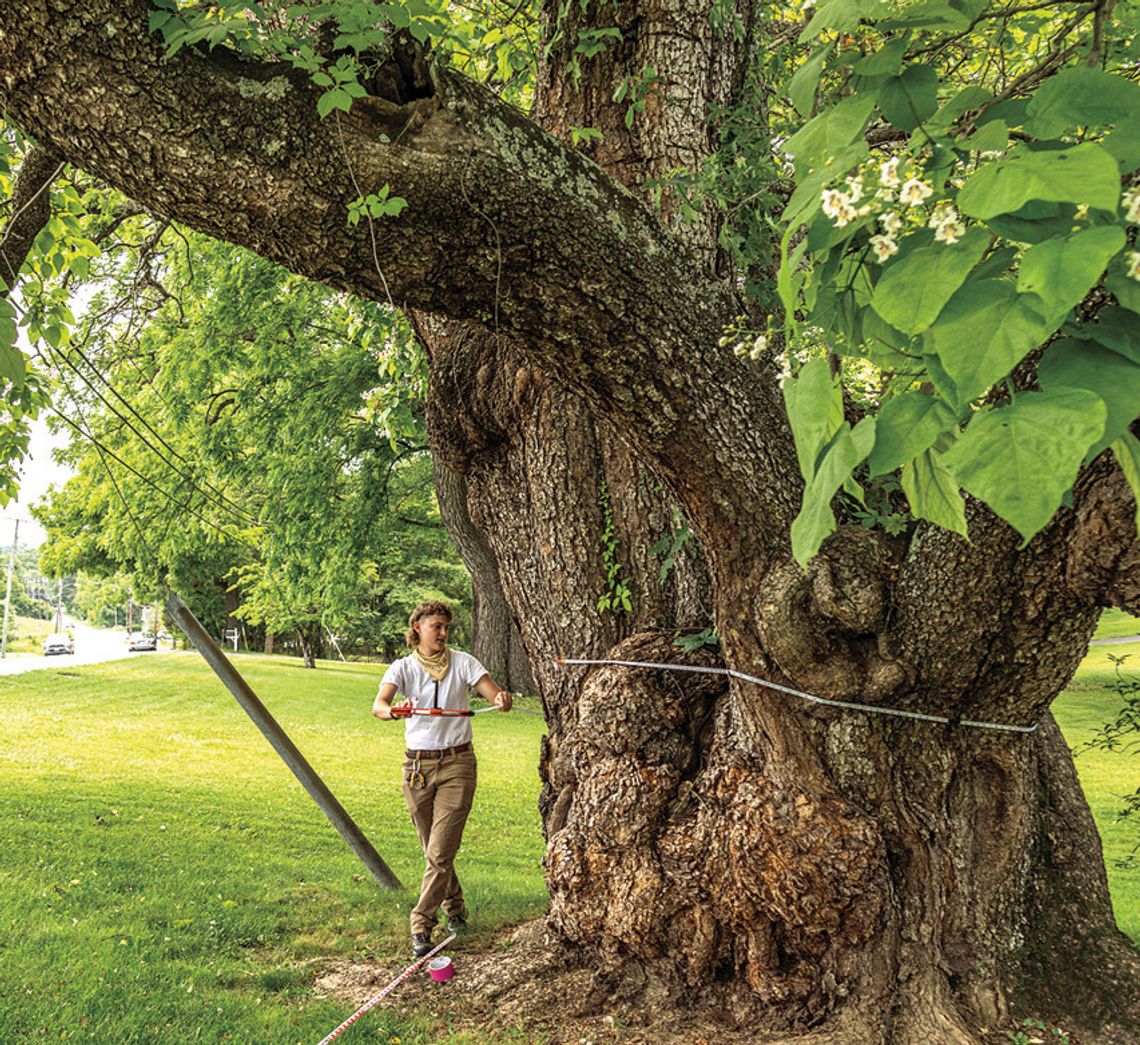
Virginia’s Big Tree Program helps document the state’s largest trees while promoting their appreciation and care. They also provide education and outreach programs through Virginia Cooperative Extension which is affiliated with the American Forests and the National Big Tree Program .An intern with the Virginia Tech Department of Forest Resources and Environmental Conservation measured the tree in Nelsen Nicely’s yard at 939 Thornhill Road on Friday, June 13.
Trees in the program must be remeasured and photographed every 10 years. All measured trees are registered with the Big Tree Program.
The program tallies the measurements and the trees earn points. They are measured by height, average crown spread and trunk circumference. They also include the tree’s unique characteristics, health and location. Results are published on the Virginia Big Trees website.
The t ree w as fi rst m easured i n 1991 and became a national champion for the largest catalpa tree in 2019.
The tree was last measured and certified in 2015. It was 66 feet tall with a circumference of 241 inches, which earned the tree 327 points. These measurements caused the tree to be listed as a category grand champion.
The remeasurement by intern Bella Hardaway resulted in a height of 63 feet, circumference of 268 inches and a crown of 86 feet. This resulted in 353 points and the tree is now a Virginia co-state champion with a tree in Tazewell.
The Big Tree Program first began in 1970 as a 4-H and Future Farmers of America project. Since then the program and measurements are primarily run by volunteers.
The program registers the top three largest trees of each species. To qualify, trees must be at least 13 feet tall, be measured 4.5 feet above ground level, and have a trunk circumference of at least 9.5 inches.
Catalpa trees are known for having heart-shaped leaves and bellshaped flower clusters that only stay bloomed for a week in late spring.